
If you are planning a new home, renovating a kitchen, or upgrading your flooring, you might have heard the term ‘Nano White’ at the stone stores. These days, it has become quite popular in the international market because it looks clean, modern, and elegant. But then come the confusing parts: G5, G7, G9. What do these grades mean? Which one should you choose? And how much do they cost in Pune?
G5, G7 & G9 – A Detailed Comparison
| Parameter | G9 Nano White (Premium) | G7 Nano White (Mid-Grade) | G5 Nano White (Basic) |
| Look & Finish | Ultra-smooth, flawless, and polishedAlso gives a high-end, luxurious feel | Smooth and polished (but not as refined as G9) | Polished (but may have small imperfections and uneven areas) |
| Translucency | Very high (perfect for backlit walls or decorative panels) | Moderate (not ideal for lighting effects) | Minimal ( fully opaque, best for basic flooring or walls) |
| Thickness | Consistent and uniform, usually 15–18mm. | Mostly uniform, minor variations possible. | Can vary; less consistent, which may affect strength. |
| Cost (₹/sqft) | ₹420–550 (Certified)₹320–380 (Uncertified) Get Exact Price Chat Now | ₹380–450 (Certified)₹300–380 (Uncertified) Get Exact Price Chat Now | ₹320–380 (Certified)₹280–320 (Uncertified) Get Exact Price Chat Now |
| Cutting & Fabrication | Difficult to cut (Requires precision tools and careful handling) | Moderate difficulty ( needs some experience to handle well) | Easy to cut (may need extra polishing due to rough edges) |
| Installation | Needs skilled labor and careful handling | Moderate skill required | Simple to install |
| Best For | best for luxury projects. | suitable for most standard applications | Works well for lightweight and flexible for basic setup |
In this detailed blog post, we will help you understand the differences between various Nano White grades, their prices, applications, and much more.
- G5, G7 & G9 – A Detailed Comparison
- What exactly is Nano White?
- Is Nano White Marble, Quartz, or Stone?
- Nano White Grades G5, G7 & G9 – What Do These Grades Mean?
- Nano White G5 Vs G7 Vs G9 : How to Know?
- Which is better Nano White G5, G7, G9?
- Quick Comparison Table
- Typical Thickness of Nano White
- Nano White Price in Pune, India
- G5, G7 & G9 – A Detailed Comparison
- How to Check if Nano White is G5, G7 or G9?
- Tips to Prevent Nano White from Cracking
- Where to Buy Nano White?
- Summary
- FAQs
- Key Takeaways
What exactly is Nano White?
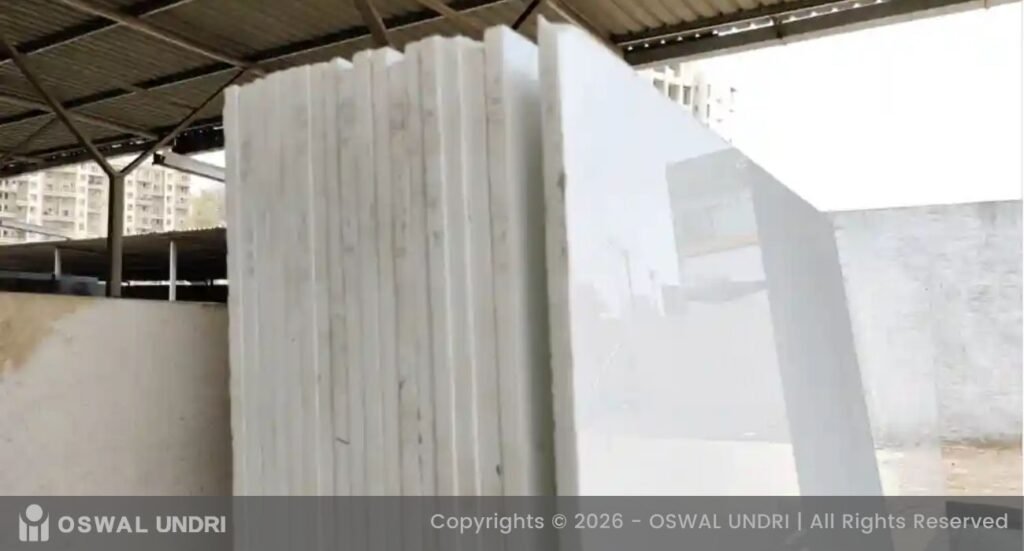
Nano White is a man-made surface that’s often mistaken for natural marble because of how clean and polished it looks. You may also hear it referred to as Nano Artificial Marble or Nano Crystallised Glass White.
It is made by combining glass, resin, and minerals, which are processed at a very fine (nano) level. Unlike real stone, Nano White has a uniform color and texture. There are no veins, cracks, or natural imperfections, so every slab looks consistent and neat. Because it is non-porous, Nano White doesn’t absorb stains, water-spills or any moisture.
There are different quality grades of nano white, such as G5, G7, and G9, which vary in strength and finish.
Is Nano White Marble, Quartz, or Stone?
This is a very common question and an important one as well.
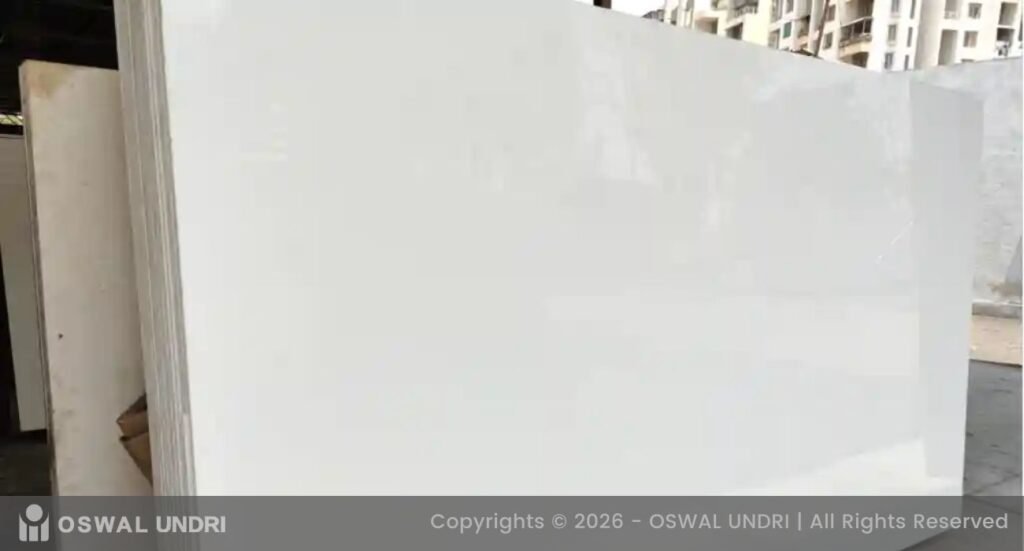
Nano White is not a natural marble, and it’s not quartz either. Basically, it is a nano-engineered stone that is made using advanced technology. Tiny particles are compressed and bonded together to create a surface that is dense, strong, and uniform.
Nano White Grades G5, G7 & G9 – What Do These Grades Mean?
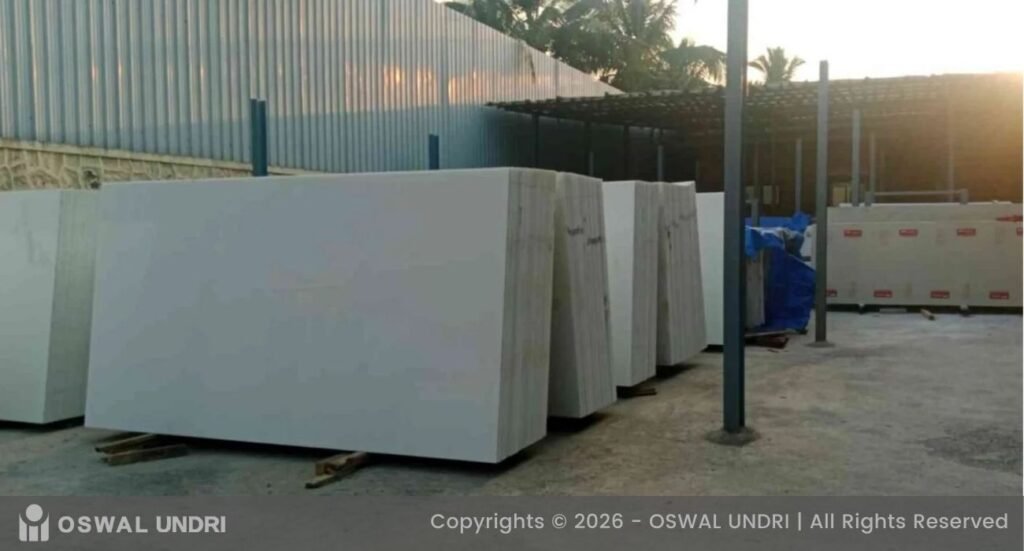
Nano White is commonly categorized into different grades such as G3, G5, G7, and G9. These grades primarily differ in their degree of whiteness. .
- G3 and G5 are considered lower grades. They typically have slightly lower whiteness and may exhibit minor surface defects, such as small spots, lines, or variations in tone.
- G7 and G9 are higher grades. These usually present with little to no visible defects, and G9 in particular can even appear slightly translucent due to its superior whiteness and density.
Across all grades, the main factor determining quality is whiteness:
Higher whiteness = higher grade.
Nano White G5 Vs G7 Vs G9 : How to Know?
Because the difference in whiteness between grades can be subtle, it is often difficult to distinguish with the naked eye alone. The most reliable way to compare grades is to:
- Request physical samples from different dealers
- Place them side by side against other samples or existing installed stock
For a more precise evaluation, whiteness can also be quantified using an L-value (whiteness value), which is measured with specialized equipment. This method provides an objective numerical comparison, although such instruments are not commonly available to end users.
In simple terms:
- Higher grade = better whiteness, better finish, and better performance
- Lower grade = more basic quality and suitable for lighter use
Which is better Nano White G5, G7, G9?
Nano White grades (G5, G7, G9) signify the quality levels of these crystallized slabs. Here, you will get to know the pros, cons as well as uses of each grade so you can use it efficiently in your projects.
Quick Comparison Table
| Feature | G5 | G7 | G9 |
|---|---|---|---|
| Grade level | Basic | Mid-grade | Premium |
| Quality | Lowest | Improved | Highest |
| Translucency | Opaque | Moderate | High (best for backlighting) |
| Durability | Low to medium | Medium to high | Very high |
| Price | Lowest | Moderate | Highest |
| Handling difficulty | Easy | Moderate | Complex (professional required) |
Nano White G5 ( Basic Grade)
| Feature | Details |
| Pros | • Most affordable • Easy to cut and install • Polished surface for basic projects • Low maintenance • Lightweight and versatile • Good for basic flooring/walls |
| Cons | • Lowest quality • Opaque, lacks translucency • Minor inconsistencies/uneven edges • Less durable for high-traffic areas |
| Applications | • Simple flooring in homes/offices • Basic wall cladding • Areas where a high polish or luxury finish is not essential |
Nano White G7 (Mid-Grade)
| Feature | Details |
| Pros | • Balanced quality and price• Smooth polished surface • Moderate translucency • Heat and stain resistant • Durable for countertops/walls • Suitable for medium-traffic areas |
| Cons | • Susceptible to cracking if mishandled • Joints can darken over time • Only pure white • Slightly more expensive than G5 |
| Applications | • Kitchen countertops and backsplashes • Staircases and flooring • Medium-traffic walls • Areas needing both durability and aesthetic appeal |
Nano White G9 (Higher-Level Premium Grade)
| Feature | Details |
| Pros | • Flawless polish and surface • High translucency (great for backlighting) • Luxurious appearance • Durable and long-lasting • Ideal for feature walls/decorative panels • Premium aesthetic and structural quality |
| Cons | • Most expensive • Requires specialized installation tools • Complex handling during cutting/installation • Limited availability |
| Applications | • Luxury countertops • Backlit panels and feature walls • High-end interiors in hotels/offices/homes • Premium flooring where appearance is critical |
Typical Thickness of Nano White
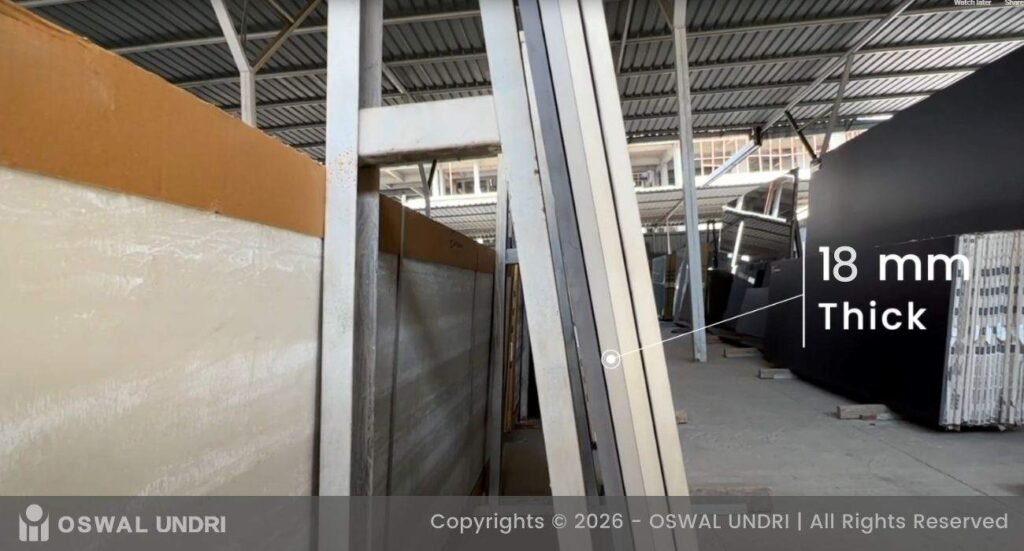
The Nano White slabs are available in various thicknesses, which are typically 18mm to 20mm, but some may be 15mm thick depending on the grade or use. The thickness plays a big role in strength, durability, and ease of installation.
- G9 Nano White: This is a high-grade material that is typically produced with a uniform thickness of 15mm to 18mm. It has a uniform thickness that suitably fits it well for high-end installations where accuracy and impeccable finishing are crucial.
- G7 Nano White: It resembles G9 and is 15 mm and 18 mm thick. G7 usually comes in regular thicknesses, but small differences may exist depending on the supplier.
- G5 Nano White: As an entry grade, G5 can be more diverse in terms of thickness. These differences can affect durability and make it better suited for simpler applications, like flooring or wall cladding, where high precision is not the most important factor.
Nano White Price in Pune, India

When you look at Nano White in the market, the first thing you notice is the price, and it usually depends on the grade and whether the slab is certified.
Nano White Slab Material Prices (Per sq. ft.)
Higher grades cost more because they are smoother, more durable, and have that flawless, premium look. On the other hand, the lower grades are cheaper, but they are still good for simple flooring or wall cladding where you don’t need perfection.
G9 Nano White
- Certified Slab: ₹420 – ₹550 per sqft
- Uncertified Slab: ₹320 – ₹380 per sqft
G7 Nano White
- Certified Slab: ₹380 – ₹450 per sqft
- Uncertified Slab: ₹300 – ₹380 per sqft
G5 Nano White
- Certified Slab: ₹320 – ₹380 per sqft
- Uncertified Slab: ₹280 – ₹320 per sqft
Installation + Fabrication Costs of Nano White
Apart from the price of the slabs themselves, you should also think about installation and fabrication. This includes cutting, shaping, polishing, and fitting the Nano White slabs in your kitchen, bathroom, or flooring. And, yes, these costs can vary depending on the grade, project size, as well as complexity of installing the slabs.
- Fabrication Cost: On average, fabrication costs can range from ₹60 – ₹120 per sqft, depending on the complexity and grade.
- Installation Cost: Typical installation costs range from ₹40 – ₹80 per sqft.
G5, G7 & G9 – A Detailed Comparison
Check the below mentioned table to easily identify the nano white grade:
| Parameter | G9 Nano White (Premium) | G7 Nano White (Mid-Grade) | G5 Nano White (Basic) |
| Look & Finish | Ultra-smooth, flawless, and polishedAlso gives a high-end, luxurious feel | Smooth and polished (but not as refined as G9) | Polished (but may have small imperfections and uneven areas) |
| Translucency | Very high (perfect for backlit walls or decorative panels) | Moderate (not ideal for lighting effects) | Minimal ( fully opaque, best for basic flooring or walls) |
| Thickness | Consistent and uniform, usually 15–18mm. | Mostly uniform, minor variations possible. | Can vary; less consistent, which may affect strength. |
| Cost (₹/sqft) | ₹420–550 (Certified)₹320–380 (Uncertified) | ₹380–450 (Certified)₹300–380 (Uncertified) | ₹320–380 (Certified)₹280–320 (Uncertified) |
| Cutting & Fabrication | Difficult to cut (Requires precision tools and careful handling) | Moderate difficulty ( needs some experience to handle well) | Easy to cut (may need extra polishing due to rough edges) |
| Installation | Needs skilled labor and careful handling | Moderate skill required | Simple to install |
| Best For | best for luxury projects. | suitable for most standard applications | Works well for lightweight and flexible for basic setup |
How to Check if Nano White is G5, G7 or G9?
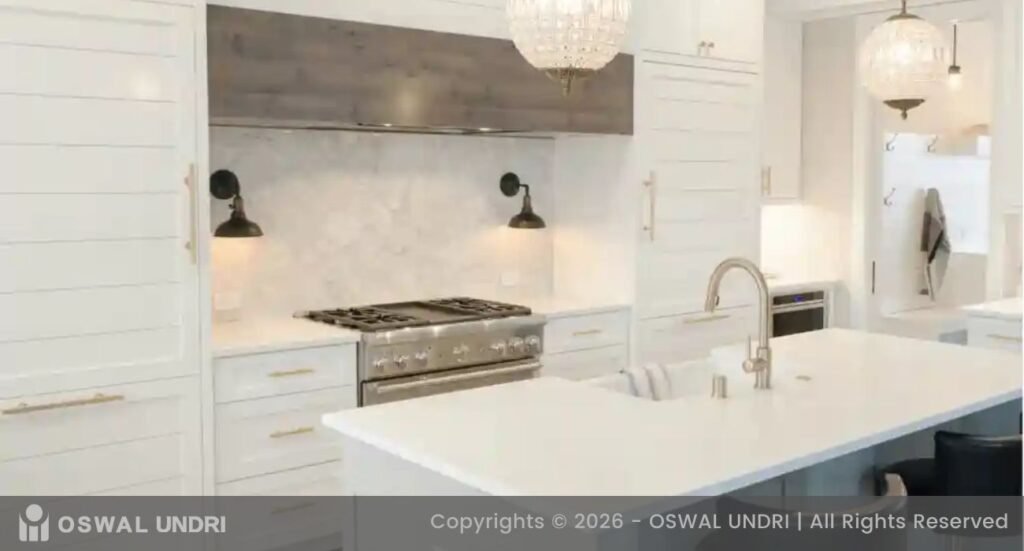
Figuring out the grade of Nano White can be tricky because the differences are subtle and often hard to spot with the naked eye. Here’s a simple guide to help you identify G5, G7, or G9 slabs:
1. Whiteness and Surface Quality
- The grade mainly depends on how white and flawless the slab is
- G9 is the brightest, most uniform, and sometimes slightly translucent
- G7 is smooth and clean, with very few or no surface defects
- G5 (and lower grades like G3) may show minor imperfections or uneven spots
2. Surface Finish
- You can touch and feel the slab surface. A high-gloss, mirror-like finish usually indicates G9.
- Lower grades may feel less smooth and have small inconsistencies.
3. Translucency Test
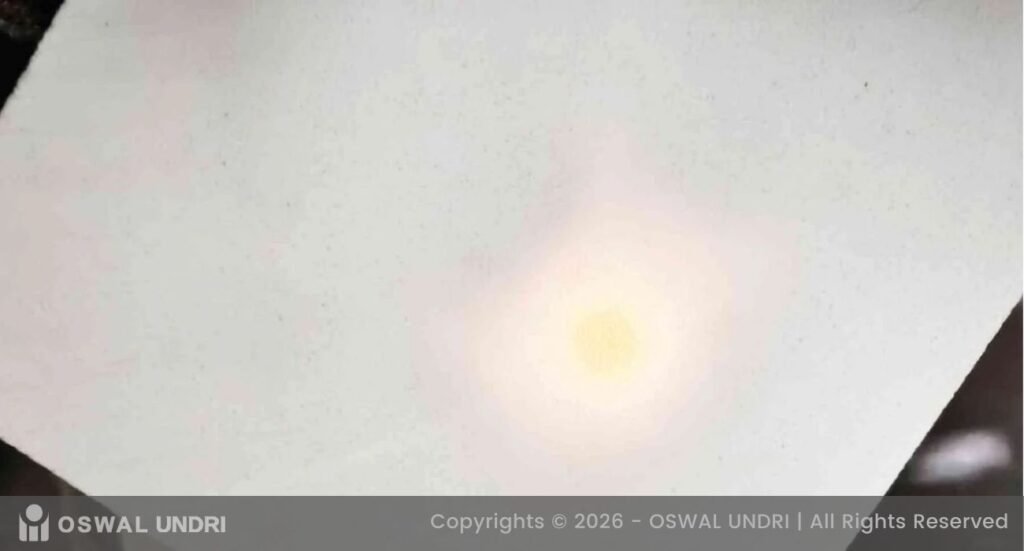
- To check the translucency, you can hold a light behind the slab. The more glow or translucency indicates a higher grade.
- G9 may show some glow, G7 less so, and G5 is mostly opaque.
4. Thickness Consistency
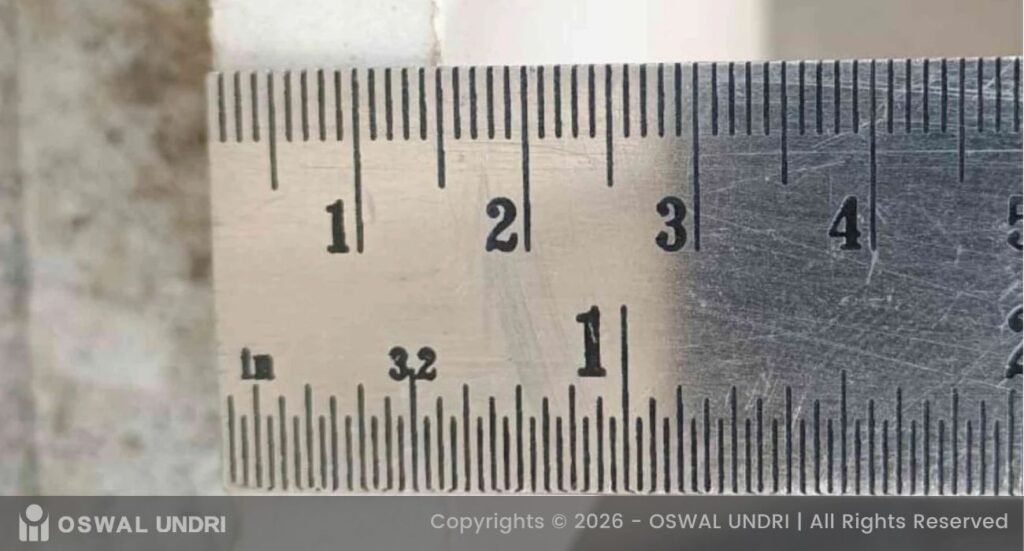
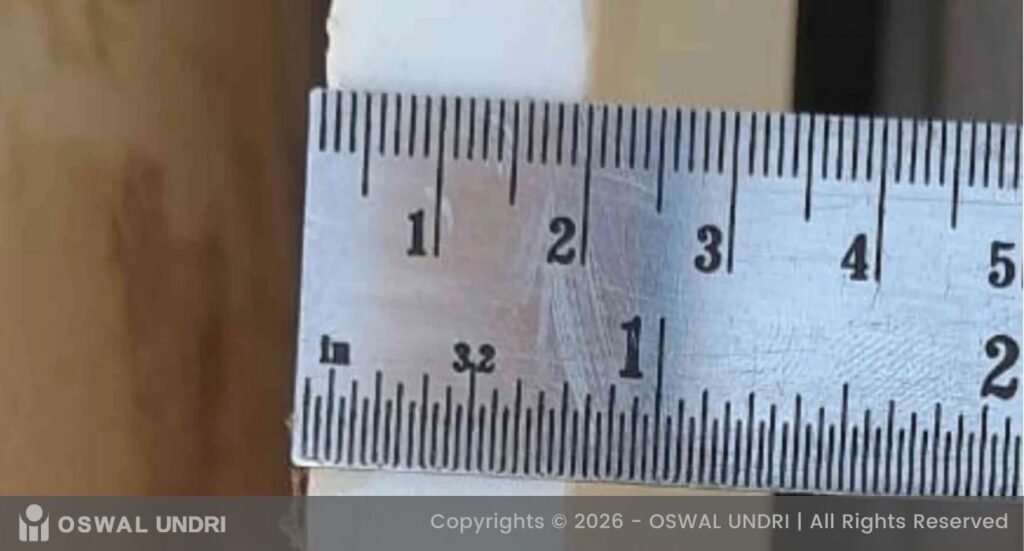
- You can also compare the slabs by checking the edges and thickness.
- Uniform thickness and even edges are signs of better quality (G7 or G9)
- G5 may vary more in thickness and edges
5. Compare Samples
- The best way is to get sample slabs from different dealers and compare them side by side.
- This helps you visually see which slab is whiter and more consistent, since subtle differences are hard to notice otherwise.
6. Certification and Branding
- The most reliable method is to ask for supplier certification or a branded mark.
- Certified slabs guarantee the grade, finish, and quality you are paying for.
Pro Tip: Don’t rely on looks alone because many lower-grade slabs are mislabelled as higher grades. So, certification is the only foolproof way to ensure you get the right quality.
7. Using special equipment
- Professionals can measure the L-value or whiteness value using special tools, but this is usually not something the average buyer can do at home.
8. Cutting & Processing
- G5: Easier to cut due to lower hardness, but edges may be uneven and need extra polishing
- G7: Harder to cut than G5; requires moderate skill
- G9: Hard and dense; needs advanced tools for precise cuts and smooth edges
9. Installation Complexity
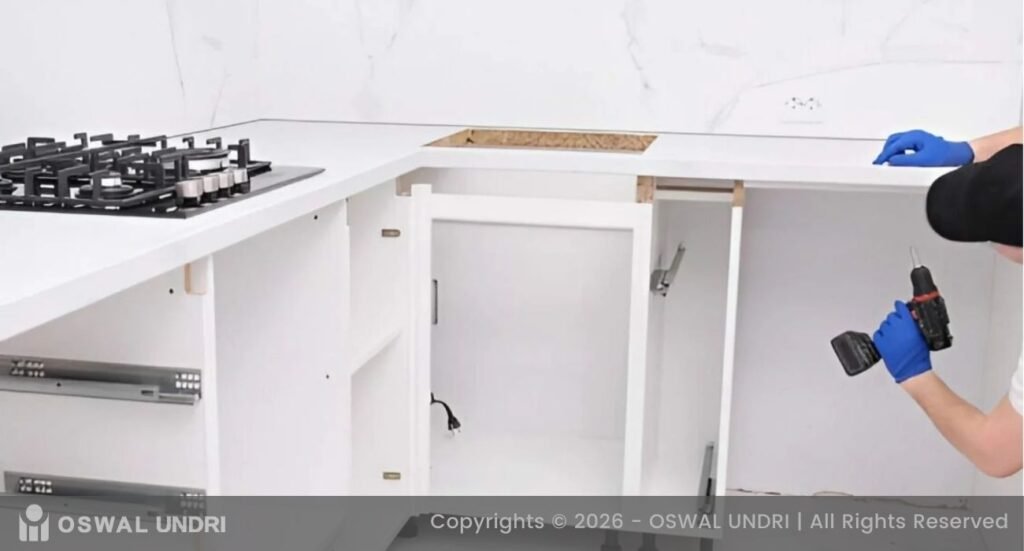
- G5: Easy to install, lightweight
- G7: Requires moderate skill and precision
- G9: Demands highly skilled labor due to heavier weight and premium quality
Tips to Prevent Nano White from Cracking
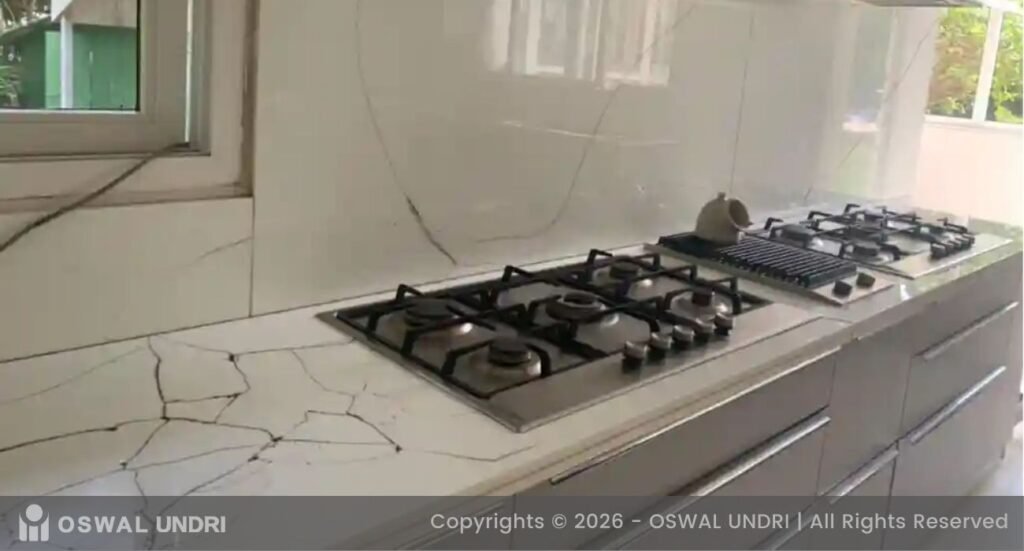
Nano White is strong and elegant, but even the best surfaces need a little care. Here’s how to make sure your slabs stay perfect for years:
- Hire professionals for installation – Don’t try to DIY install. A professional installer knows all the tricks to handle the slabs carefully and avoid stress that can cause cracks.
- Follow the advice – You should use the adhesives and sealers that the manufacturer recommends since the low cost alternatives may save you some money in the short-run, but they could cause cracks or peels in the long-run.
- Caution – Heavy pots, dropping things, or slamming items on the surface can leave marks or chips. So be careful because a little caution goes a long way!
- Protect countertops – It is recommended that coasters, trivets, and cutting boards should be used all the time on the surface. Although it is hard, frequent hits by knives or hot pans can produce wounds or break the slab with time.
Where to Buy Nano White?
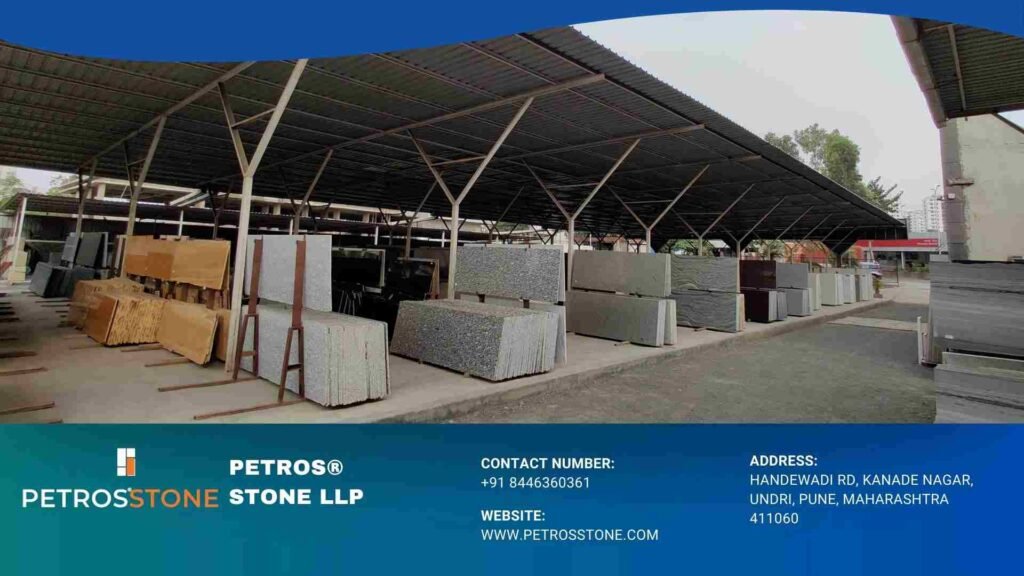
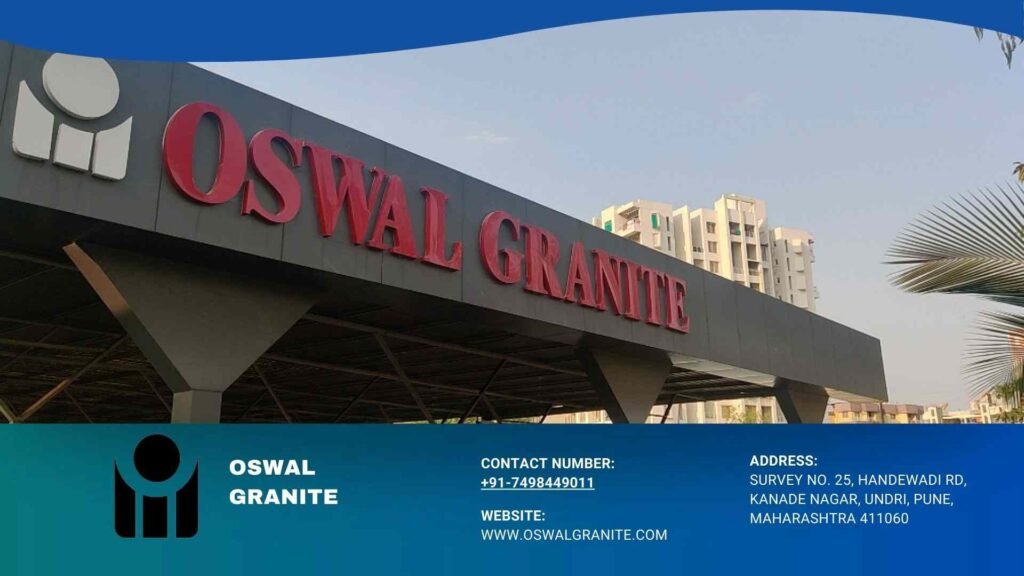
As you now know all the pros and cons of nano white, you might be thinking to include it in your projects. Isn’t it? Well, it is important to choose a trusted supplier so you get genuine, high-quality slabs. Here’s where you can look:
- Local stone suppliers
- Authorized dealers of premium brands
- Verified online marketplaces
Looking for the best nano white brand in Pune? The top-notch Nano White for a kitchen, bathroom, or luxury interior is available at reputed names like Petros® Stone and Oswal Granites. They are certified for quality, ensuring you get authentic, high-grade Nano White.
Summary
As a whole, Nano White is a great option if you want an elegant look without the heavy maintenance of natural marble. Choosing between G5, G7, and G9 really comes down to your budget, usage, and expectations.
- If you want something affordable, G5 works actually well.
- If you want the best value, G7 is the sweet spot.
- If you want top-class finish and durability, G9 is worth the investment.
So, take your time, compare slabs, and choose what fits your space best; because the right surface can completely change how your home feels.
FAQs
What is the variation between G5 and G7 Nano white?
The primary distinctions are density, shine and durability. G7 is more robust, smoother, and has a superior shine than G5. G5 would be appropriate in low-traffic places, and G7 would be appropriate in kitchens, floors, and general use.
What has made Nano White so popular?
Nano White resembles marble. It is strong, easy to care of, plus stains and water are not able to enter inside these slabs as compared to the natural marble. It also provides a contemporary appearance without the burden of intense maintenance expenses.
How much is the G7 Nano white marble?
The average price of G7 Nano White in Pune is 380 -450 per sq.ft., which varies with the thickness, finish, certification and supplier.
Does Nano White suit kitchen counter tops?
Yes! Nano White is works good for kitchen countertops. It is durable, steady, and is easier to wash. Also, it does not contain stains like ordinary marble.
Can Nano White stain?
Although Nano White is resistant to stains compared to marble, but with prolonged exposures to very strong chemicals, oils, or colored liquids, it can also stain.
G7 or G9, which is better?
G9 is more premium, denser and shinier. However, to the majority of households, G7 is the middle of the road with high, robust and cheaper specifications.
Can you give some tips for cleaning Nano White Kitchen Countertops?
Cleaning is simple: Wipe on a soft cloth or sponge using mild detergent or soap. Do not use very strong chemicals or scrubbing pads. Clean up spills in time to avoid stain. In hard areas a mild stone-safe cleaner is effective.
Is Nano white Warranted?
Yes. Majority of manufacturers are providing 5-15 years warranties. These normally include manufacturing flaws, but not damage caused by excessive impact or abusive use.
Key Takeaways
- Nano White is a man-made stone that looks like marble but is stronger, non-porous, and easy to maintain.
- Nano White Grades matter – G5: Basic, affordable, good for low-traffic areas G7: Mid-grade, durable, great for kitchens and regular use G9: Premium, highly durable, perfect for luxury interiors
- Nano White Price in Pune (approx.) – G5: ₹280–380/ sq.ft, G7: ₹300–450/sq.ft, G9: ₹320–550/sq.ft.
- Nano White is perfect for kitchen countertops and walls because it is heat and stain resistant, but spills should still be wiped quickly.
- Always ask for certification or proof of grade to avoid overpaying for lower-quality slabs.
Get a free consultation, expert guidance, and a detailed quote tailored to your project needs.
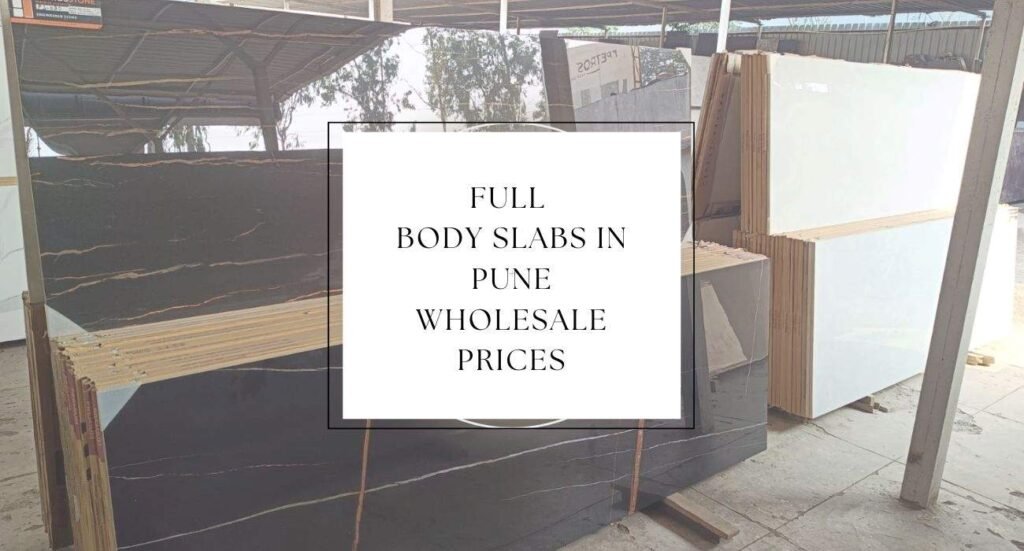
Full Body Slabs in Pune | Artifical Stone | Wholesale Prices | Factory Outlet
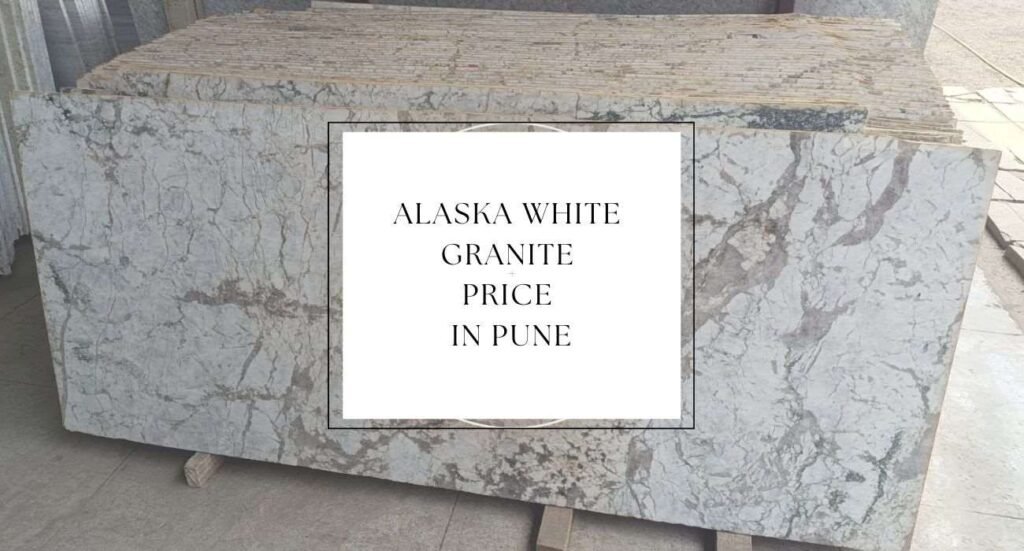
Alaska White Granite | Price at Factory Outlet
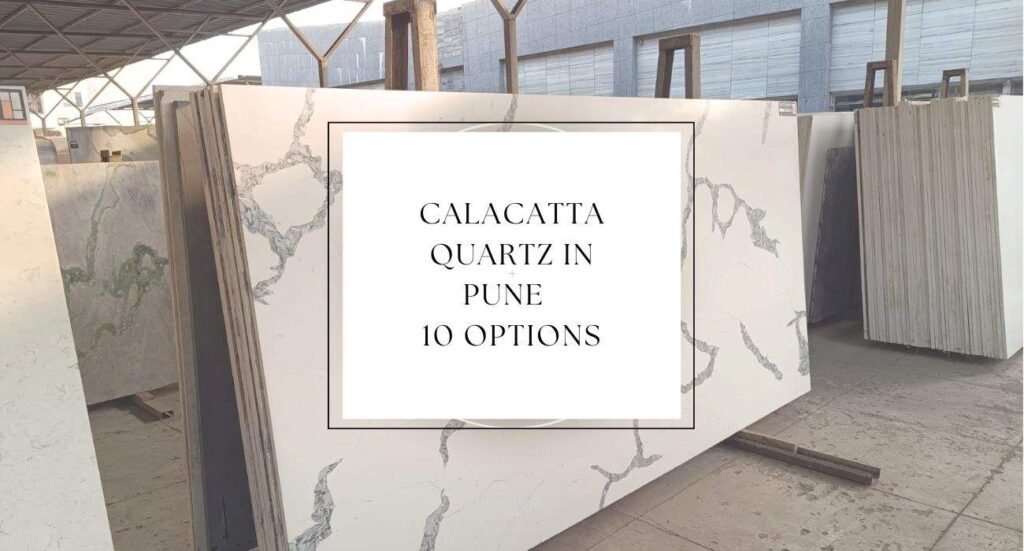
Calacatta Quartz in Pune | Kitchen Platform | 10 Options
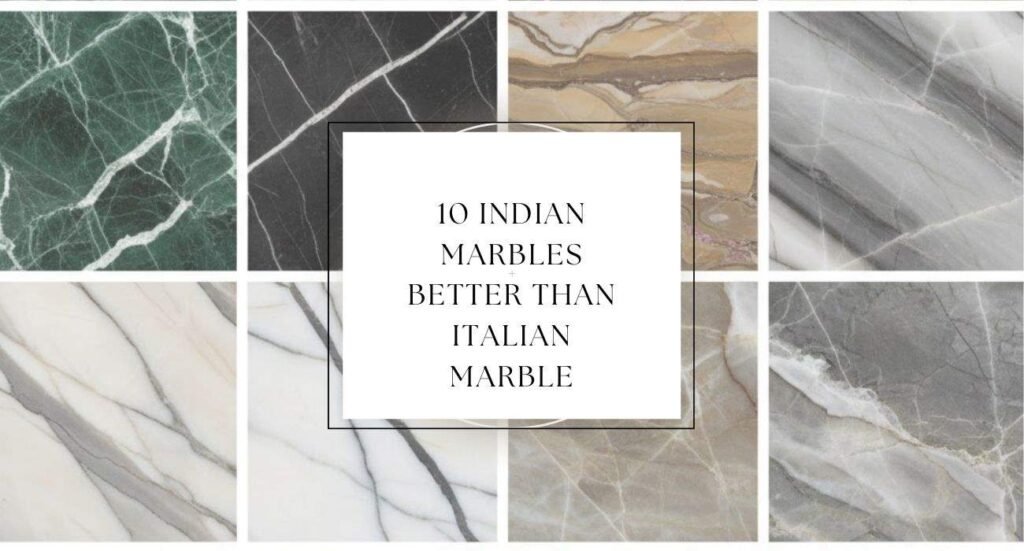
10 Indian Marbles that Look Better than Italian Marble
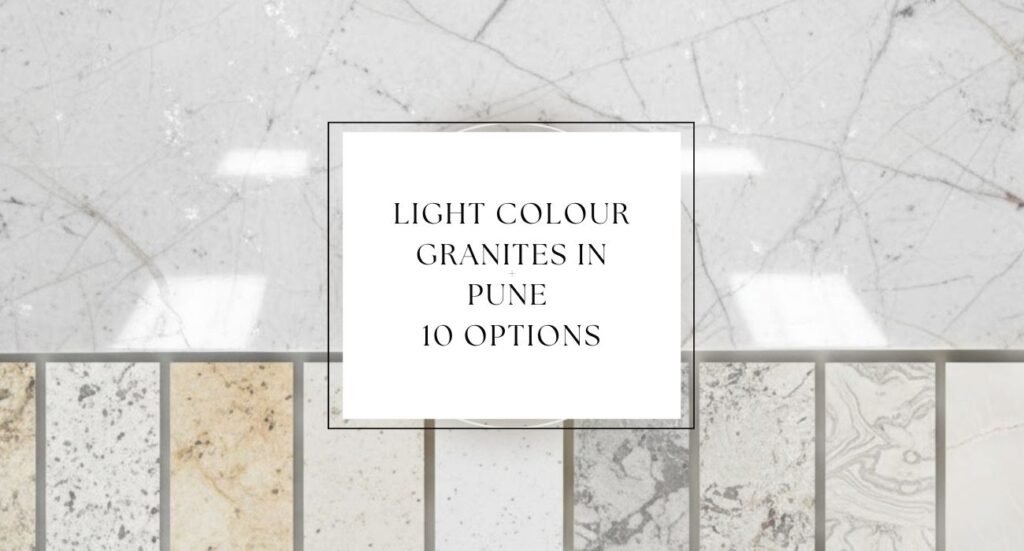
Light Colour Granites in Pune | 10 Options with Prices