

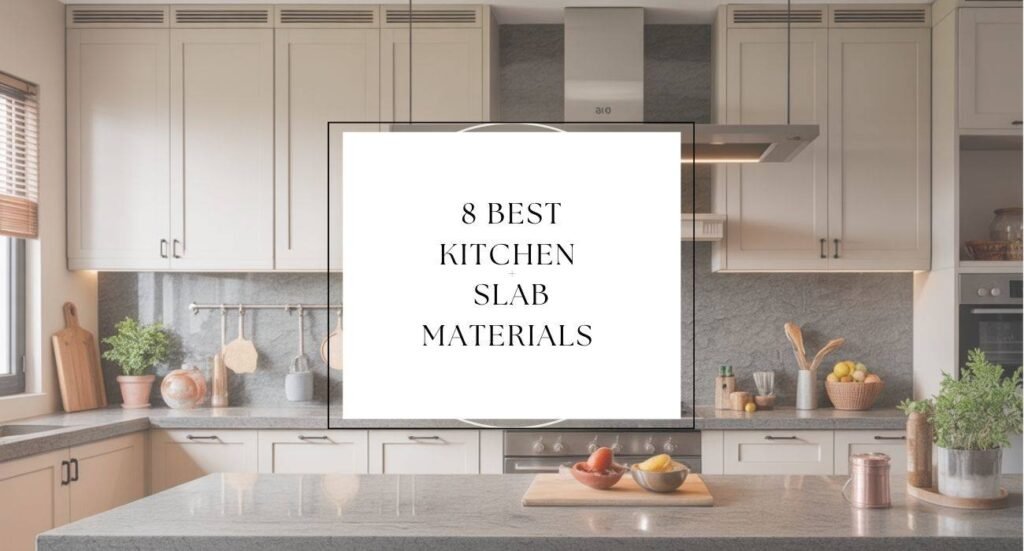
Indian kitchens not only form a part of the overall house aesthetics, but also are the most functional spaces in a home. They are the hubs for heavy and frequent cooking using oils, turmeric, spices, coffee, and other ingredients prone to staining the slab.
In this case, choosing the right stone slab becomes critical.
The best kitchen stone materials for Indian kitchens are:
1. Granite
2. Quartz
3. Quartzite
4. Sintered Stone
5. Corian
6. Metal (Stainless Steel/Brass/Copper)
7. Glass
8. Concrete
With a wide range of materials in varieties like quartz, granite, sintered stone, etc., selecting the most durable and suitable slabs is the key. In addition to durability, the right colour, thickness, and heat resistance are also important.
8 Best Kitchen Slab Materials & Prices
| Material | Type | Image | Price Range | Chat Link | Get Exact Price |
|---|---|---|---|---|---|
| Granite | Natural | 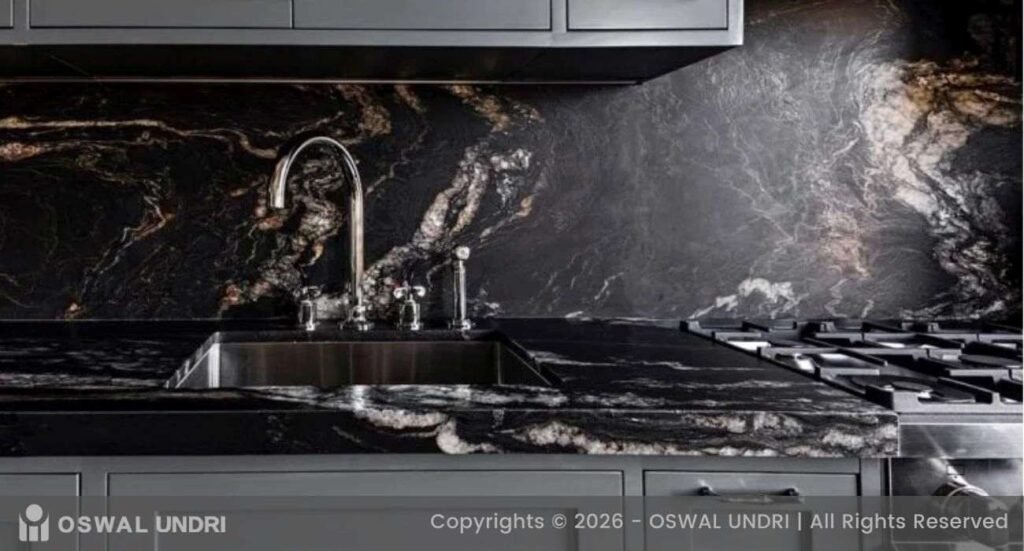 | INR 70 – INR 300+ per sq. ft. | Chat Now | Exact Price |
| Quartz | Engineered | 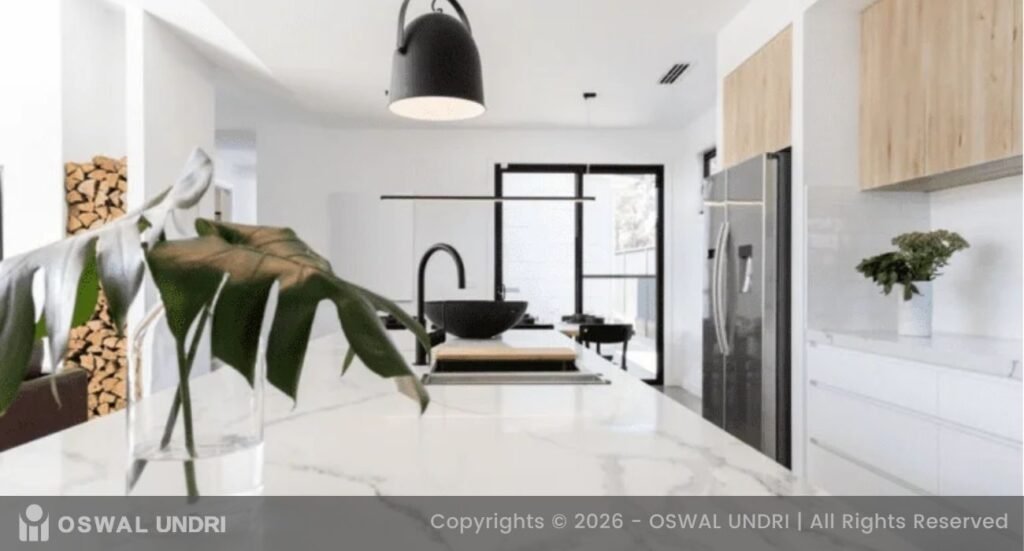 | INR 240 – INR 550+ per sq. ft. | Chat Now | Exact Price |
| Quartzite | Natural | 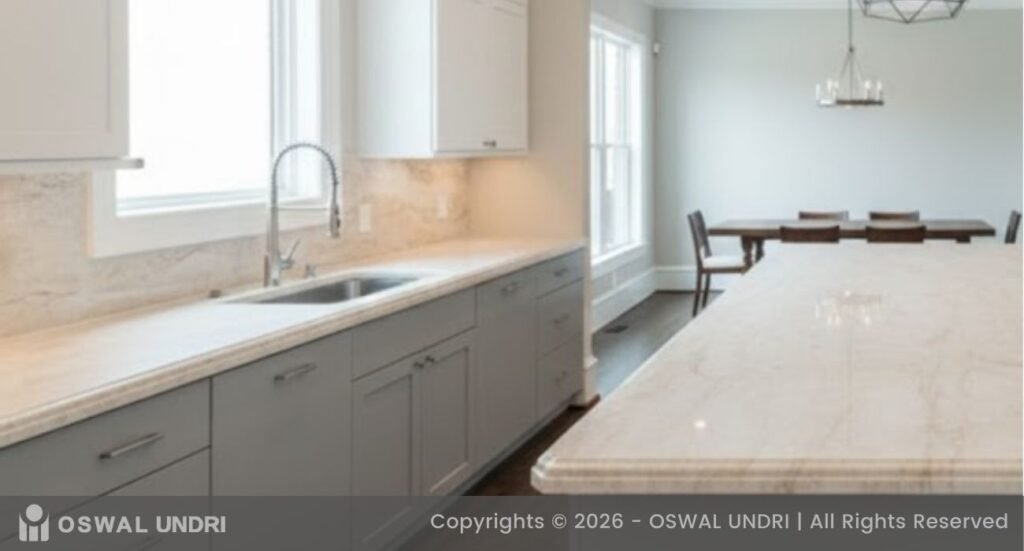 | INR 350 – INR 2000+ per sq. ft. | Chat Now | Exact Price |
| Sintered Stone | Engineered | 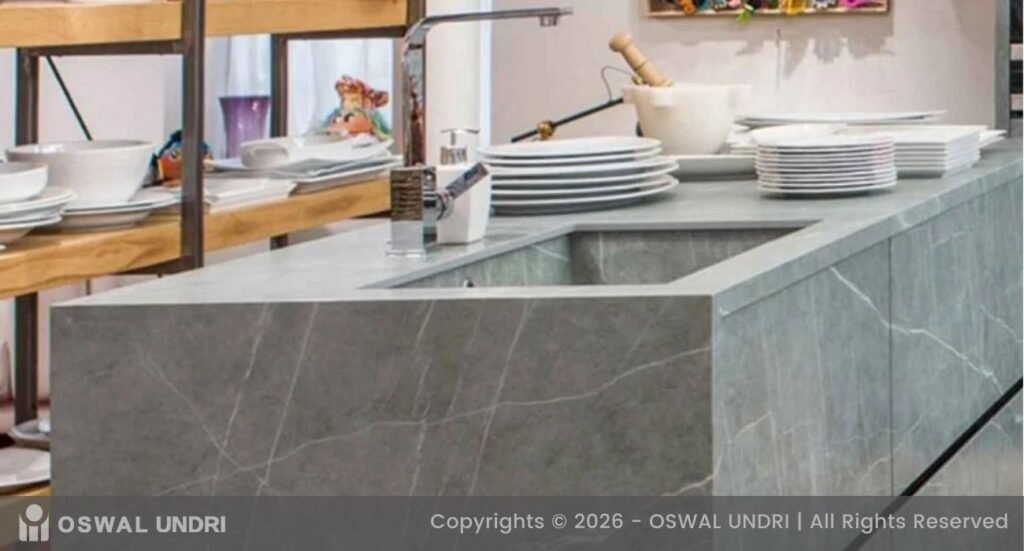 | INR 160 – INR 400 per sq. ft. | Chat Now | Exact Price |
| Corian / Solid Surface | Non-stone Material | 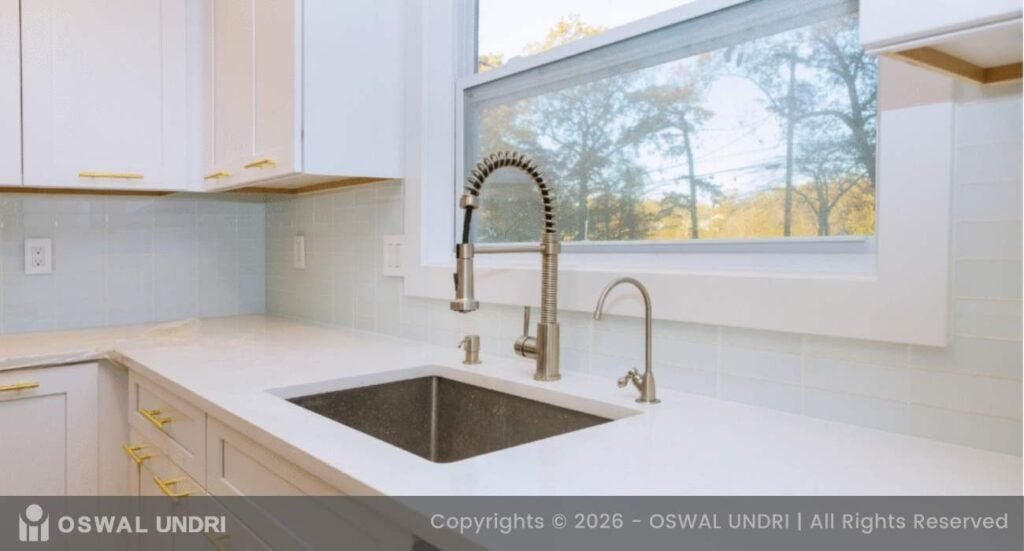 | INR 1000 – INR 1800 per sq. ft. | Chat Now | Exact Price |
| Metal (Stainless Steel/Brass/Copper) | Non-stone Material | 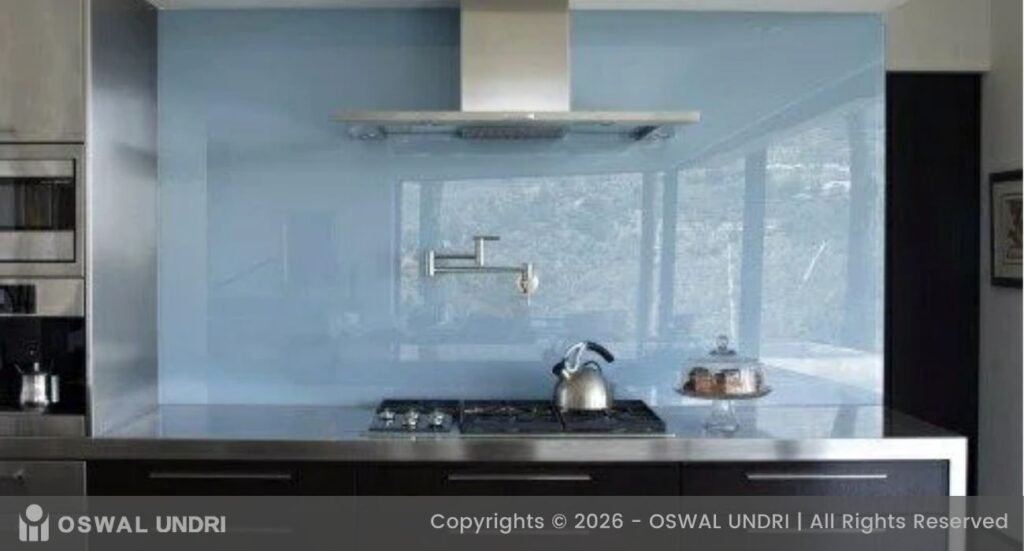 | ₹750 – ₹2500 per sq. ft. | Chat Now | Exact Price |
| Glass (Toughened) | Non-stone Material | 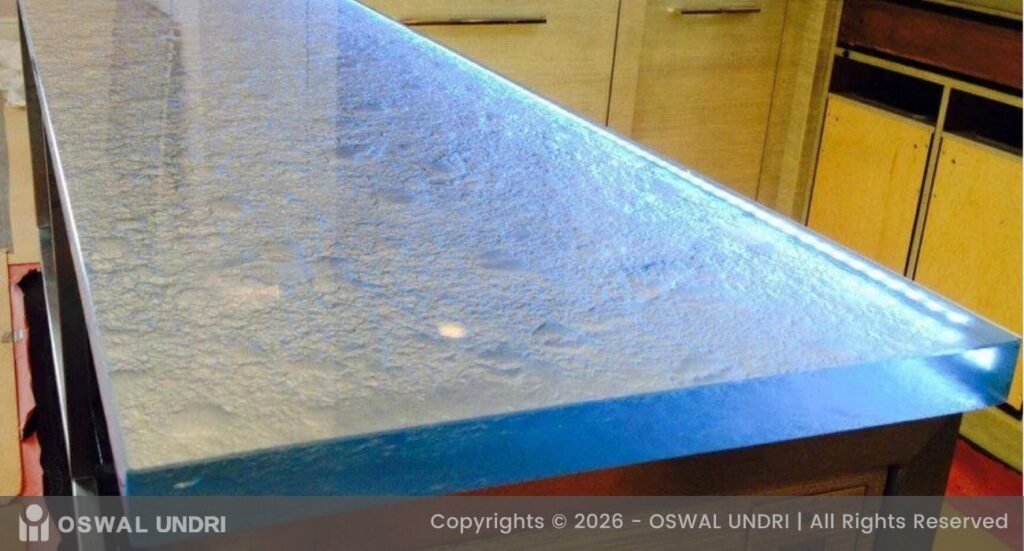 | ₹1,00 – ₹350 per sq. ft. | Chat Now | Exact Price |
| Concrete | Non-stone Material | 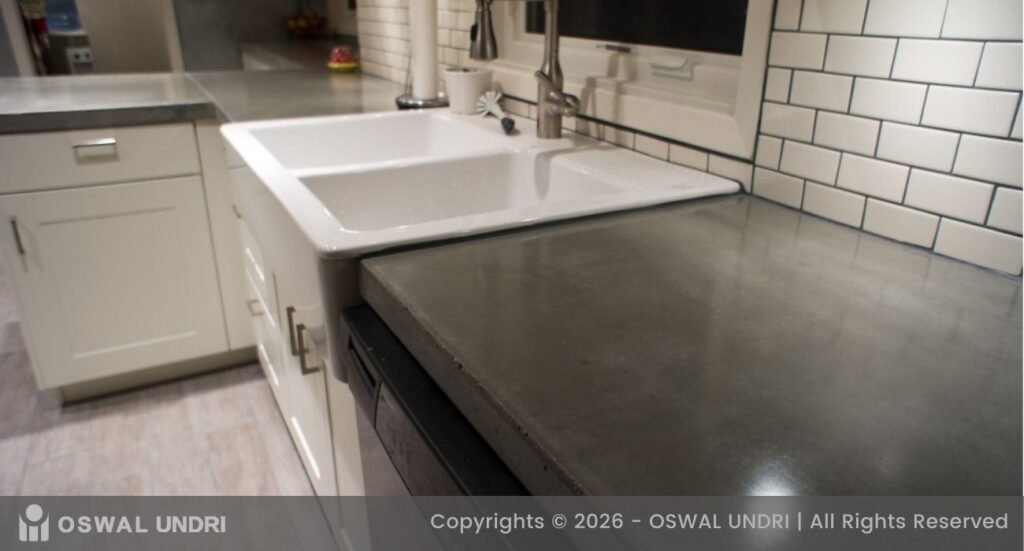 | ₹800 – ₹1,800 per sq. ft. | Chat Now | Exact Price |
In this blogpost, we have explored the best kitchen stone slab materials for Indian kitchens, considering real cooking conditions, durability, and maintenance needs. We compared each material based on stain resistance, heat tolerance, porosity, and longevity to help you make an informed choice. Whether you cook occasionally or run a high-performance Indian kitchen, this guide simplifies the selection process for long-lasting results.
- Understanding the Unique Needs of Indian Kitchens
- Best Stone Slab Materials for Indian Kitchens
- 1. Granite
- Performance Criteria & Ratings
- Standard Thickness of Granite Countertops
- 2. Quartz
- Performance Criteria & Ratings
- Standard Thickness of Quartz Countertops
- 3. Quartzite
- Performance Criteria & Ratings
- Standard Thickness of Quartzite Countertops
- 4. Sintered Stone
- Sintered Stone – Performance Criteria & Ratings
- Standard Thickness of Sintered Stone Countertops
- 5. Corian
- Performance Criteria & Ratings
- Standard Thickness of Corian Countertops
- 6. Metal (Stainless Steel / Brass / Copper)
- Performance Criteria & Ratings
- Standard Thickness of Metal Countertops
- 7. Glass Countertops
- Performance Criteria & Ratings
- Standard Thickness of Glass Countertops
- 8. Concrete Countertops
- Performance Criteria & Ratings
- Standard Thickness of Concrete Countertops
- Performance Criteria for Ideal Kitchen Slab Materials
- How to Select the Countertop Edging Design?
- Countertop Edge Profiles
- Tips to Maintain Countertops
- Key Takeaways
Understanding the Unique Needs of Indian Kitchens
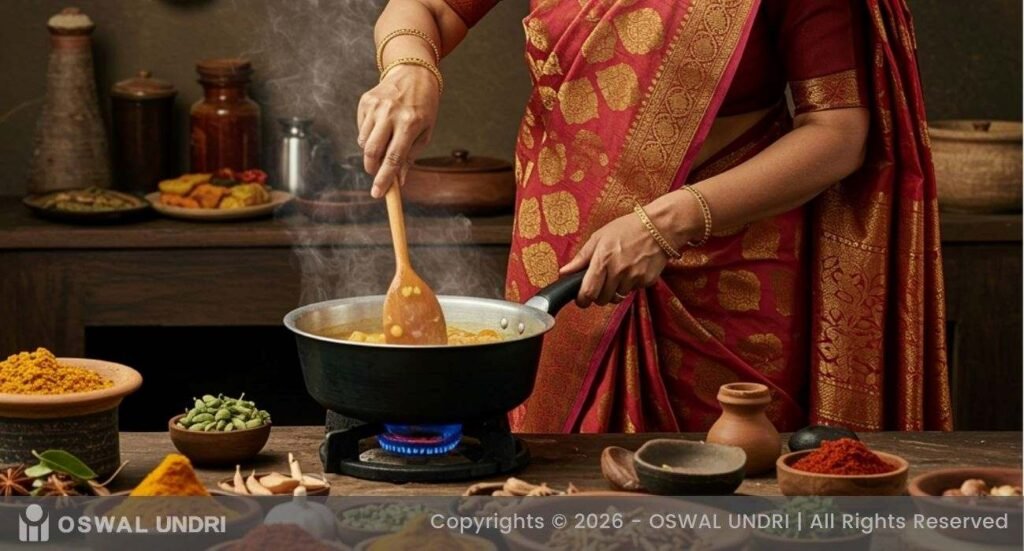
Indian kitchens are high-performance spaces designed for frequent, intensive cooking that involves deep frying, grinding, pressure cooking, and heavy use of oil, spices, turmeric, and coffee. Countertops are constantly exposed to heat, moisture, impact, and staining agents. When materials are chosen without considering these realities, issues such as stains, scratches, chipping, and burn marks typically appear after a few years—not due to defects, but because the surface isn’t suited to Indian cooking demands.
Daily habits like placing hot vessels directly on the slab, chopping without boards, delayed cleaning of spills, frequent washing, and extra load from leaning or resting utensils significantly affect countertop durability. Understanding these usage patterns is essential to selecting a material that can withstand Indian kitchen conditions while maintaining its appearance and performance over time.
Best Stone Slab Materials for Indian Kitchens
Now that we’ve learnt about the typical failures in Indian kitchen countertops and the criteria to choose a material, let’s explore the best stone slab options.
1. Granite
Granite is the Indian homeowner’s favourite choice. Whether it’s about the aesthetics or durability, it serves both purposes with its natural properties.
Performance Criteria & Ratings
| Performance Criteria | Evaluation | Rating |
|---|---|---|
| Stain Resistance | Resists oil, turmeric & coffee when sealed | ★★★★☆ |
| Scratch Resistance | Knife-safe surface | ★★★★★ |
| Heat Resistance | Hot vessels safe | ★★★★★ |
| Porosity | Low, needs periodic sealing | ★★★★☆ |
| Longevity | 15–25+ years | ★★★★★ |
| Maintenance | Easy, low effort | ★★★★☆ |
Pros and Cons
| Pros | Highly durable, heat resistant, scratch resistant, stain resistant, low maintenance, wide colour range |
| Cons | High upfront cost, requires periodic sealing |
Standard Thickness of Granite Countertops
| Thickness | Application |
| 15 mm | Primarily used for kitchen backsplash |
| 17-18 mm | Light-use kitchens |
| 20 mm | Ideal for Indian kitchens |
| 30 mm | For luxury kitchens or countertops with large spans and overhangs |
Where Does Granite Work the Best?
- Kitchens with daily and heavy cooking.
- Both indoor and outdoor kitchens.
- Kitchens where hot vessels are directly placed on the countertop.
- Households involving direct cutting on the counters, exposed to turmeric, oil, or multipurpose counters.
2. Quartz
Quartz is an engineered stone manufactured by binding the natural quartz crystals with pigments and resins. In the modern age, it has risen as one of the most popular kitchen slab materials owing to its high durability, low maintenance, and uniformity in its aesthetics.
Performance Criteria & Ratings
| Performance Criteria | Evaluation | Rating |
|---|---|---|
| Stain Resistance | Non-porous, stain-proof | ★★★★★ |
| Scratch Resistance | Highly scratch resistant | ★★★★☆ |
| Heat Resistance | Heat pads required | ★★☆☆☆ |
| Porosity | Completely non-porous | ★★★★★ |
| Longevity | Long-lasting | ★★★★☆ |
| Maintenance | Very low | ★★★★★ |
Different Designs of Quartz
| Variety of Quartz | Visual Features |
| Sparkle | Sophisticated design with shimmering flecks |
| Plain | Minimalistic design with simplicity and uniform colour |
| Multicolour | A blend of several tones and patterns for statement-making countertops |
| Carrara | Resembles Carrara marble with grey tones and a soft veining pattern |
| Calacatta | Mimics Italian marble with a white base flaunting bold veins |
Pros and Cons
| Pros | Uniform appearance, non-porous, stain resistant, scratch resistant, low maintenance |
| Cons | Not heat resistant; hot vessels can cause burn marks |
Standard Thickness of Quartz Countertops
| Thickness | Application |
| 15 mm | Light-weight quartz works for projects associated with cost-cutting |
| 18 mm | Most popular choice for moderate weight, ample thickness, and ease of installation |
| 20 mm | Most durable, but it adds to the weight |
Where Does Quartz Work the Best?
- Kitchens with moderate cooking intensity.
- Kitchen designs demand uniformity in pattern and colour.
- Homes using heat pads to place hot vessels.
3. Quartzite
Quartzite is another naturally occurring stone derived from sandstone. While it’s often confused with quartz, it’s important to understand that both are different, with quartzite exhibiting excellent heat-resistant properties unlike quartz.
While its excellent properties make it comparable to granite, its high cost is the primary reason for its limited popularity.
Performance Criteria & Ratings
| Performance Criteria | Evaluation | Rating |
|---|---|---|
| Stain Resistance | Good when sealed | ★★★★☆ |
| Scratch Resistance | Extremely hard | ★★★★★ |
| Heat Resistance | Excellent | ★★★★★ |
| Porosity | Low–moderate, sealing required | ★★★★☆ |
| Longevity | Extremely durable | ★★★★★ |
| Maintenance | Moderate | ★★★☆☆ |
Pros and Cons
| Pros | Natural beauty, extremely durable, heat resistant, scratch resistant |
| Cons | Expensive, limited colour options, requires periodic sealing |
Standard Thickness of Quartzite Countertops
| Thickness | Application |
| 20 mm | Ideal for vertical surfaces |
| 30 mm | For heavy-use kitchen countertops, islands, and bars |
Where Does Quartzite Work the Best?
- Indian luxury kitchens with heavy cooking.
- Homeowners aiming for the aesthetics of marble but with higher durability. A 30 mm-thick quartzite countertop performs the best.
- Countertops in the hot zones of the kitchen.
4. Sintered Stone
Sintered stone is one of the most versatile engineered stones. Whether it’s the look of wood or marble, this innovative material perfectly mimics the look.
It is crafted with high heat intensity and pressure on a mix of minerals like quartz, granite, porcelain, and recycled glass. Since these slabs are engineered without binders, the end product is exceptionally strong and non-porous.
Sintered Stone – Performance Criteria & Ratings
| Performance Criteria | Evaluation | Rating |
|---|---|---|
| Stain Resistance | Fully stain-proof | ★★★★★ |
| Scratch Resistance | Excellent | ★★★★★ |
| Heat Resistance | Withstands direct heat | ★★★★★ |
| Porosity | Completely non-porous | ★★★★★ |
| Longevity | Exceptional | ★★★★★ |
| Maintenance | Minimal | ★★★★★ |
Pros and Cons
| Pros | Heat resistant, scratch resistant, stain resistant, hygienic, suitable for indoor & outdoor use |
| Cons | High cost, cannot be repaired if chipped or cracked |
Standard Thickness of Sintered Stone Countertops
| Thickness | Application |
| 15 mm | Ideal for moderately-used kitchens |
| 20 mm | Well-suited for kitchens with heavy cooking |
Where Does Sintered Stone Work the Best?
- Ultra-modern and luxury Indian kitchens.
- Homes prioritising hygienic countertops.
- Indian kitchens with intense cooking.
5. Corian
Corian is an artificial countertop material made from natural minerals and acrylic polymers. It offers a wide range of colours and patterns at an economic price.
Performance Criteria & Ratings
| Performance Criteria | Evaluation | Rating |
|---|---|---|
| Stain Resistance | Moderate | ★★★☆☆ |
| Scratch Resistance | Scratches with sharp tools | ★★☆☆☆ |
| Heat Resistance | Poor | ★☆☆☆☆ |
| Porosity | Non-porous | ★★★★★ |
| Longevity | Moderate | ★★★☆☆ |
| Maintenance | Repairable but frequent care | ★★★☆☆ |
Pros and Cons
| Pros | Seamless finish, budget-friendly, repairable surface |
| Cons | Poor heat resistance, prone to scratches |
Standard Thickness of Corian Countertops
| Thickness | Application |
| 6 mm | For backsplash |
| 12 mm | A standard pick for kitchen countertops |
| 19 mm | More durable slabs are used for heavy-use kitchens |
Where Does Corian Work the Best?
- Display kitchens.
- Kitchens with light cooking.
6. Metal (Stainless Steel / Brass / Copper)
Metal countertops are commonly seen in commercial kitchens and are gaining traction in modern Indian homes.
Performance Criteria & Ratings
| Performance Criteria | Evaluation | Rating |
|---|---|---|
| Stain Resistance | Non-absorbent | ★★★★★ |
| Scratch Resistance | Scratches visible | ★★☆☆☆ |
| Heat Resistance | Excellent | ★★★★★ |
| Porosity | Non-porous | ★★★★★ |
| Longevity | Very long-lasting | ★★★★★ |
| Maintenance | Easy but polishing needed | ★★★★☆ |
Pros and Cons
| Pros | Seamless finish, budget-friendly, repairable surface |
| Cons | Poor heat resistance, prone to scratches |
Standard Thickness of Metal Countertops
| Thickness | Application |
| 1–3 mm | Residential kitchens |
| 4–6 mm | Commercial kitchens |
Where Do Metal Countertops Work the Best?
- Professional-style kitchens
- Heavy cooking environments
- Minimalist or industrial interiors
7. Glass Countertops
Glass countertops are made using tempered glass and are primarily aesthetic-driven choices.
Performance Criteria & Ratings
| Performance Criteria | Evaluation | Rating |
|---|---|---|
| Stain Resistance | Non-porous | ★★★★★ |
| Scratch Resistance | Prone to scratches | ★★☆☆☆ |
| Heat Resistance | Sensitive to thermal shock | ★★☆☆☆ |
| Porosity | Non-porous | ★★★★★ |
| Longevity | Breakage risk | ★★☆☆☆ |
| Maintenance | Easy cleaning | ★★★★☆ |
Pros and Cons
| Pros | Sleek modern appearance, non-porous, stain resistant |
| Cons | Poor impact resistance, scratch prone, sensitive to heat and thermal shock |
Standard Thickness of Glass Countertops
| Thickness | Application |
| 12–19 mm | Light-use kitchens |
Where Do Glass Countertops Work the Best?
- Display kitchens
- Contemporary homes
- Low-usage spaces
8. Concrete Countertops
Concrete countertops offer a raw, industrial look and can be custom-cast.
Performance Criteria & Ratings
| Performance Criteria | Evaluation | Rating |
|---|---|---|
| Stain Resistance | Needs sealing | ★★☆☆☆ |
| Scratch Resistance | Moderate | ★★★☆☆ |
| Heat Resistance | Excellent | ★★★★★ |
| Porosity | Highly porous | ★★☆☆☆ |
| Longevity | Structurally strong | ★★★☆☆ |
| Maintenance | Frequent sealing | ★★☆☆☆ |
Pros and Cons
| Pros | Highly customisable, heat resistant, raw industrial appeal |
| Cons | Highly porous, requires frequent sealing, prone to hairline cracks |
Standard Thickness of Concrete Countertops
| Thickness | Application |
| 40–50 mm | Industrial-style kitchens |
Where Do Concrete Countertops Work the Best?
- Industrial or rustic kitchens
- Custom-designed spaces
Performance Criteria for Ideal Kitchen Slab Materials
Let’s understand the key factors to consider while picking a kitchen stone slab material.
Stain Resistance
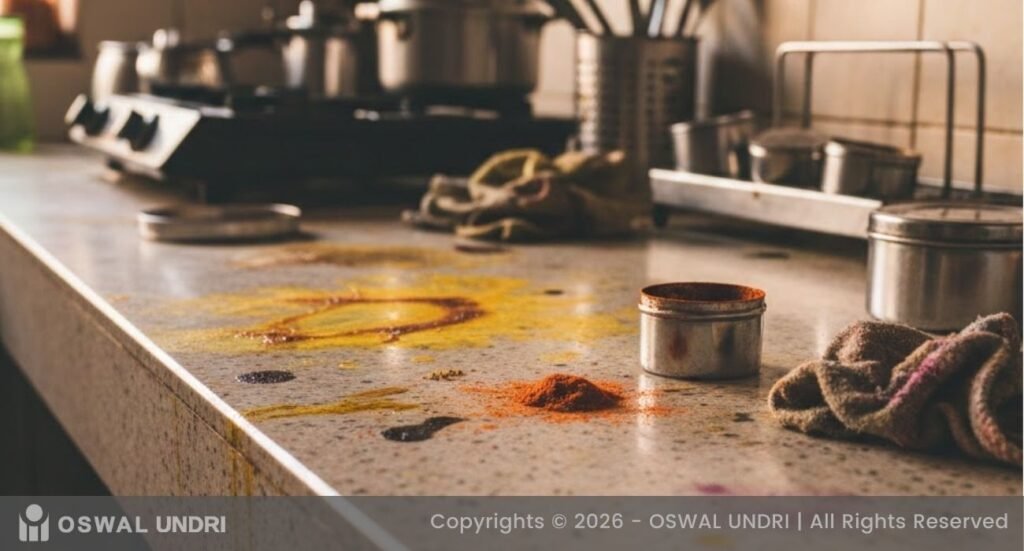
Indian cooking is rich in colour and that’s exactly what puts countertops to the test. From turmeric spills to coffee rings and oil splashes, your slab must retain its colour and finish over the years.
Consider:
- Will turmeric or coffee leave permanent marks?
- Can oil seep into the surface?
- Will the slab look the same after years of daily cooking?
If your kitchen sees frequent use of strong spices and oils, choosing a naturally stain-resistant or non-porous material is essential.
Scratch Resistance

In many Indian homes, chopping vegetables directly on the countertop is a daily habit. Add heavy utensils and constant movement, and scratches become inevitable—unless the material is strong enough.
Consider:
- Can you chop directly on the slab without visible marks?
- Will minor impacts cause chipping or surface damage?
A good kitchen stone should handle knives, pressure, and everyday wear without losing its finish.
Heat Resistance
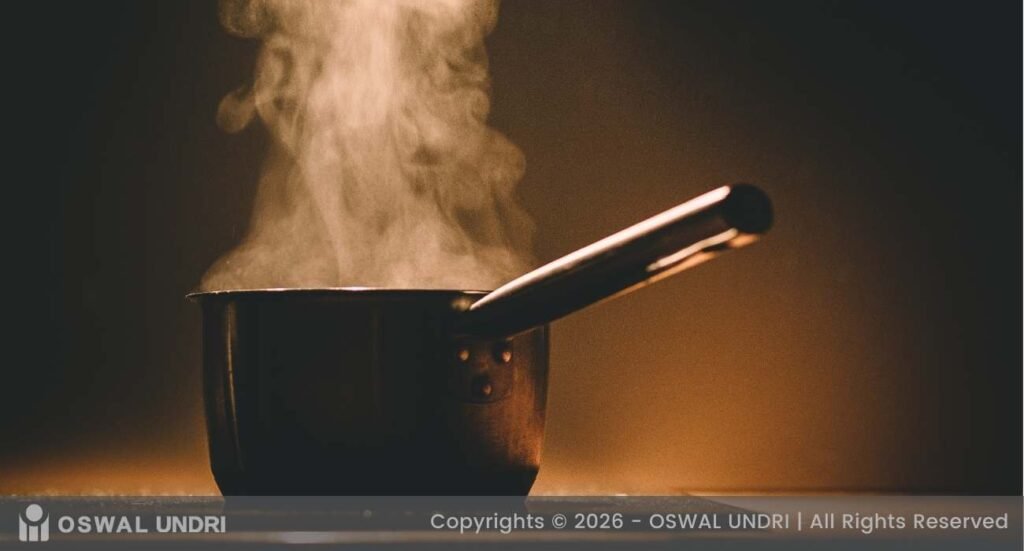
From pressure cookers to hot kadais, Indian kitchens involve frequent contact with high heat. Your countertop should withstand sudden temperature changes without cracking or burning.
Consider:
- Will placing hot vessels leave burn marks?
- Can the slab handle heat without discolouration?
Heat-resistant stones protect your countertop from long-term damage and preserve its appearance.
Porosity
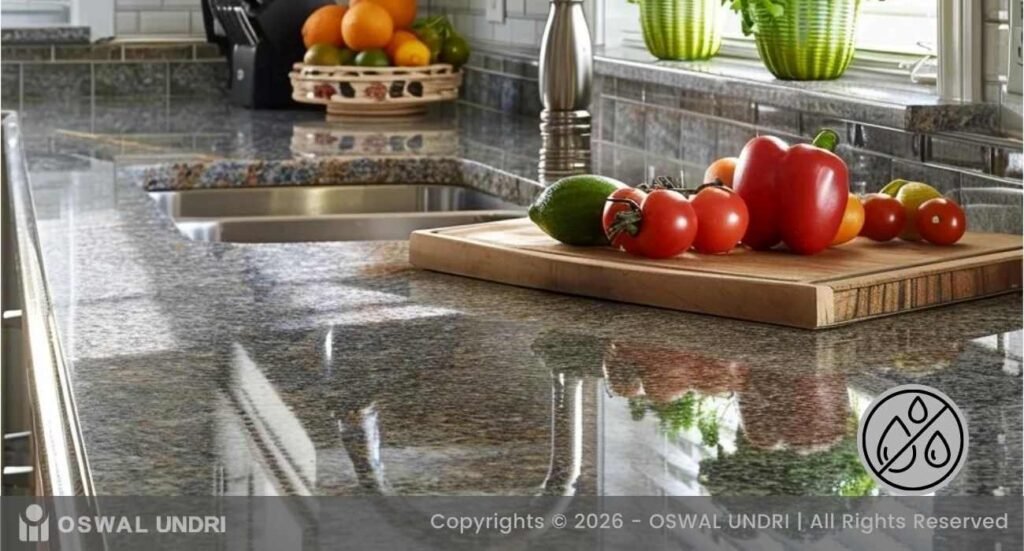
Porosity determines how much liquid a stone absorbs. In Indian kitchens—where oil, water, and cleaning agents are used frequently—low or zero porosity is crucial.
Check for:
- Does the material require regular sealing?
- Can it resist water and oil absorption?
Low-porosity surfaces prevent deep stains, reduce bacterial growth, and make cleaning effortless.
Longevity
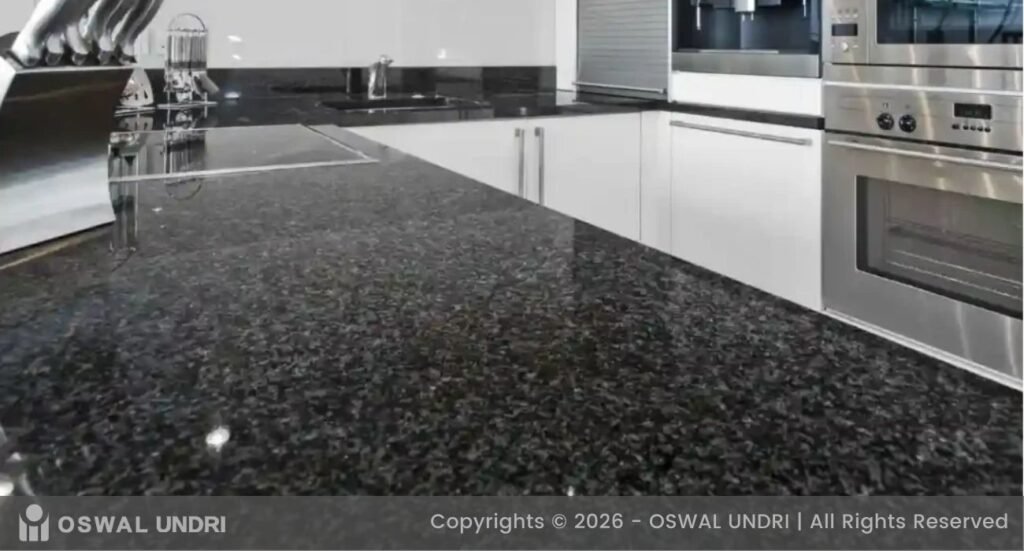
Kitchen countertops aren’t something you replace every few years. They should retain their strength, colour, and structure even after prolonged use.
Consider:
- Will the slab age gracefully?
- Can it maintain its appearance after years of heavy cooking?
Choosing a durable stone ensures your kitchen looks good and performs well for decades.
Speak to our stone expert and understand how the countertop material will look after several years.
Maintenance Requirements
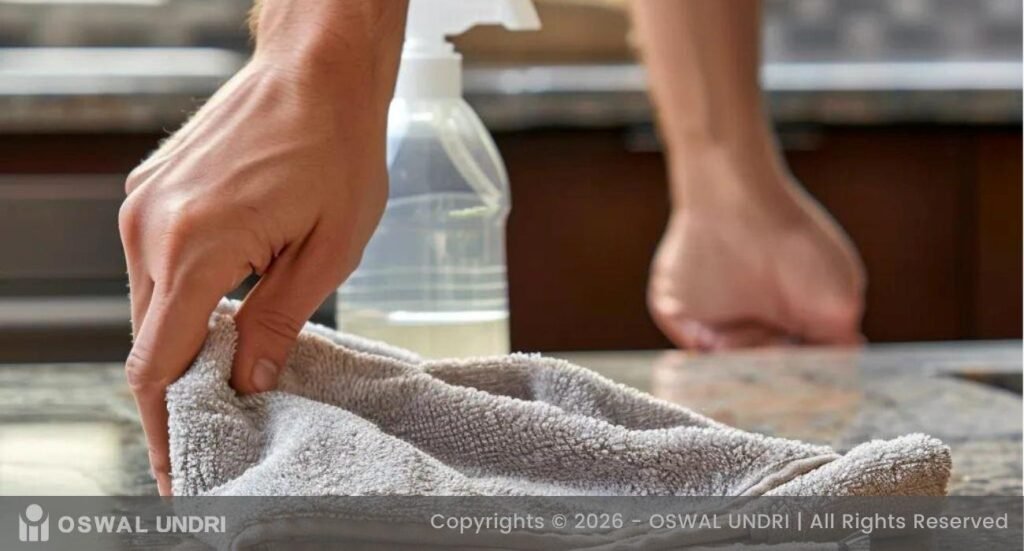
A beautiful countertop shouldn’t come with complicated upkeep. Indian kitchens require frequent cleaning, and the material must withstand daily wiping and mild cleaning agents.
Consider:
- Does it require frequent sealing or polishing?
- Will regular cleaning damage the surface?
Low-maintenance stones save time, effort, and long-term costs making everyday cooking more enjoyable.
How to Select the Countertop Edging Design?
In addition to selecting the right material, choosing the correct edge profile for the countertops is also crucial. From heavy utensils hitting the edge to people leaning against it, the edge profile is the ultimate decision for aesthetics and safety.
Let’s understand different types of edge profiles and their properties.
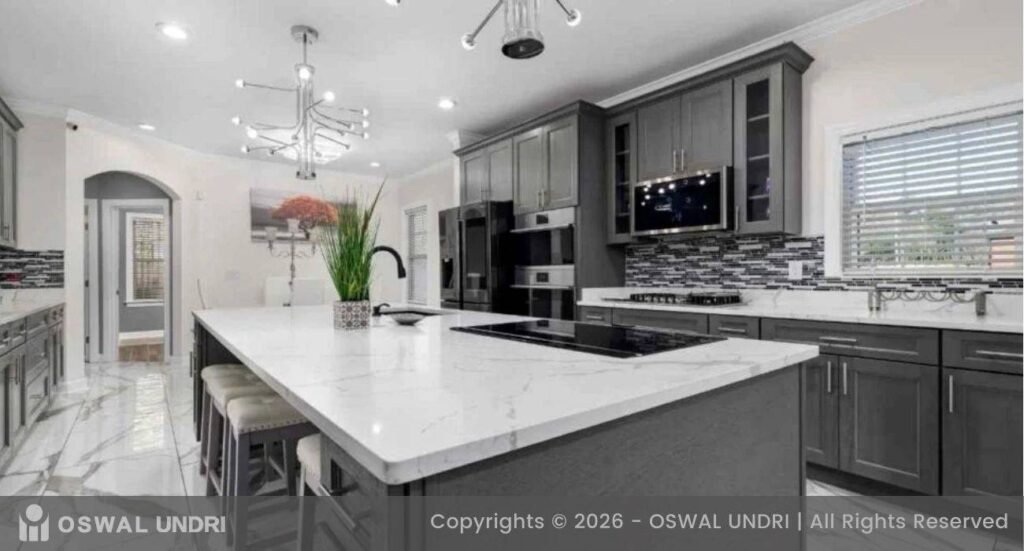
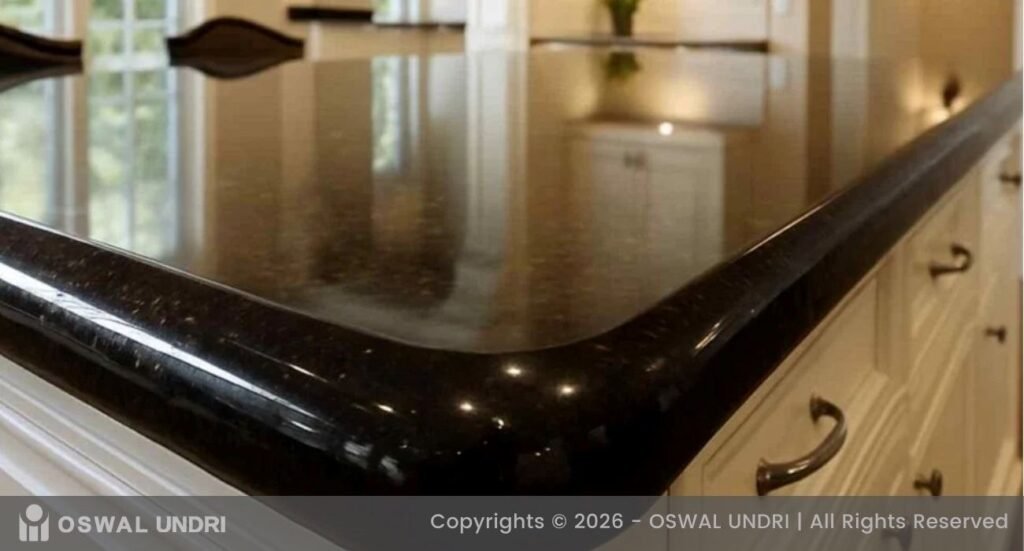
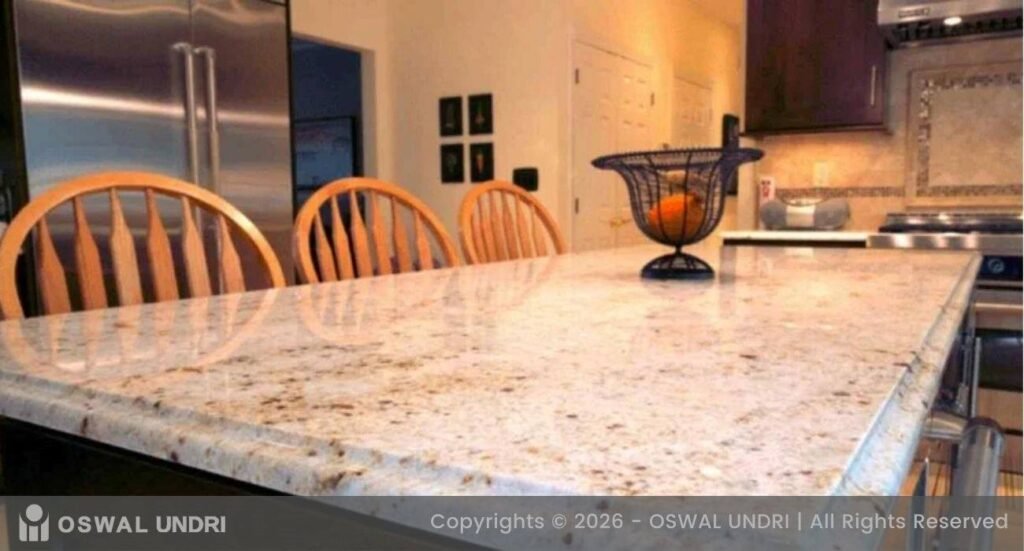
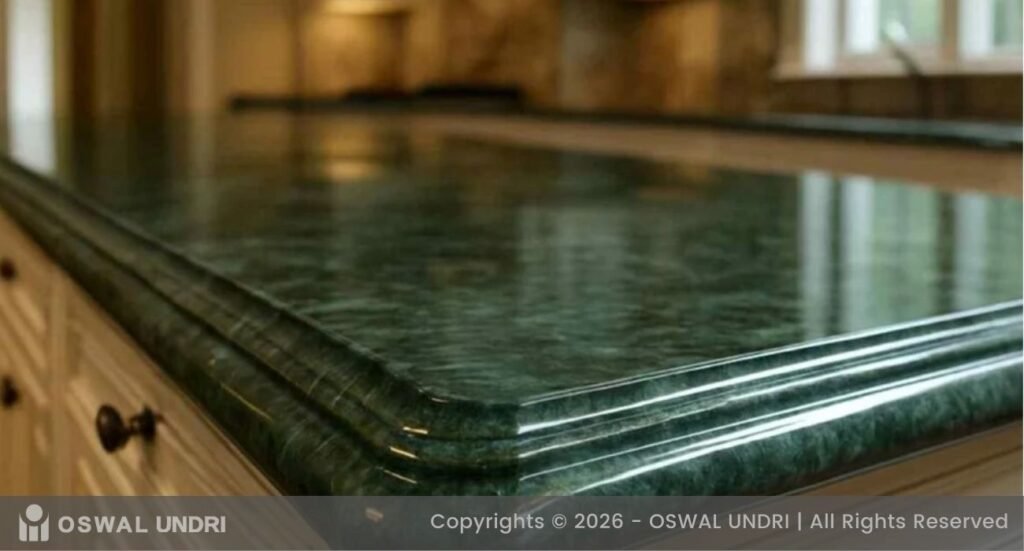
Countertop Edge Profiles
| Edge Profile | Image | Features | Advantages | Application |
| Eased | | The square edge is slightly rounded on the top and bottom | Minimises chipping, safe for elders and children as it has no sharp grooves, a modern look, and is easier to maintain | Best-suited for modern countertops in granite, sintered stone, quartz, and quartzite |
| Bullnose | | The edge is completely rounded | Extremely safe and helps water to run off easily | Mostly used for granite countertops in a traditional kitchen style |
| Bevelled | | The square edge is cut at a 45-degree angle for an angled look | Offers a sharp and contemporary look | Popularly used in quartz, sintered stone and granite countertops |
| Ogee | | S-shaped edge profile | Very decorative and luxurious look | Only suited for show kitchens, as the complicated profile may accumulate dust |
Tips to Maintain Countertops
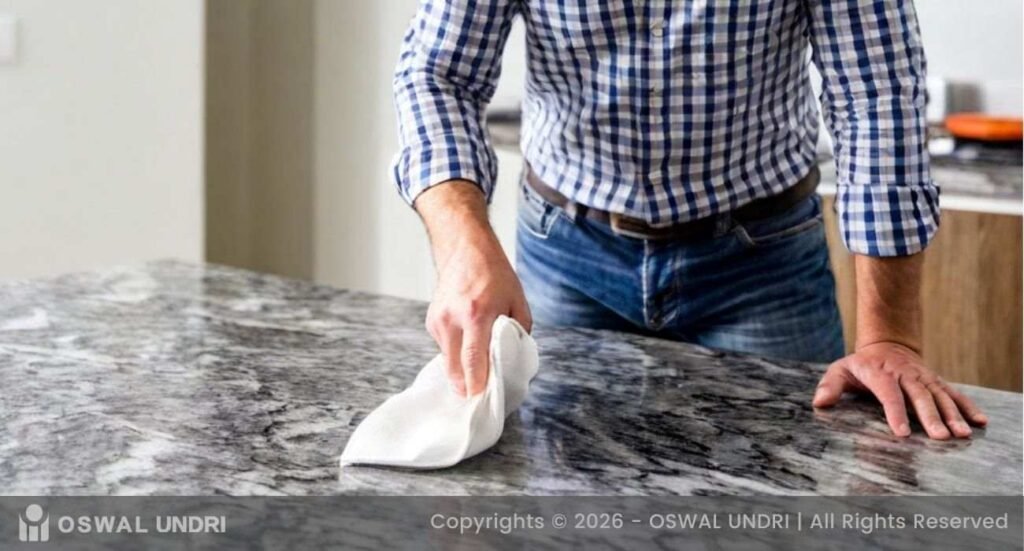
Irrespective of the material you pick for your kitchen countertops, here are the expert tips to maintain them:
- Always work in this order– clean the spill, remove the stain, and seal the top (if required).
- Use mild soap for cleaning the slabs, as exposure to harsh chemical cleaners may lead to damaged surface, discolouration, or patches.
- Use a microfibre cloth for frequent wiping of the slab.
- For countertop materials like Corian or solid surfaces without heat resistance, use heat pads and avoid direct contact of hot vessels with the slab.
- Get your kitchen cleaned by the cleaning professionals once a year.
Key Takeaways
- Selecting the right kitchen stone slab material can be daunting. The finalisation has to take into account the material’s aesthetics, performance, and long-term value.
- When it comes to picking for Indian kitchens, make sure to keep in mind your cooking habits. If you’re planning a material for the display kitchen or kitchens with light use, you can opt for budget-friendly materials like Corian.
- And if your cooking practice involved deep frying, spices, and direct chopping on the countertops, consider choosing among granite, sintered stone, quartz, or quartzite. Understand the properties of each material and take an informed decision.
- Still not sure which material will work the best for you? Connect with our stone experts who’ll guide you through the process by transparently stating pros and cons for each of your options.
Get a free consultation, expert guidance, and a detailed quote tailored to your project needs.
Artificial Kitchen Stone – Best Materials | Price in Pune | White
6 Best Quartz Countertops Brands in Pune | Comparison & Review
Quartz Countertops Price in Pune | Quartz Kitchen Cost
White Granite Price in Pune | 10 Best Options with Price
Steel Grey Granite Price in Pune | 4 Qualities & Price