
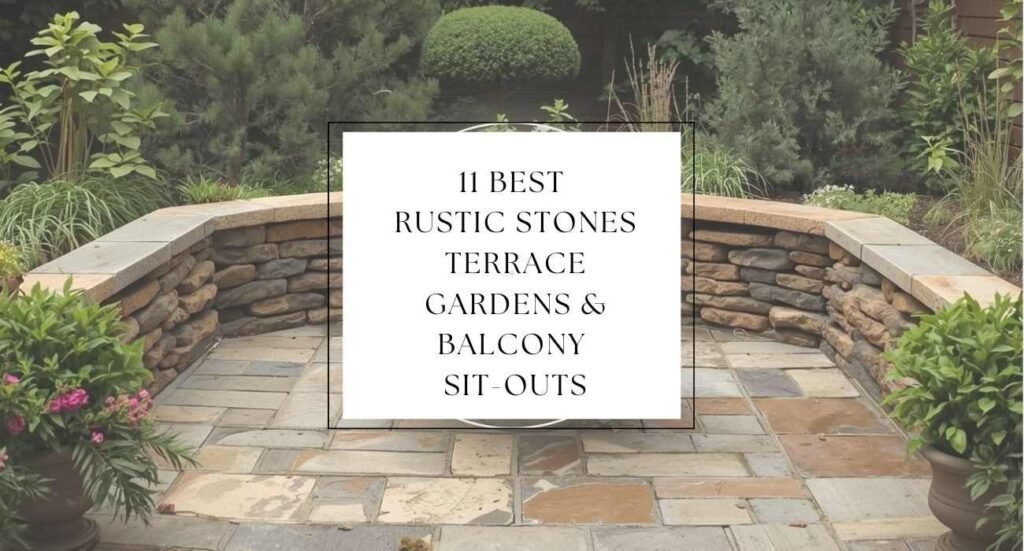
Terrace gardens and balcony sit-outs are exposed to continuous weather variations. Flooring performance is influenced by sun, rain, dust, moisture, and changes in temperature. Although most homeowners use designer tiles because they look good to customers, tiles tend to fail when used outside. Rough natural stones, however, are engineered naturally to withstand environmental pressure.
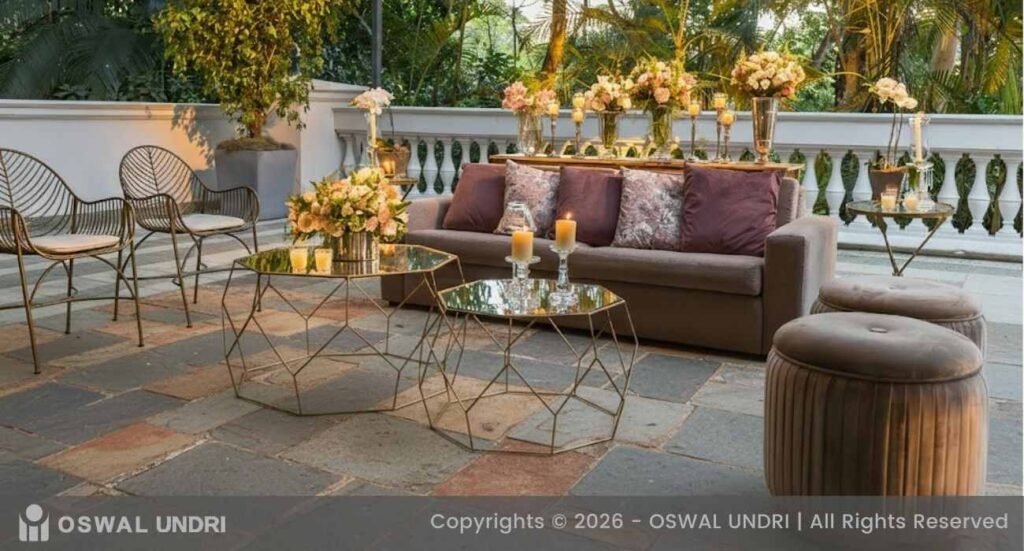
Here’s a list of the 11 Best Rustic Stones for Terrace Gardens and Balcony Sit-outs:
- Kota Stone
- Slate
- Sandstone
- Basalt
- Limestone
- Granite (Flamed / Leathered)
- Quartzite
- Porphyry
- Cuddapah Black
- Cobblestone
- Flagstone
In this blogpost, we have discussed the reasons why rustic stones work better than tiles and have given detailed performance profiles of the 11 Best Rustic Stones to use in the outdoors. It is centred on practicality, safety, durability, and long-term value, not showroom beauty.
- 11 Best Rustic Stones for Terrace Gardens and Balcony Sit-outs
- Why Rustic Stones Perform Better Outdoors Than Tiles
- How Climate Changes the 'Best Stone' Choice
- Why Most Outdoor Stone Failures Are Not Material Faults
- Maintenance Truths – What No Seller Tells You
- Cost vs Value – Thinking in Decades, Not Per Sq. Ft.
- Rustic Stone Performance Comparison
- FAQs
- Key Takeaways
11 Best Rustic Stones for Terrace Gardens and Balcony Sit-outs
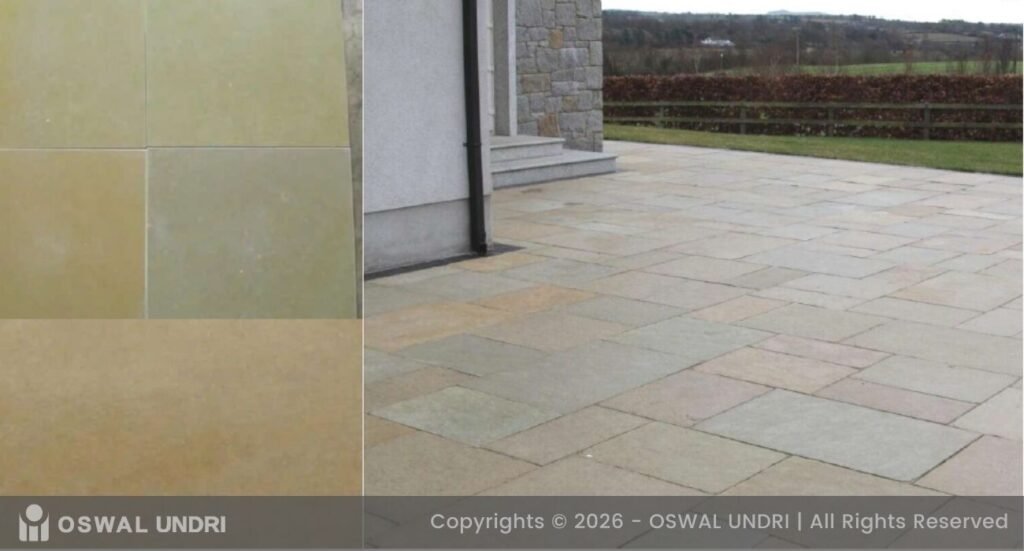
1. Kota Stone – Nature, Refined.
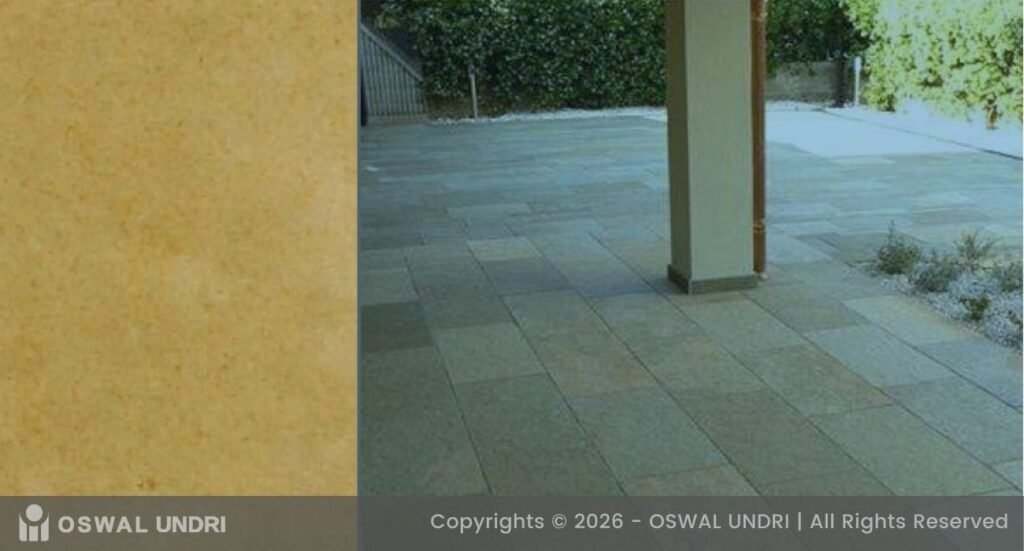
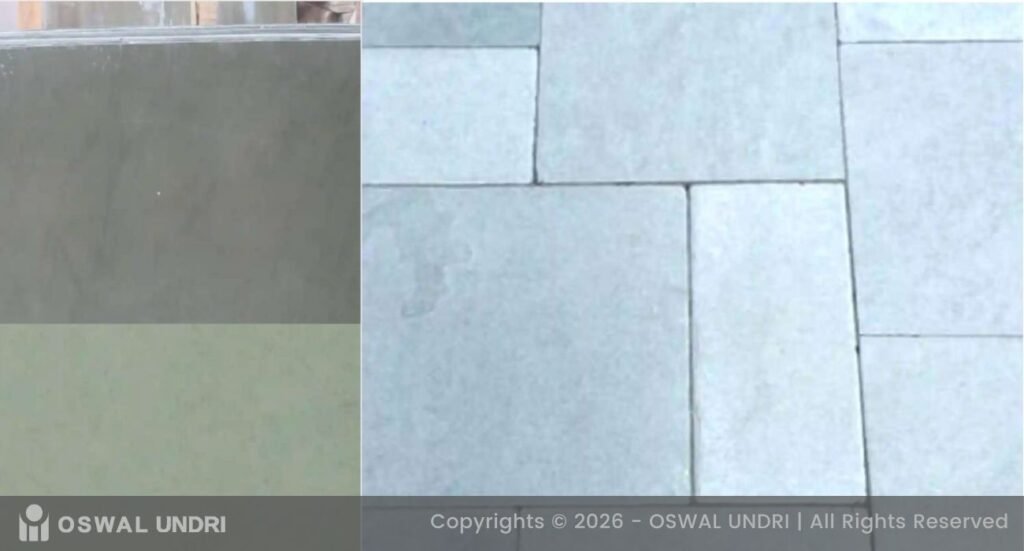
Key Information
| Evaluation Factor | Details |
| Visual Appeal & Surface Character | Natural, earthy tones with a smooth yet natural texture that ages so beautifully and blends well with greenery. |
| Available Sizes, Cuts & Finishes | Available slabs and tiles; finishes are natural, honed, leathered, and polished (matte is preferred outdoors). |
| Durability & Structural Strength | Very tough materials that can withstand heavy pedestrian traffic with little chance of cracking. |
| Slip Resistance in Wet Conditions | Superior in matte or leather finishes, offering a secure grip in the rain. |
| Heat Comfort Under Sun Exposure | Is comparatively cool even during strong sunlight and is ideal to walk in bare feet. |
| Moisture Tolerance & Algae Risk | Good moisture tolerance; algae proliferation is inhibited with a seal. |
| Maintenance Needs & Long-Term Care | Low maintenance; periodic sealing and cleaning keep it in order. |
| Ideal Outdoor Use Scenarios | Terraces, balconies, pathways, and seating areas. |
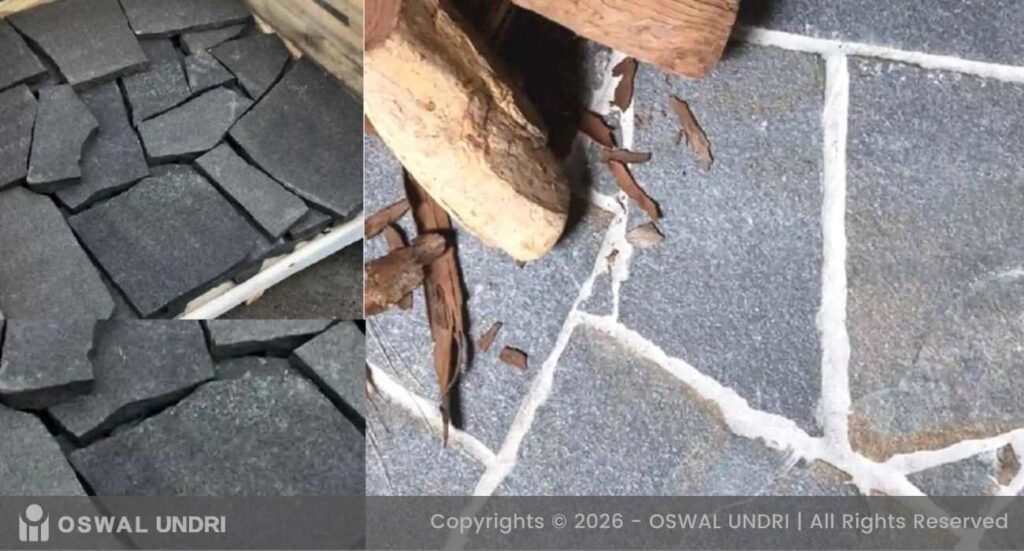
2. Slate – Nature’s Anti-Skid Engineering
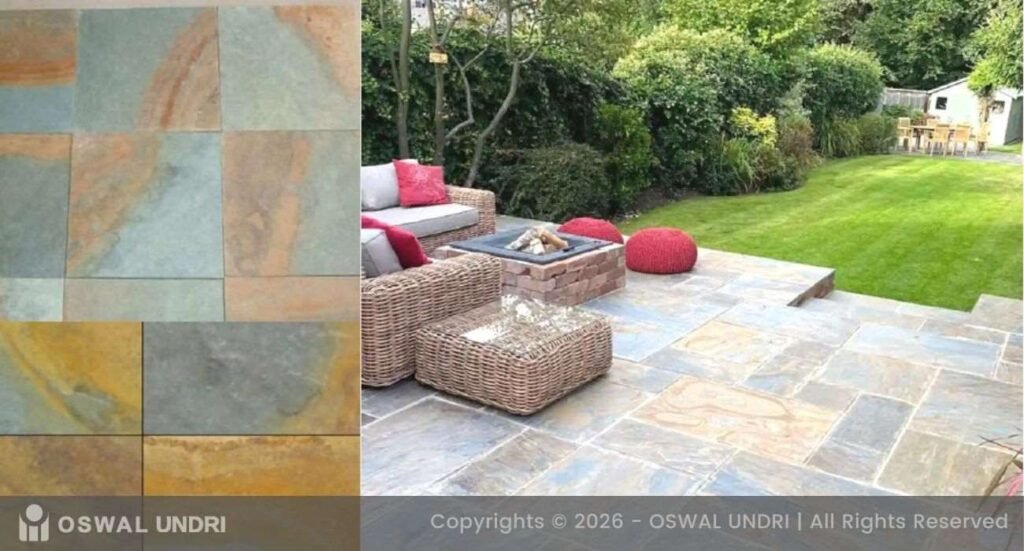
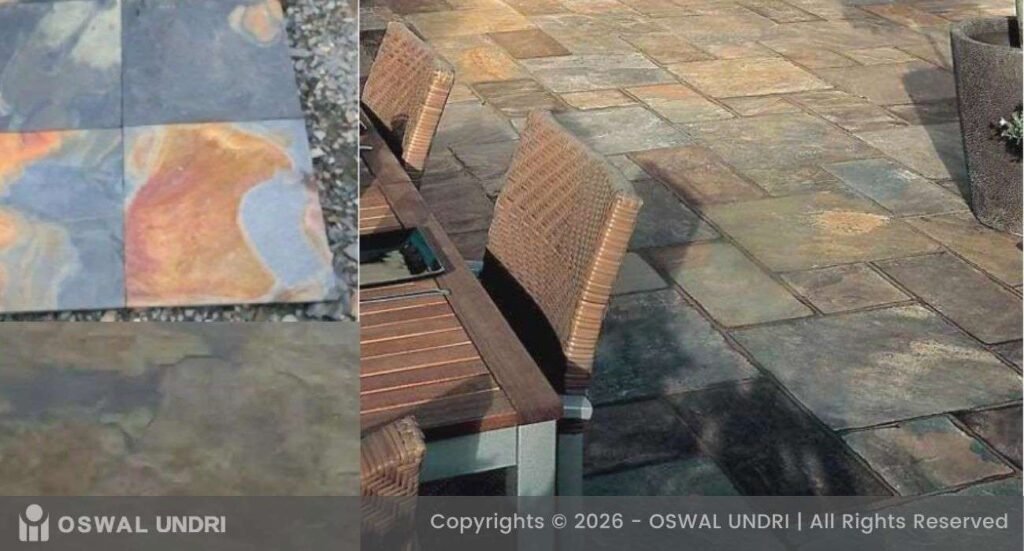
Key Information
| Evaluation Factor | Details |
| Visual Appeal & Surface Character | Various rich textures with layered look, available in grey, black, rust, and green. |
| Available Sizes, Cuts & Finishes | Found in tiles or irregular shapes, typically having a natural cleft finish to give a grip. |
| Durability & Structural Strength | Moderately strong; thicker slabs will do well outdoors. |
| Slip Resistance in Wet Conditions | Excellent natural grip, ideal for rain-exposed areas. |
| Heat Comfort Under Sun Exposure | Some heat is absorbed, but it is manageable. |
| Moisture Tolerance & Algae Risk | Needs sealing to limit absorption of water and proliferation of algae. |
| Maintenance Needs & Long-Term Care | Moderate maintenance with occasional sealing required. |
| Ideal Outdoor Use Scenarios | Steps, balconies, and wet-prone terrace zones. |
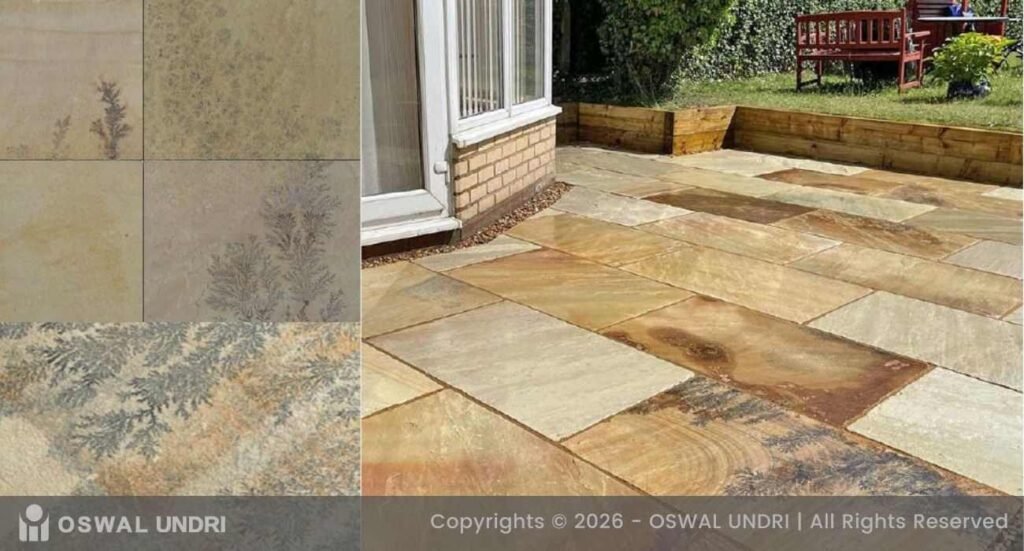
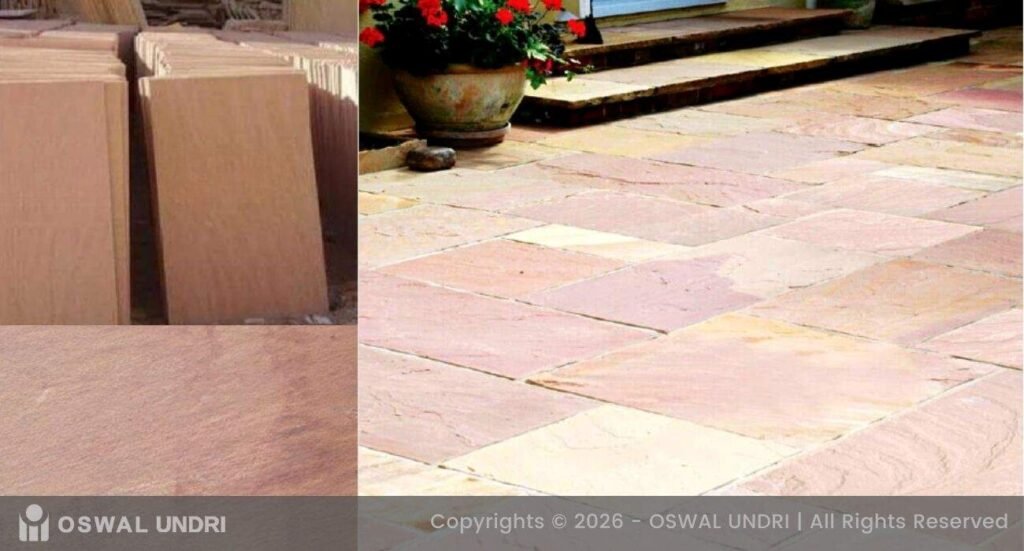
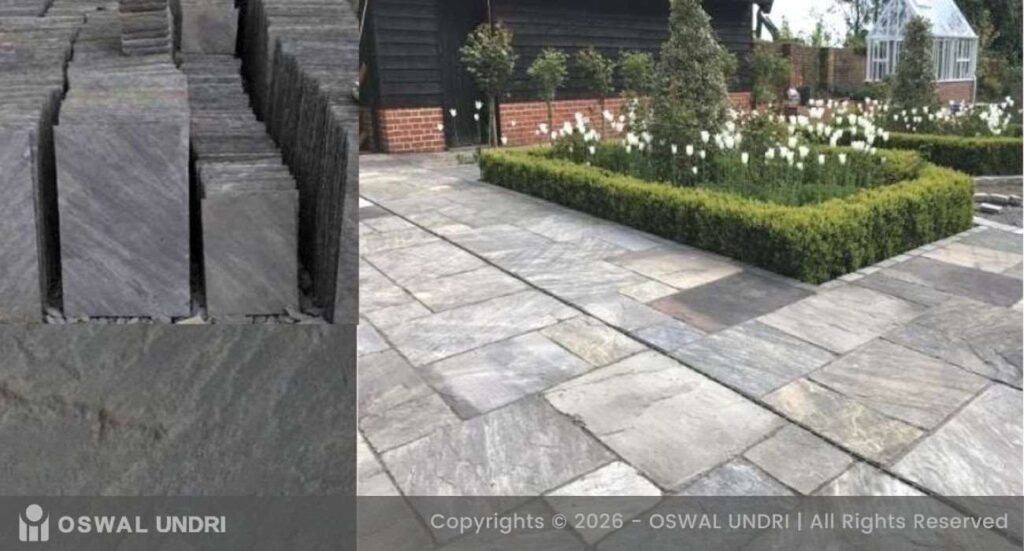
3. Sandstone – The Garden Stone
Key Information
| Evaluation Factor | Details |
| Visual Appeal & Surface Character | Natural and warm tones that blend very well with nature. |
| Available Sizes, Cuts & Finishes | Available in slabs, cobble, and textured to provide a better grip. |
| Durability & Structural Strength | Moderate strength; works best in thicker cuts. |
| Slip Resistance in Wet Conditions | Good traction when textured. |
| Heat Comfort Under Sun Exposure | Stays cool under sunlight. |
| Moisture Tolerance & Algae Risk | Porous; to be sealed to avoid staining. |
| Maintenance Needs & Long-Term Care | Periodic, medium maintenance, sealing. |
| Ideal Outdoor Use Scenarios | Garden sit-outs, pathways, and terraces. |
4. Basalt – Industrial Strength in Rustic Form
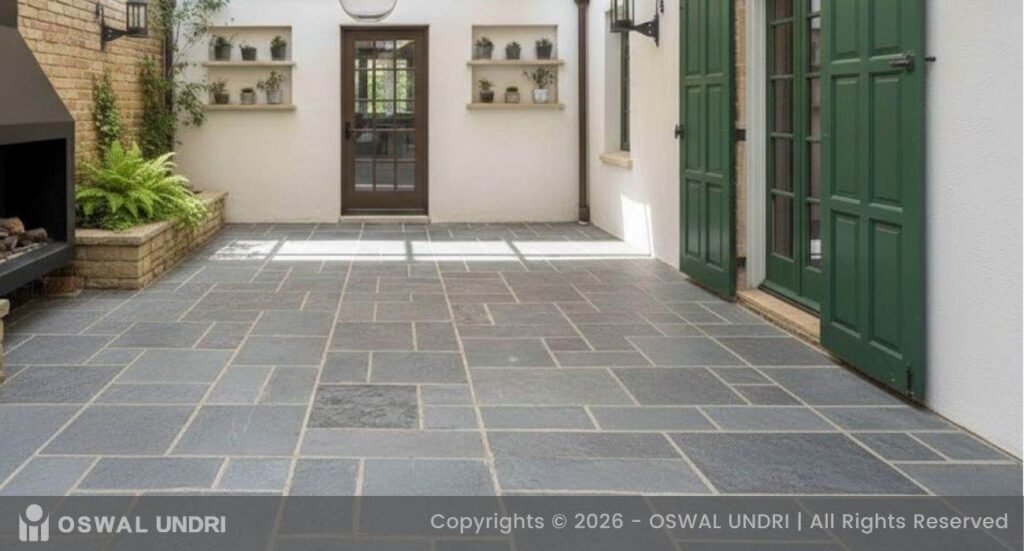
Key Information
| Evaluation Factor | Details |
| Visual Appeal & Surface Character | Dark grey or black with a rough and modern rustic look. |
| Available Sizes, Cuts & Finishes | Available in flamed, brushed, and natural finishes to provide texture. |
| Durability & Structural Strength | Very strong and weather-resistant. |
| Slip Resistance in Wet Conditions | Very good because of textured surfaces. |
| Heat Comfort Under Sun Exposure | Can become warm in peak sun. |
| Moisture Tolerance & Algae Risk | Good moisture protection with low algae risk. |
| Maintenance Needs & Long-Term Care | Minimal maintenance and cleaning. |
| Ideal Outdoor Use Scenarios | High-traffic terraces and commercial outdoor spaces. |
5. Limestone – Soft Stone, Strong Performance
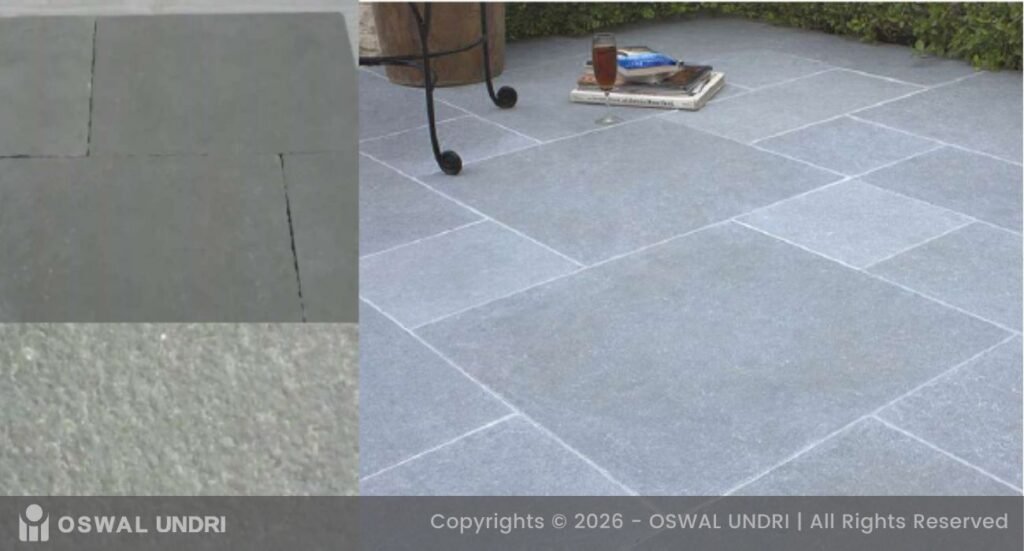
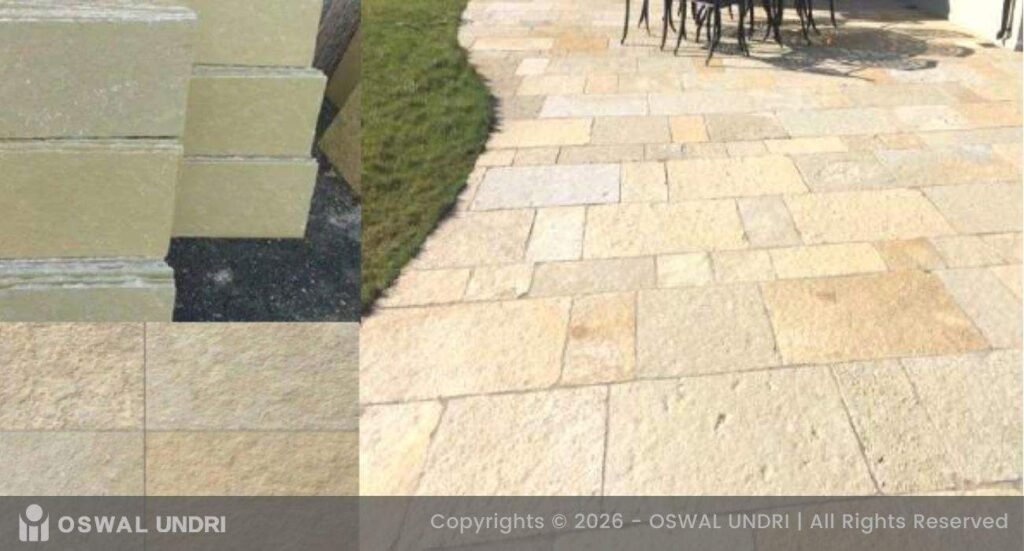
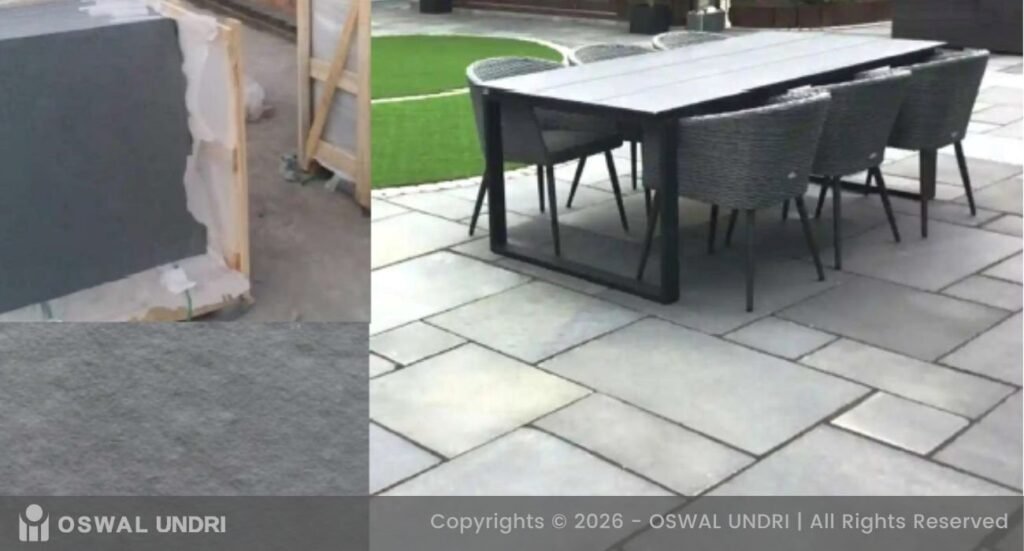
Key Information
| Evaluation Factor | Details |
| Visual Appeal & Surface Character | Light, luxurious colors giving a relaxing outdoor effect. |
| Available Sizes, Cuts & Finishes | Available in tiles and slabs with smooth or textured finishes. |
| Durability & Structural Strength | Medium strength suitable for moderate use. |
| Slip Resistance in Wet Conditions | Good when textured. |
| Heat Comfort Under Sun Exposure | Remains cool in sunlight. |
| Moisture Tolerance & Algae Risk | Sealing is necessary protection against moisture. |
| Maintenance Needs & Long-Term Care | Moderate upkeep needed. |
| Ideal Outdoor Use Scenarios | Covered balconies and light-use terraces. |
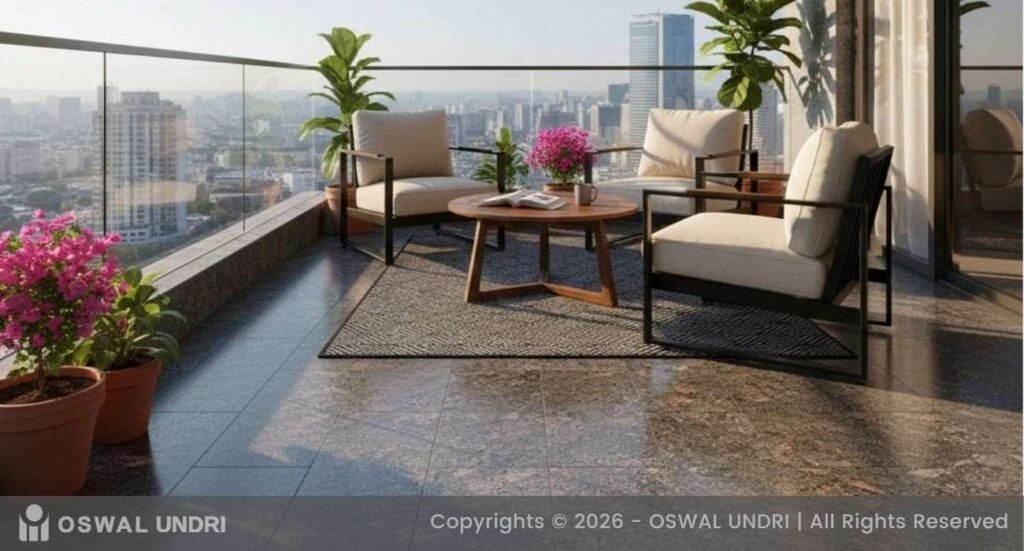
6. Granite (Flamed / Leathered) – Controlled Power
Key Information
| Evaluation Factor | Details |
| Visual Appeal & Surface Character | Strong grain patterns with a textured, rugged finish. |
| Available Sizes, Cuts & Finishes | Available in flamed, leathered, and bush-hammered finishes. |
| Durability & Structural Strength | Extremely durable and impact-resistant. |
| Slip Resistance in Wet Conditions | Excellent grip in flamed finish. |
| Heat Comfort Under Sun Exposure | Overheats easily in direct sunlight. |
| Moisture Tolerance & Algae Risk | Very resistant to moisture damage. |
| Maintenance Needs & Long-Term Care | Minimal maintenance needed. |
| Ideal Outdoor Use Scenarios | High-traffic terraces and stairways. |
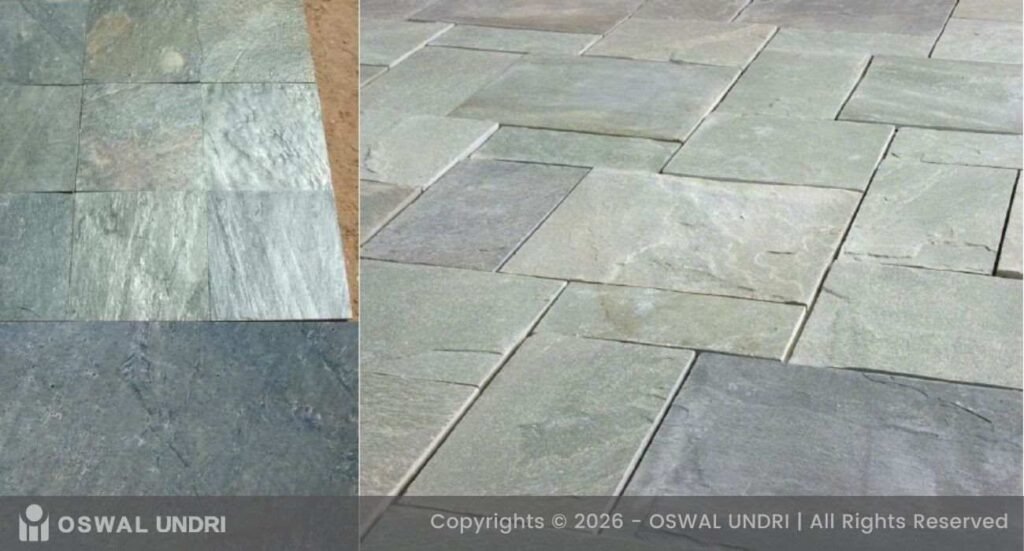
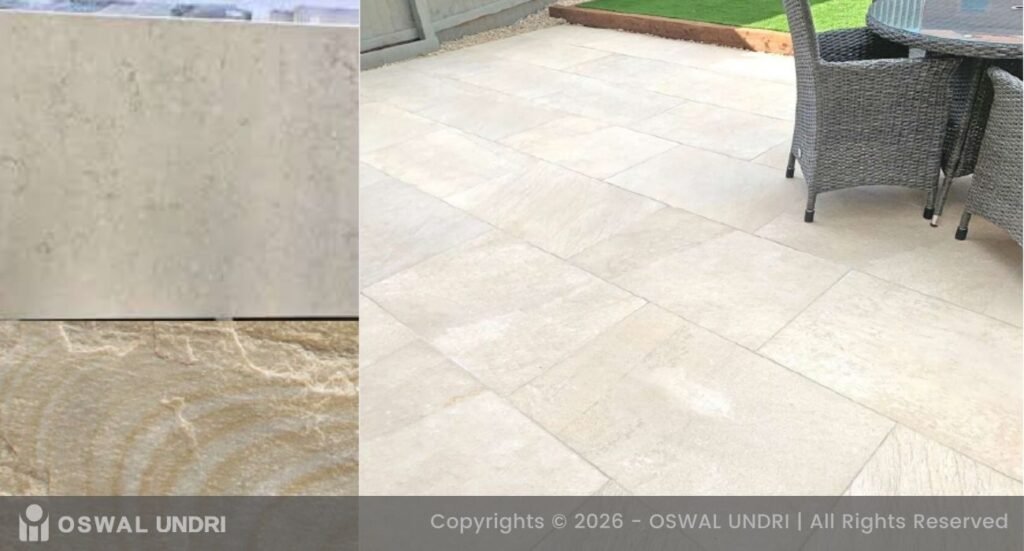
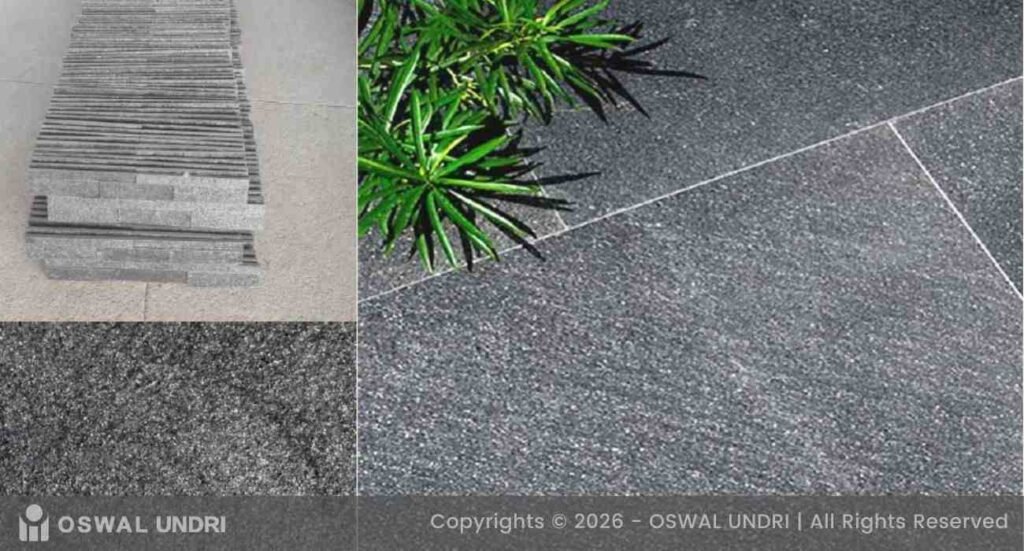
7. Quartzite – The Hybrid Performer
Key Information
| Evaluation Factor | Details |
| Visual Appeal & Surface Character | It looks like marble with natural textures. |
| Available Sizes, Cuts & Finishes | Available in slabs and textured finishes. |
| Durability & Structural Strength | Extremely powerful against the weather. |
| Slip Resistance in Wet Conditions | Good grip under wet conditions. |
| Heat Comfort Under Sun Exposure | Moderate heat absorption. |
| Moisture Tolerance & Algae Risk | Low water absorption rate. |
| Maintenance Needs & Long-Term Care | Low maintenance required. |
| Ideal Outdoor Use Scenarios | Premium terrace gardens. |
8. Porphyry – The Eternal Stone
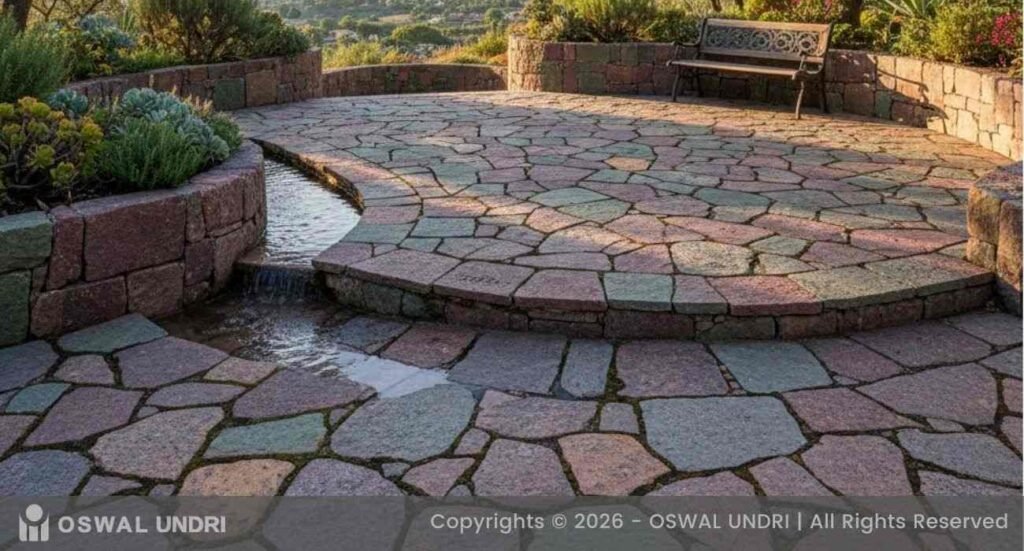
Key Information
| Evaluation Factor | Details |
| Visual Appeal & Surface Character | Natural rustic texture with specks. |
| Available Sizes, Cuts & Finishes | Mostly irregular shapes and cobbled forms. |
| Durability & Structural Strength | Very tough and durable. |
| Slip Resistance in Wet Conditions | Excellent traction. |
| Heat Comfort Under Sun Exposure | Moderate comfort level. |
| Moisture Tolerance & Algae Risk | Highly moisture-resistant. |
| Maintenance Needs & Long-Term Care | Very low maintenance required. |
| Ideal Outdoor Use Scenarios | Driveways and large terraces. |
9. Kadapah Black – Traditional Indian Outdoor Option
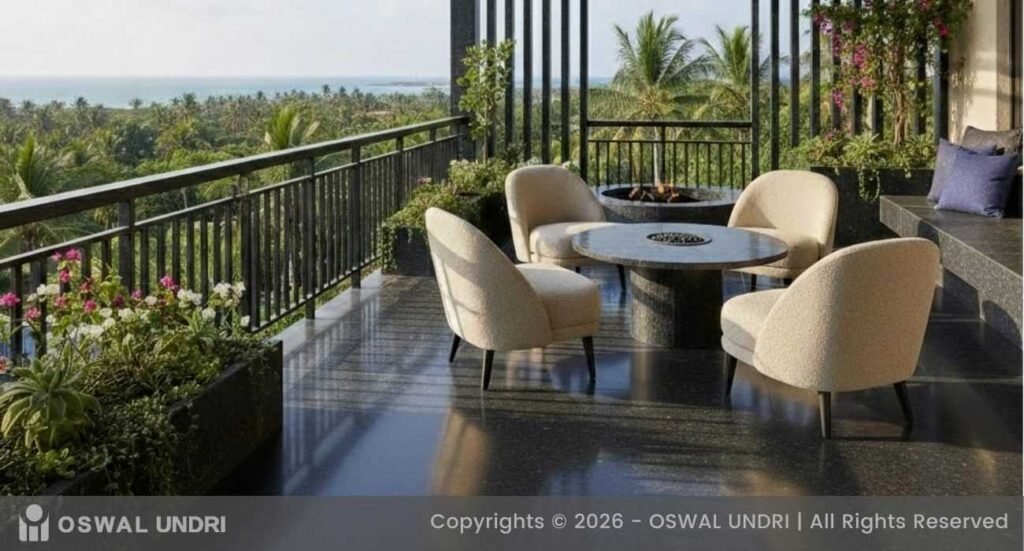
Key Information
| Evaluation Factor | Details |
| Visual Appeal & Surface Character | Deep grey to black tones with a look of a natural matte. |
| Available Sizes, Cuts & Finishes | Mostly available in natural slabs and tiles. |
| Durability & Structural Strength | Powerful and sturdy enough to be used over time. |
| Slip Resistance in Wet Conditions | Good slip resistance. |
| Heat Comfort Under Sun Exposure | Slightly warm under the sunlight. |
| Moisture Tolerance & Algae Risk | Seal moisture easily when sealed. |
| Maintenance Needs & Long-Term Care | Low maintenance needed. |
| Ideal Outdoor Use Scenarios | Balconies and walkways. |
10. Cobblestone – Functional, Not Decorative
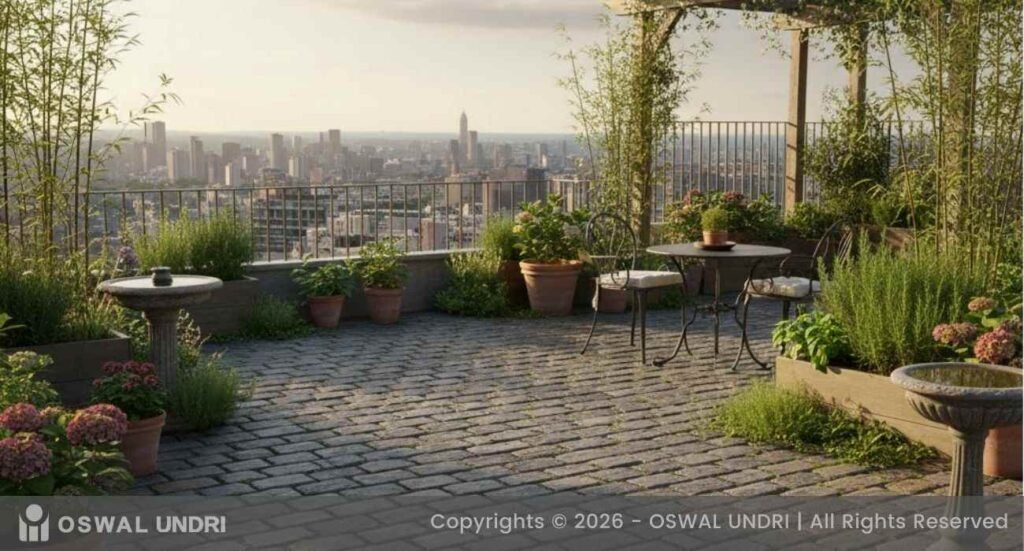
Key Information
| Evaluation Factor | Details |
| Visual Appeal & Surface Character | Raw, rugged look befitting classical spaces. |
| Available Sizes, Cuts & Finishes | Small block shapes with natural finishes. |
| Durability & Structural Strength | Very durable and strong. |
| Slip Resistance in Wet Conditions | Excellent traction. |
| Heat Comfort Under Sun Exposure | Comfortable even in the sun. |
| Moisture Tolerance & Algae Risk | Very good moisture management. |
| Maintenance Needs & Long-Term Care | Minimal maintenance needed. |
| Ideal Outdoor Use Scenarios | Garden pathways and rustic walkways. |
11. Flagstone – The Most Natural Terrace Finish
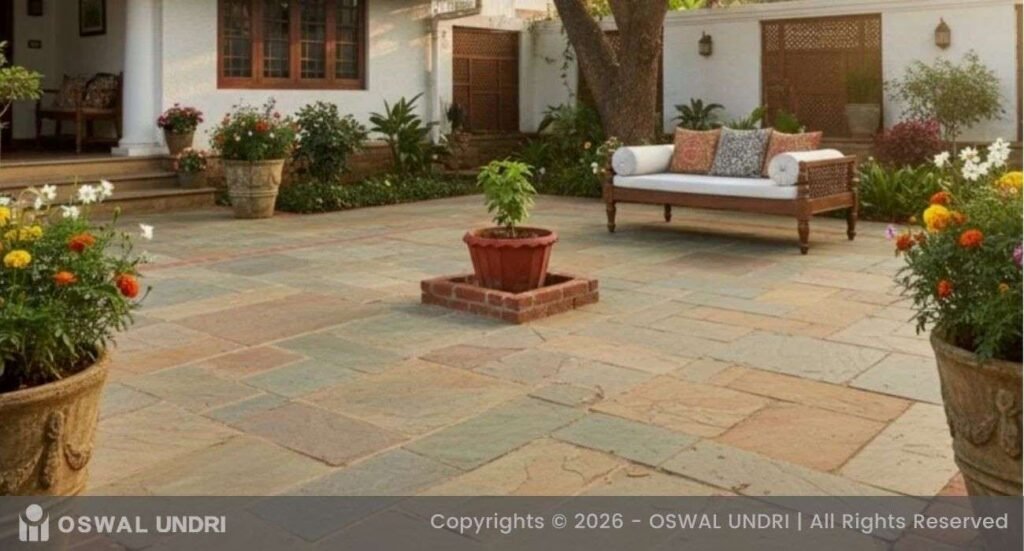
Key Information
| Evaluation Factor | Details |
| Visual Appeal & Surface Character | Irregular forms generate a natural and organic appearance. |
| Available Sizes, Cuts & Finishes | Natural cuts with uneven edges. |
| Durability & Structural Strength | Moderate to high durability. |
| Slip Resistance in Wet Conditions | Good natural grip. |
| Heat Comfort Under Sun Exposure | Comfortable when exposed to the sun. |
| Moisture Tolerance & Algae Risk | Performs well with sealing. |
| Maintenance Needs & Long-Term Care | Moderate maintenance required. |
| Ideal Outdoor Use Scenarios | Terrace gardens and outdoor lounges. |
Why Rustic Stones Perform Better Outdoors Than Tiles
Tiles can appear clean and smooth, and are not necessarily intended to be used in an outdoor environment. Rustic stones are created by natural geological processes over thousands of years, and this process provides them with strength and durability that manufactured tiles may not have.
Key Reasons Rustic Stone Performs Better Outdoors
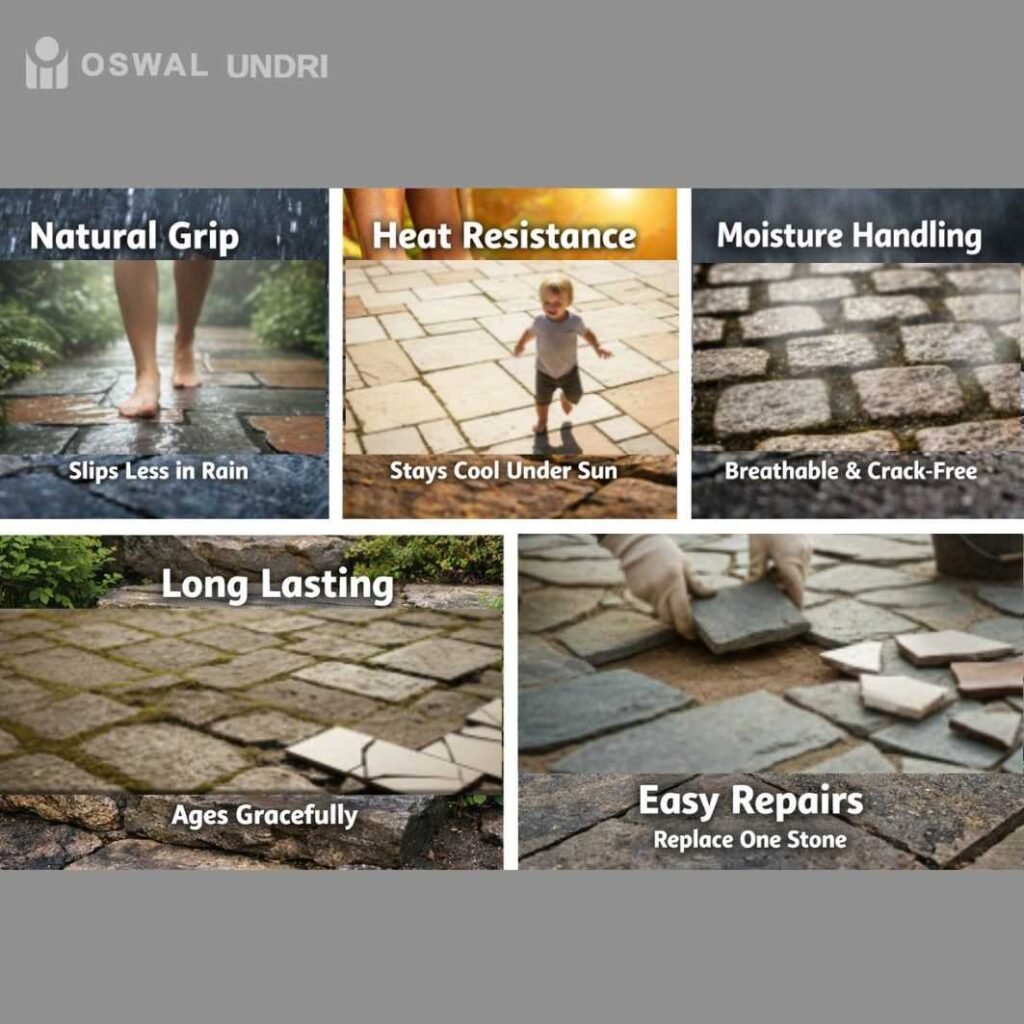
1. Natural Grip
Rustic stones have textured surfaces. This minimizes the chances of falling, particularly in the rainy season. Most tiles are slippery when they are wet.
2. Heat Resistance
Natural stones have the ability to absorb and emit heat gradually. Tiles will usually overheat and are not comfortable to walk on.
3. Moisture Handling
Rustic stones are breathable. They permit the evaporation of small amounts of moisture. Tiles seal water in between and crack or lift.
4. Longevity
Natural stone ages gracefully. Tiles wear, fade, and chip.
5. Repair Ease
It is relatively simple to replace one damaged stone as opposed to tiles that might no longer be available.
Rustic Stone vs Outdoor Tiles
| Feature | Rustic Stone | Outdoor Tiles |
| Slip Resistance | Naturally textured | Often smooth |
| Heat Comfort | Moderate to cool | Can get very hot |
| Water Resistance | Breathable | Can trap moisture |
| Durability | Very high | Moderate |
| Maintenance | Simple cleaning | May require frequent replacement |
| Aesthetic Aging | Improves over time | Looks worn |
How Climate Changes the ‘Best Stone’ Choice
The most significant error a homeowner can make is to select stone just because it looks good. The climate largely determines the performance of a stone over time. The same stone can act in a totally different way during dry seasons, heavy rains, or humid coastal areas. Let’s explore more about it.
1. Hot and Dry Climates
Flooring in cities where there is blazing summer heat swells and shrinks. The stones holding excessive heat become unbearable to walk on and could have micro-cracks with the passage of time.
Best stones for hot climates:
- Kota Stone
- Sandstone
- Limestone
- Flagstone
These stones:
- Cooler even in direct sunlight.
- Expand less dramatically
- Provide a comfortable environment when barefoot.
- Age well under UV exposure
Granite and basalt, though tough, can get extremely hot during peak summer except when in the shade.
2. Heavy Rainfall Regions
Long monsoon regions require stones that can hold them firmly and that are not easily damaged by water. Smooth surfaces may become slippery and unstable.
Best stones for rainy climates:
- Slate
- Porphyry
- Basalt
- Flamed Granite
These stones:
- Have textured surfaces
- Resist water penetration
- Reduce moss growth
- Ensure structural integrity.
In these places, be careful of over-polished finishes.
3. Humid Coastal Regions
Humidity causes algae growth, retention of moisture, and accelerated wear. Here, low porosity stones perform better.
Best stones for humid climates:
- Granite
- Quartzite
- Basalt
- Cuddapah Black
These stones:
- Absorb less water
- Resist fungal growth
- Require less maintenance
- Stay structurally stable
4. Cold or Temperature-Fluctuating Regions
Stones expand and contract due to frequent increases and decreases in temperature. Porous stones may be damaged by the freeze–thaw cycle in colder areas, causing cracks and surface damage. High-density and low water absorption stones are the ones that suit these climates best.
Best stones for cold or fluctuating climates:
- Granite
- Quartzite
- Porphyry
These stones:
- Absorbs very little water
- Resist cracking during freeze-thaw cycles.
- Ensure that it is structurally sound.
- Minimal weather-related repairs.
Climate Selection Table
| Climate Type | Best Stone Choices | Why They Work |
| Hot & Dry | Kota, Sandstone, Limestone | Stay cool, less expansion |
| Rainy | Slate, Porphyry, Basalt | High grip, water-resistant |
| Humid | Granite, Quartzite | Low porosity |
| Cold | Granite, Quartzite | Freeze-resistant |
Why Most Outdoor Stone Failures Are Not Material Faults
Whenever something goes wrong, many people attribute the blame to the stone. As a matter of fact, 80 per cent of outdoor stone failures occur as a result of improper installation rather than materials.
Common Installation Mistakes
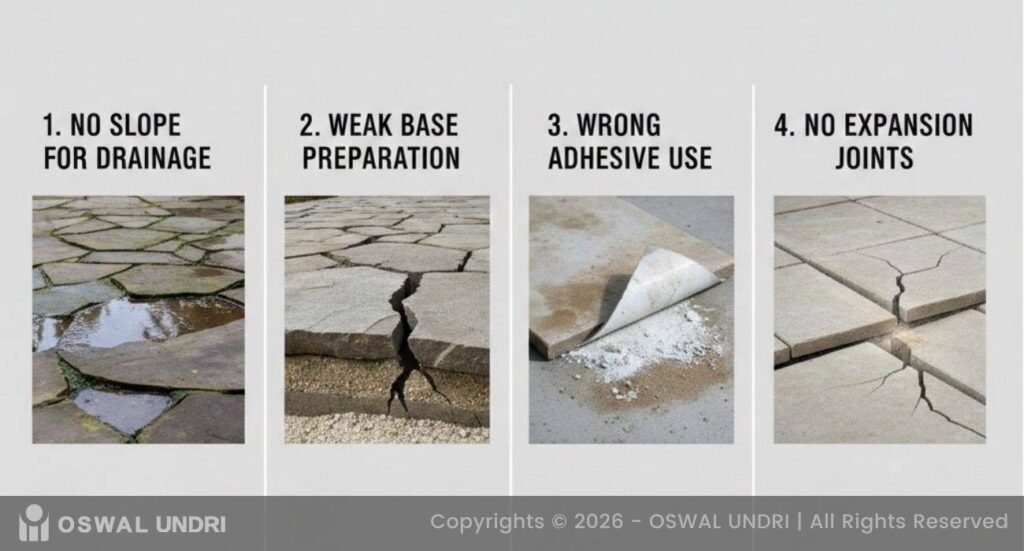
1. No Slope for Drainage
Water is not to be on the surface. Flat installations hold water, resulting in:
- Algae growth
- Stone loosening
- Staining
2. Weak Base Preparation
The base of the outdoor stone is to be compacted and stabilized. Without this:
- Stones shift
- Cracks appear
- Edges chip
3. Wrong Adhesive Use
Indoor glues are frequently applied in outdoor uses, which fail when they are exposed to moisture.
4. No Expansion Joints
Expansion is the result of temperature changes. Without joints:
- Stones grind against one another.
- Cracks develop
- Lifting occurs
Correct Outdoor Installation Checklist
| Factor | Requirement | Why It Matters |
| Base | Well-compacted layer | Prevents stone shifting and cracking over time. |
| Drainage | Minimum 1:60 slope | Allows water to flow away, reducing stains and damage. |
| Adhesive | Exterior-grade mortar | Ensures strong bonding that withstands weather changes. |
| Joint Filling | Weather-resistant grout | Stops water seepage and weed growth between stones. |
| Sealing | Recommended for porous stones | Protects against moisture absorption and extends lifespan. |
Proper installation may extend the stone’s life up to 30-40 years.
Maintenance Truths – What No Seller Tells You
Most sellers argue that natural stones require no maintenance at all. That is not true. However, it is easy to maintain when handled on a regular basis.
Reality of Outdoor Stone Care
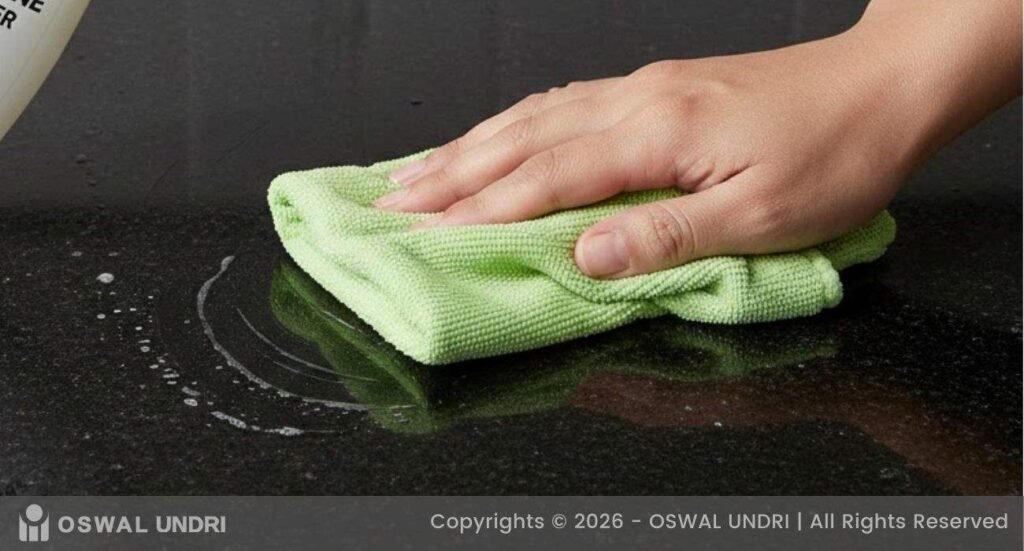
All Stones Need Cleaning
Stains are due to dust, leaves, and moisture. Simple sweeping and periodic washing avert long-term damage.
Sealing Matters
Sealing reduces:
- Water absorption
- Stains
- Algae formation
The most beneficial ones are porous stones such as limestone and sandstone.
Moss and Algae Are Natural
Dark or moist regions promote growth. This does not imply that the stone is bad – it just needs frequent cleaning.
Aging Is Normal
Rustic stones alter in color a bit over time. This is not harmful, but natural weathering.
Maintenance Frequency Guide
| Activity | Frequency | What It Involves | Why It Matters |
| Sweeping | Weekly | Remove dust and debris with a broom. | Prevents stains and algae buildup. |
| Washing | Monthly | Rinse with water and mild cleaner if needed. | Keeps the surface clean and fresh. |
| Sealing | Every 1–3 years | Apply a stone sealer based on exposure. | Protects from moisture and stains. |
| Deep Cleaning | Once a year | Remove moss and deep dirt thoroughly. | Maintains appearance and durability. |
Visual appeal extends greatly when proper care is taken.
Cost vs Value – Thinking in Decades, Not Per Sq. Ft.
A significant number of buyers consider only the initial cost. Stone used outside should not only be judged on the purchase price, but also on its longevity.
Why Cheap Options Often Cost More Later
Low-cost materials:
- Crack easily
- Need replacement
- Increase labor costs
High-quality stone enjoys decades of service with minimal repairs.
Long-Term Value Comparison
| Stone | Initial Cost | Lifespan | Repair Frequency | Overall Value |
| Kota | Low | 25–40 yrs | Low | Excellent |
| Granite | High | 40–60 yrs | Very Low | Best |
| Sandstone | Medium | 15–25 yrs | Moderate | Balanced |
| Slate | Medium | 20–30 yrs | Low | Good |
Value Perspective
Instead of asking: “How much per square foot?”
Ask: “How many years can this be safely sustained?”
Rustic Stone Performance Comparison
| Stone | Slip Resistance | Heat Comfort | Durability | Maintenance | Best Use Area |
|---|---|---|---|---|---|
| Kota Stone | ★★★★☆ | ★★★★☆ | ★★★★☆ | ★★★★☆ | Terraces, balconies |
| Slate | ★★★★★ | ★★★☆☆ | ★★★★☆ | ★★★☆☆ | Wet areas, steps |
| Sandstone | ★★★★☆ | ★★★★☆ | ★★★☆☆ | ★★★☆☆ | Garden sit-outs |
| Basalt | ★★★★☆ | ★★☆☆☆ | ★★★★☆ | ★★★★☆ | High-traffic terraces |
| Limestone | ★★★☆☆ | ★★★★☆ | ★★★☆☆ | ★★★☆☆ | Covered balconies |
| Granite (Flamed) | ★★★★★ | ★★☆☆☆ | ★★★★★ | ★★★★☆ | Heavy-use spaces |
| Quartzite | ★★★★☆ | ★★★☆☆ | ★★★★☆ | ★★★★☆ | Premium outdoor areas |
| Porphyry | ★★★★★ | ★★★☆☆ | ★★★★★ | ★★★★★ | Driveways, terraces |
| Cuddapah Black | ★★★★☆ | ★★★☆☆ | ★★★★☆ | ★★★★☆ | Balconies, pathways |
| Cobblestone | ★★★★★ | ★★★★☆ | ★★★★★ | ★★★★★ | Walkways |
| Flagstone | ★★★★☆ | ★★★★☆ | ★★★☆☆ | ★★★☆☆ | Terrace gardens |
FAQs
1. What is the safest stone to use on wet terraces?
Some of the safest are Slate, Porphyry, and Flamed Granite. Even when wet, their natural texture offers them a good grip. They have lower chances of slipping and work well in high-rain regions. Also, a matte or textured finish enhances safety.
2. What stone will be the coolest in summer?
Kota stone, Sandstone, and Limestone are cooler in comparison to darker stones. Their light colors reflect the heat rather than absorb it. This also allows them to be comfortable walking barefoot, especially in terrace gardens.
3. Are natural stones easy to crack outdoors?
No, if installed correctly. The majority of cracking is a result of inadequate base preparation or incomplete expansion joints. Stones such as Granite and Quartzite are of high quality and are highly resistant to the influence of temperature.
4. Is it important to seal stones?
Stones that are porous, such as sandstone and limestone, are strongly advised to be sealed. It decreases water uptake, staining, and algae growth. Dense stones such as Granite do not require as frequent sealing, but they also benefit.
5. What stone would need the least maintenance?
Granite, Basalt, and Quartzite have low maintenance. They are naturally resistant to stains, moisture, and wear. It is generally sufficient to clean and seal them occasionally.
6. Is it possible to use natural stone on small-sized balconies?
Yes, stones such as Kota, Slate, and Cuddapah Black are suitable in small spaces. They may be reduced to smaller slabs and offer great durability without crowding the space.
7. Does natural stone fade under the sun?
Natural stones do not fade like artificial materials. Rather, they acquire a patina, which contributes to character. This effect of aging is frequently viewed as aesthetically pleasing and as increased rustic beauty.
Key Takeaways
Outdoor flooring is a long-term investment. Stone rustics are not merely the outlay materials; they are building constructions that affect safety, comfort, and aesthetics. Natural stones react to weather better, cannot be damaged, and do not wear off like artificial tiles can.
- Structural Integrity – Outdoor stone is a long-term building construction that dictates the safety and comfort of your home.
- Installation Over Material – 80% of stone failures are caused by poor installation techniques, like improper drainage or missing joints, rather than the stone itself.
- Climate-Driven Selection – Your choice must be dictated by your local environment, selecting heat-reflective stones for sun or low-porosity stones for rain.
- Superior Durability – Natural stone outperforms artificial tiles by breathing with the environment and aging gracefully without fading or chipping.
- Value Over Cost – High-quality stone should be viewed as a multi-decade investment that increases in aesthetic value as it matures.
Get a free consultation, expert guidance, and a detailed quote tailored to your project needs.
Why Pune Developers Should Stop Buying Steel Grey Granite…
Don’t Use Nano White! | Granite Still Beats Nano-White, Here’s Why…
Buying Granite and Marble Direct from Rajasthan | Is it worth it?
Staircase Safety Guide: Best Materials and Finishes
8 Best Translucent Stones for Backlit Bar Counters