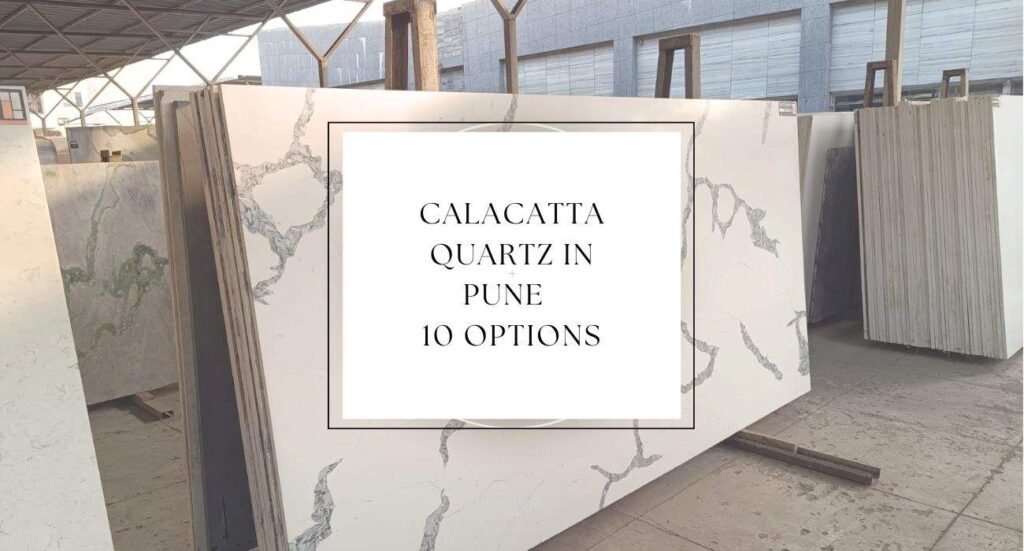
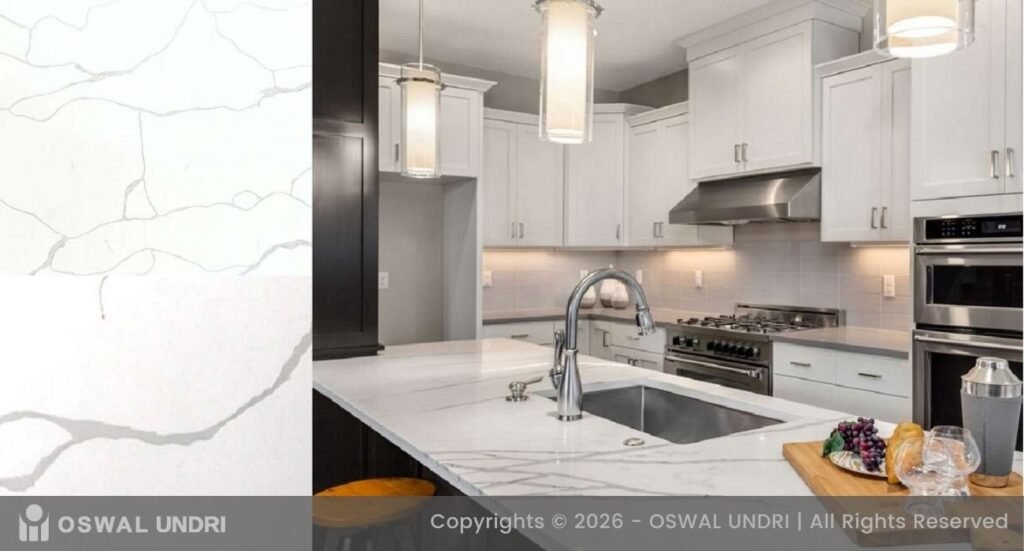
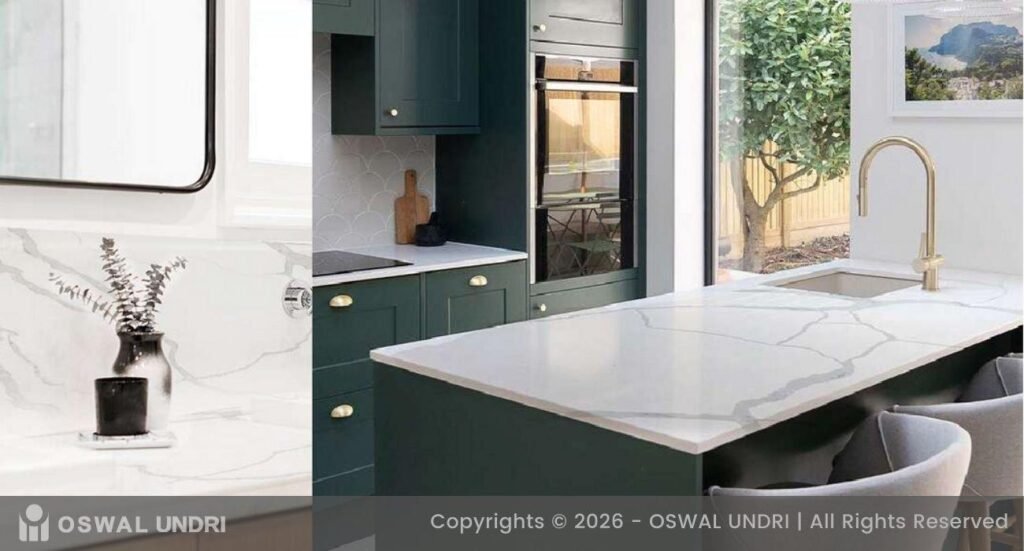
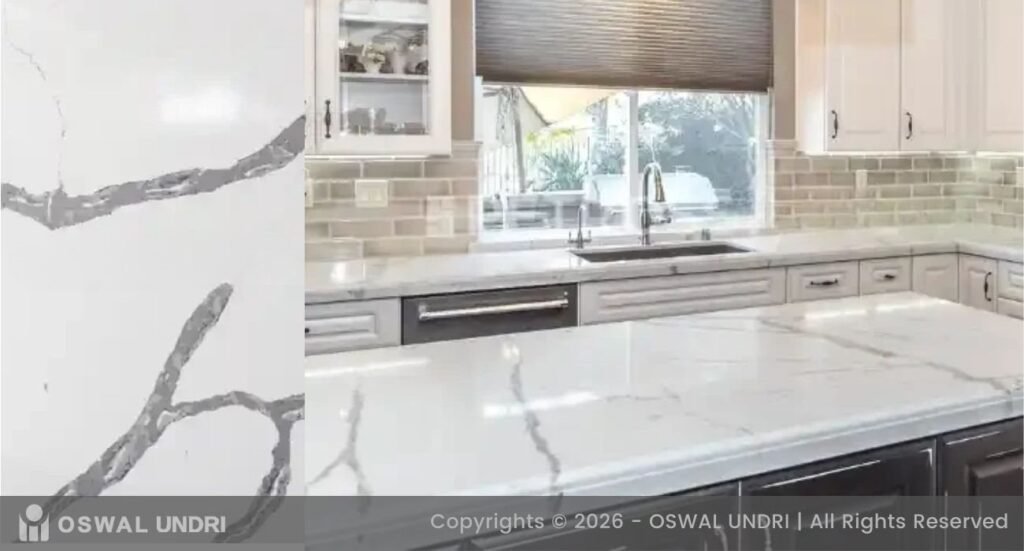
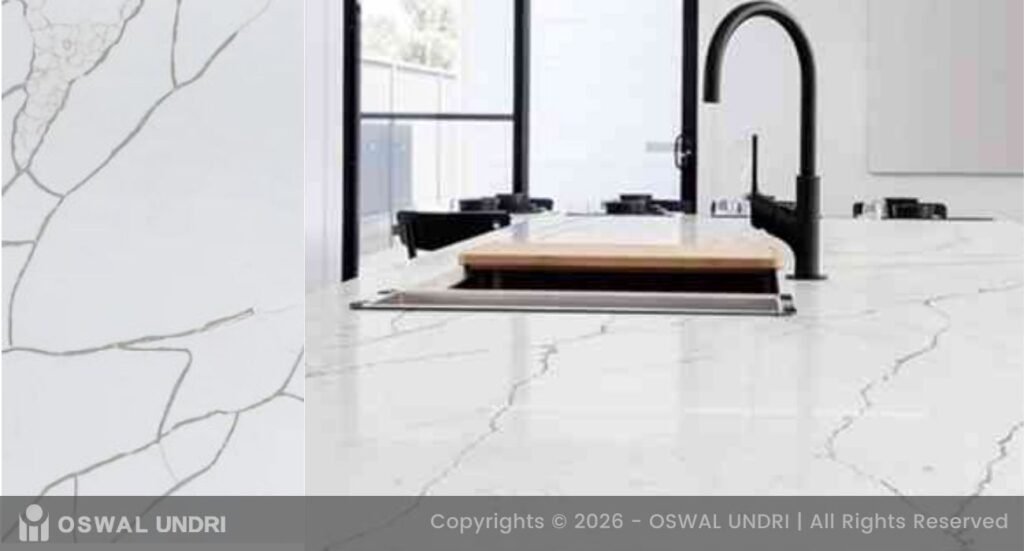
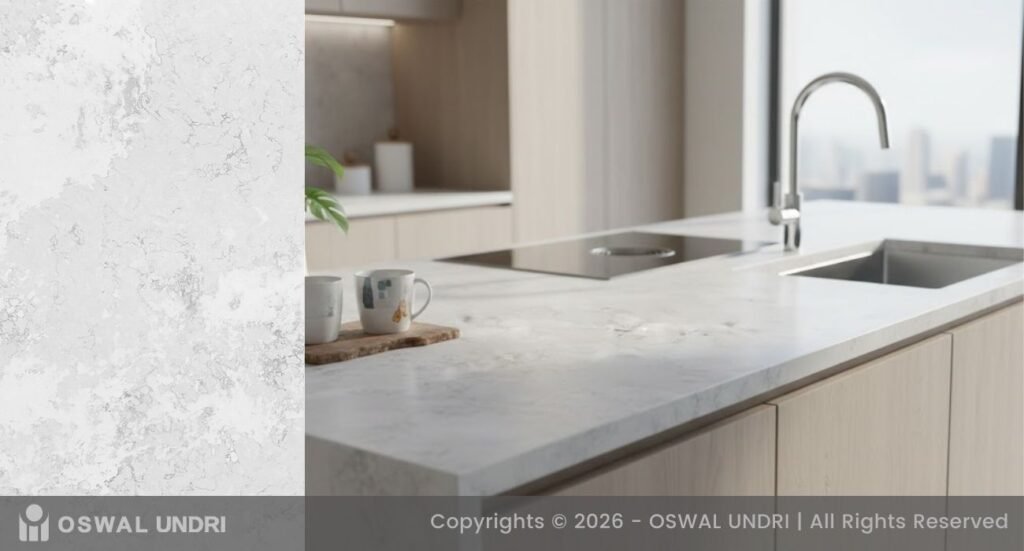
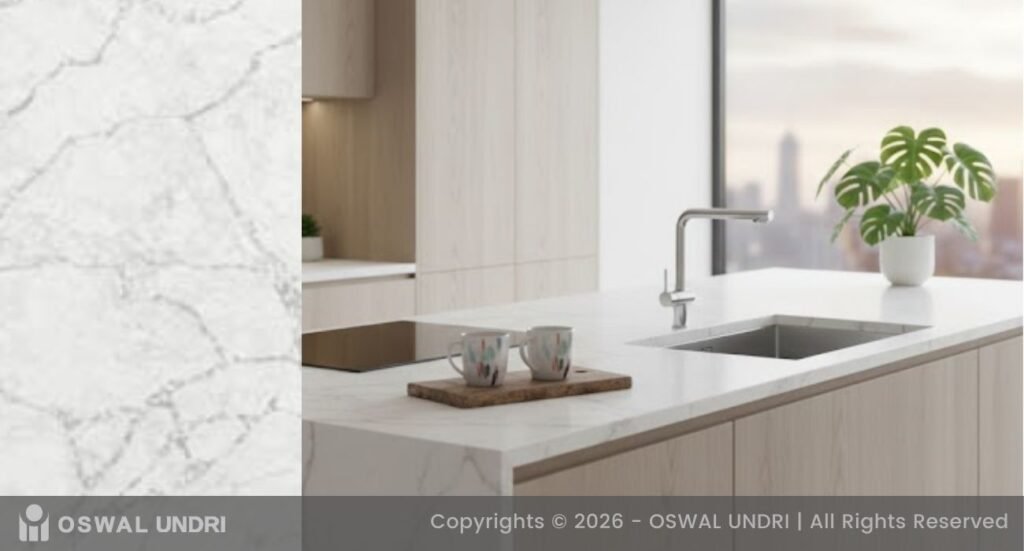
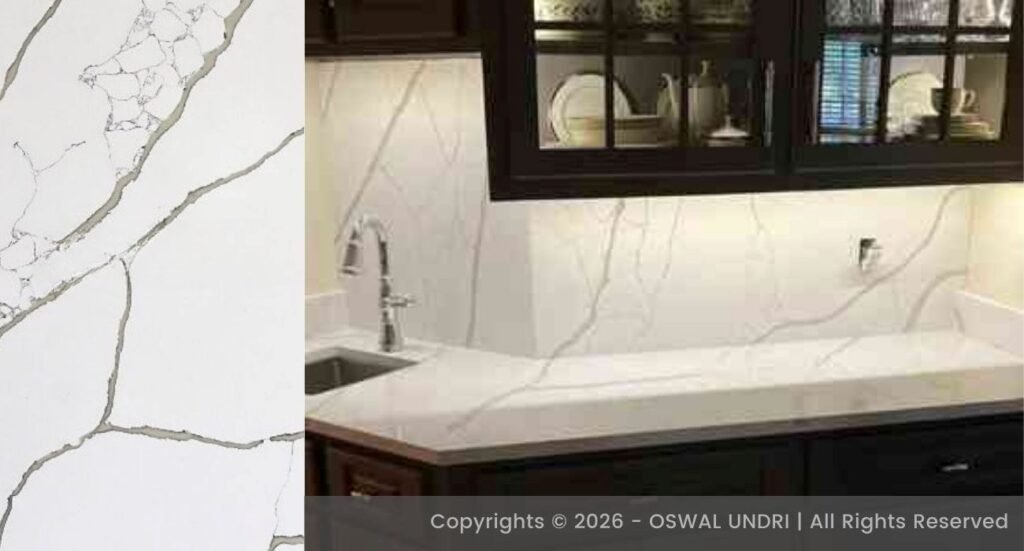
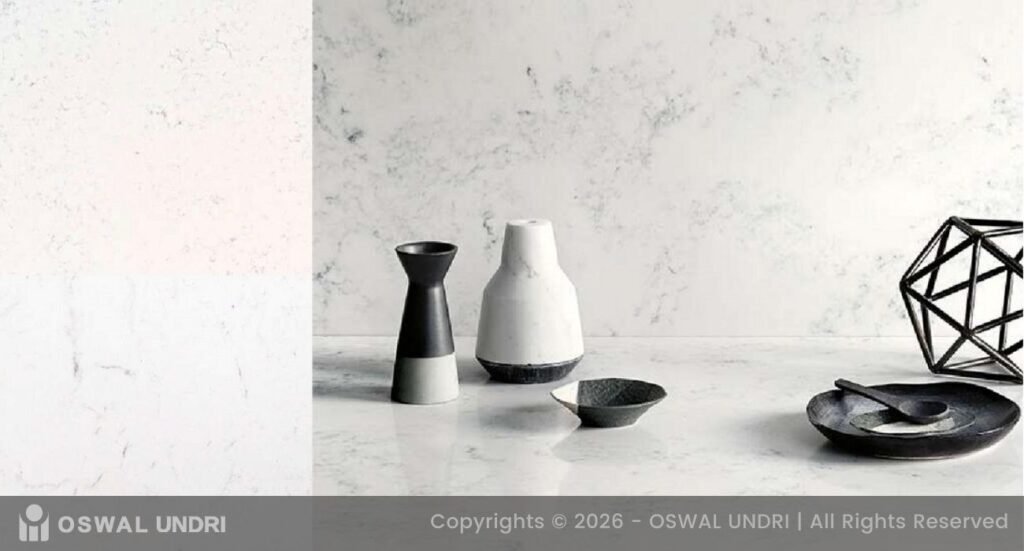
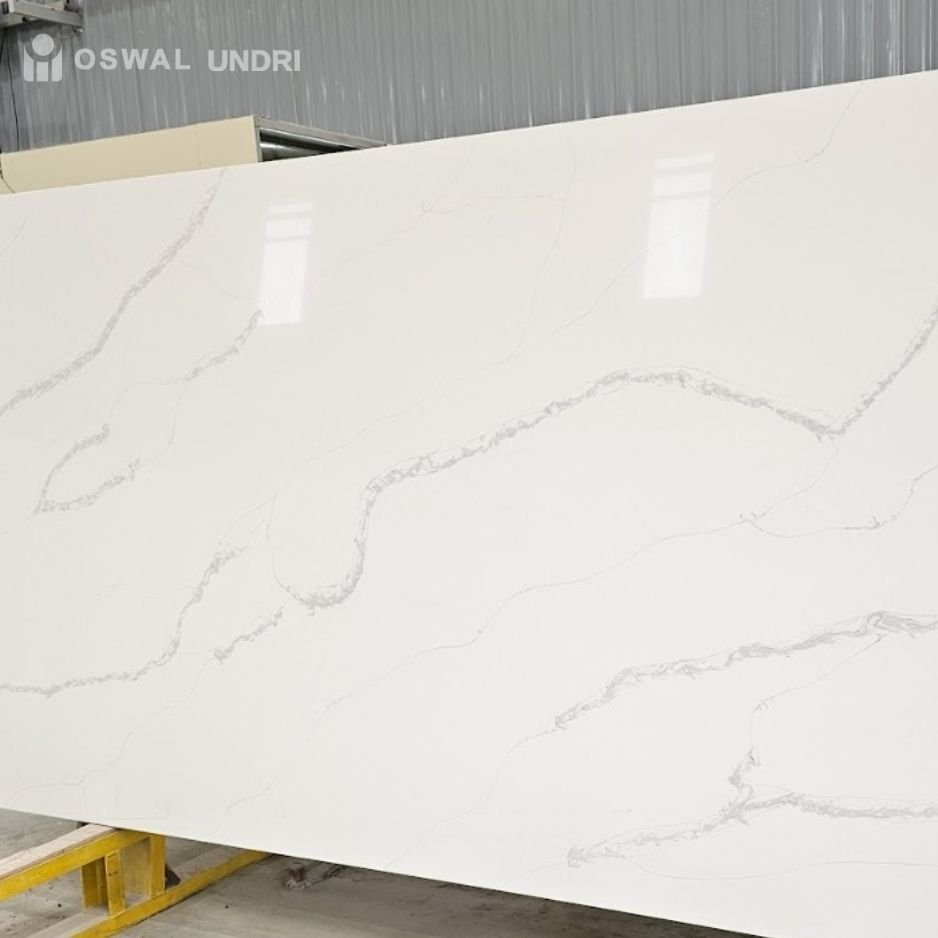
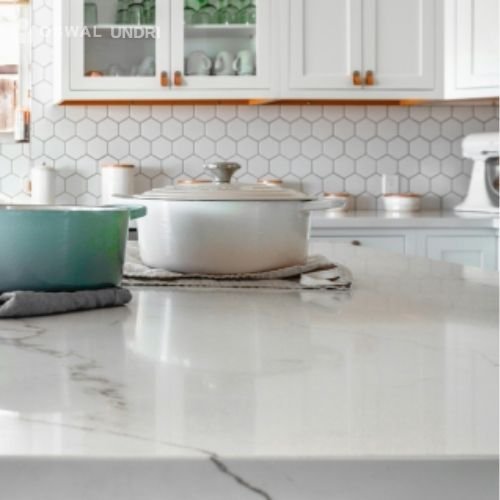
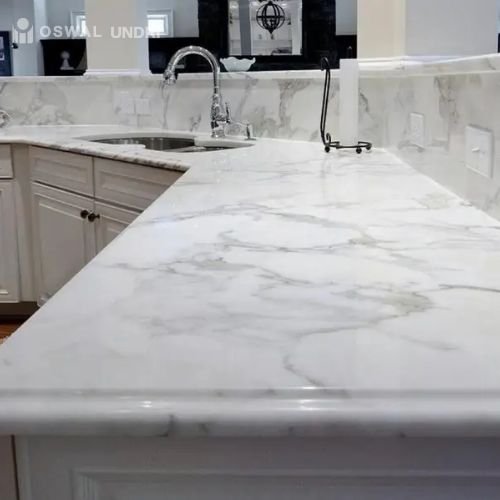
In this blog, we explore the 10 best Calacatta Quartz options available in Pune, along with their prices, performance ratings, thickness recommendations, and suitability for Indian kitchens.
We also explain what Calacatta Quartz is, why it is increasingly preferred over marble and granite, and how it performs under daily cooking conditions involving oil, haldi, and masala. Additionally, the blog compares different Calacatta variants to help homeowners choose the right option based on budget, aesthetics, and usage.
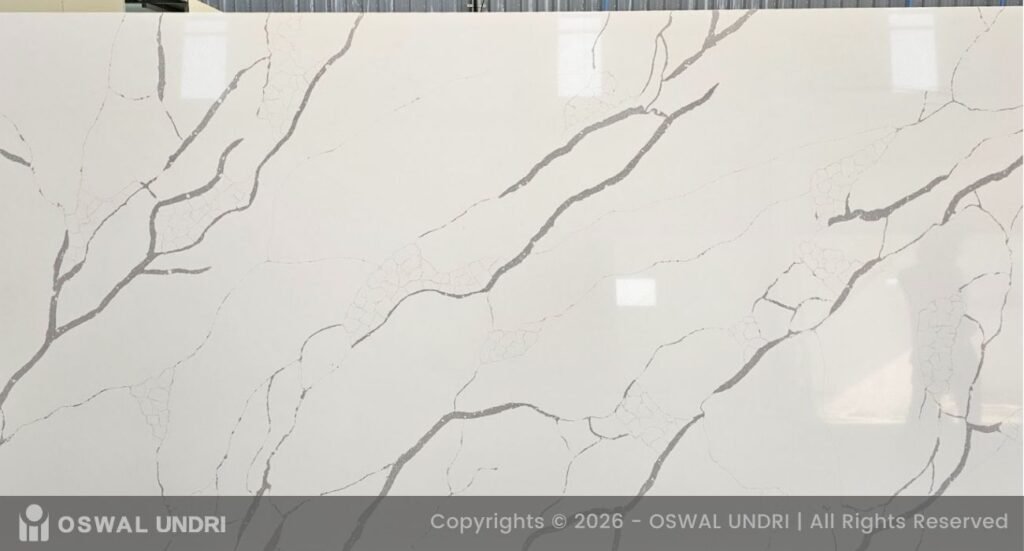
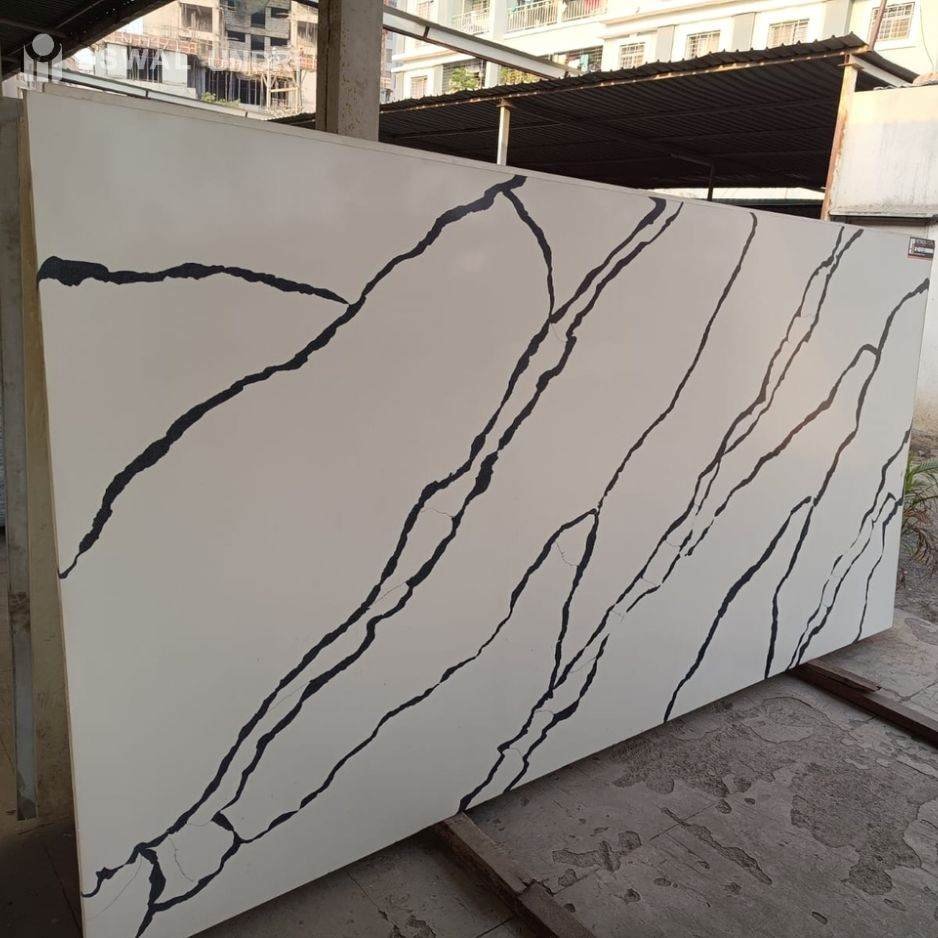
Calacatta Quartz is an engineered stone that mimics the high-end look of natural Calacatta marble. It is made using:
Approximately 90-95 percent pure quartz crystals.
High-quality resins
Pigments and binding agents
Calacatta Quartz is completely non-porous, uniform, and very strong, unlike natural marble, which means it can be used in the Indian kitchen where the use of oil, turmeric, masala, and heat are prevalent.
Why Pune Homes Prefer Calacatta Quartz Slabs
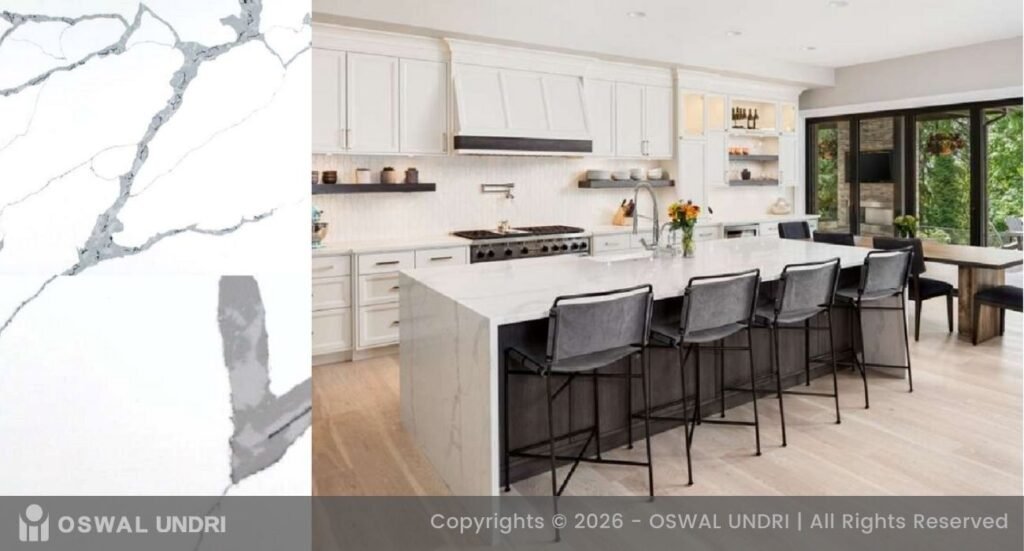
Works well in modular kitchens
Withstands heavy daily cooking
Fits contemporary and upscale furnishing.
Minimal maintenance is needed.
Top 10 Calacatta Quartz Options
1. Calacatta Classic Quartz
Performance Criteria & Ratings
Performance Criteria
Evaluation
Rating
Stain Resistance
Handles daily oil, haldi, and masala spills easily
★★★★★
Scratch Resistance
Resists knife marks and utensil movement
★★★★☆
Heat Resistance
Withstands normal cooking heat; trivets recommended
★★★☆☆
Porosity
Sealed surface prevents liquid absorption
★★★★★
Longevity
Performs well for 15–20 years in home kitchens
★★★★★
Maintenance
Simple daily wiping is enough
★★★★★
Pros and Cons
Pros
Balanced grey (veining) is compatible with most modular kitchen designs and cabinet colors. It suits perfectly in Indian homes that require durability without compromising on elegance.
Cons
Direct placement of hot pressure cookers or kadais can affect surface polish over time. Heat protection is required near stove areas for long life.
Standard Thickness of Quartz Countertops
Thickness
Application
15 mm
Appropriate in low-end kitchens or low usage cooking areas that require allocation of cost. Needs good plywood support to prevent long time stress.
18 mm
Most preferred thickness for Pune apartments, offering strength, durability, and easy installation. Handles daily cooking and appliance load comfortably.
20 mm
Recommended for large kitchen platforms and breakfast counters where extra strength is required. Adds durability but increases overall slab weight.
2. Calacatta Gold Quartz
Performance Criteria & Ratings
Performance Criteria
Evaluation
Rating
Stain Resistance
Gold veins remain unaffected by food stains
★★★★★
Scratch Resistance
Slightly softer finish than grey-veined quartz
★★★★☆
Heat Resistance
Heat exposure should be controlled
★★★☆☆
Porosity
Does not absorb oil or moisture
★★★★★
Longevity
Premium look remains stable for years
★★★★★
Maintenance
Needs regular wiping to retain shine
★★★★☆
Pros and Cons
Pros
Gold veining provides a high-quality and luxurious touch to the contemporary kitchen and villas. Increases the value on resale and matches well with warm-toned interiors.
Cons
Gold veins can highlight burn marks or discoloration if exposed to excessive heat. It should be used carefully around gas cookers and heavyweight cookware.
Standard Thickness of Quartz Countertops
Thickness
Application
15 mm
Best used in low-cooking or decorative kitchen areas where visual appeal is more important than heavy usage. Not ideal for heavy Indian cooking.
18 mm
Best suited in high-end flats and standard home kitchens that have regular cooking requirements. Offers a reasonable balance of aesthetics and strength.
20 mm
Suitable for luxury kitchens and large islands where heavy appliances and long spans are common. Most stable and gives the longest life.
3. Calacatta Blanc Extra Quartz
Performance Criteria & Ratings
Performance Criteria
Evaluation
Rating
Stain Resistance
Excellent resistance to turmeric and tea stains
★★★★★
Scratch Resistance
Suitable for regular cutting activity
★★★★☆
Heat Resistance
Needs heat pads near stove
★★★☆☆
Porosity
Hygienic and food-safe surface
★★★★★
Longevity
Retains color without yellowing
★★★★★
Maintenance
Very easy to clean
★★★★★
Pros and Cons
Pros
Small kitchens are made to seem bigger and brighter by the clean white appearance. Extremely simple to take care of despite the usage of haldi, oil, and spices every day.
Cons
Subtle veining can appear simple to homeowners who want bold, lavish designs. It should be wiped frequently to keep its fresh white look.
Standard Thickness of Quartz Countertops
Thickness
Application
15 mm
Ideal with rental property or resale apartments when it comes to cost efficiency. Works well with moderate cooking and with sufficient support of the base.
18 mm
Most commonly used thickness for daily Indian cooking and appliance placement. Offers reliability in the long run at a reasonable price.
20 mm
Appropriate for those households where the customer anticipates long-term use with rigorous cooking schedules. Offers protection against accidental impact damage.
4. Calacatta Venatino Quartz
Performance Criteria & Ratings
Performance Criteria
Evaluation
Rating
Stain Resistance
Handles acidic foods well
★★★★★
Scratch Resistance
Good resistance under daily use
★★★★☆
Heat Resistance
Not suitable for direct flame heat
★★★☆☆
Porosity
Prevents bacterial growth
★★★★★
Longevity
Vein pattern stays consistent
★★★★★
Maintenance
Requires minimal effort
★★★★★
Pros and Cons
Pros
It has linear marble-like veins that provide an appearance of a natural stone without the maintenance problems of marble. Perfect in modern and Italian-style kitchens.
Cons
Scratches can be visually emphasized by vein patterns when care on the surface is not taken. It is advisable to use cutting boards and proper cleaning.
Standard Thickness of Quartz Countertops
Thickness
Application
15 mm
Can be used on decorative countertops or secondary kitchen settings with little cooking. It should have a good base support to avoid bending.
18 mm
Perfect for daily-use kitchens where appearance and strength are equally important. Handles normal Indian cooking routines well.
20 mm
Best for a heavy-duty kitchen with large slab spans and constant use. Offers high load-bearing capacity.
5. Calacatta Laza Quartz
Performance Criteria & Ratings
Performance Criteria
Evaluation
Rating
Stain Resistance
Thick veins mask minor stains
★★★★★
Scratch Resistance
Strong surface for heavy appliances
★★★★★
Heat Resistance
Handles warm cookware, not red-hot vessels
★★★☆☆
Porosity
Spill-proof engineered surface
★★★★★
Longevity
Excellent for high-traffic kitchens
★★★★★
Maintenance
Easy despite bold veining
★★★★☆
Pros and Cons
Pros
Dramatic and bold veining conceals small stains and wear patterns. Suited to high-quality kitchens with a strong visual appeal.
Cons
Higher price point compared to basic Calacatta variants. Not suited to buyers with small renovation budgets.
Standard Thickness of Quartz Countertops
Thickness
Application
15 mm
Not recommended due to bold veining and heavy slab appearance. May not provide adequate structural balance.
18 mm
Minimum recommended thickness for standard kitchens with daily cooking needs. Offers good performance when installed correctly.
20 mm
Best option in luxury kitchens that have heavy appliances and long countertop lengths. Durable in the long run.
6. Calacatta Ultra Quartz
Performance Criteria & Ratings
Performance Criteria
Evaluation
Rating
Stain Resistance
Bright white stays clean with care
★★★★☆
Scratch Resistance
Good, but polish needs protection
★★★★☆
Heat Resistance
Sensitive to sudden heat changes
★★☆☆☆
Porosity
Zero liquid penetration
★★★★★
Longevity
Maintains premium finish
★★★★★
Maintenance
Requires frequent wiping
★★★★☆
Pros and Cons
Pros
Kitchens have an ultra-white background, which brings a hotel-like appearance of luxury. Works well with handle-less cabinets and modern designs.
Cons
A bright surface requires careful daily cleaning to avoid visible stains. Not ideal for extremely heavy Indian cooking styles.
Standard Thickness of Quartz Countertops
Thickness
Application
15 mm
Not advisable due to the sensitivity of the bright surface and heat exposure. The risk of visible wear over time is higher.
18 mm
Suitable for moderate-use kitchens with careful handling. Works best when heat pads are used consistently.
20 mm
Recommended for users who want added safety and strength along with a premium appearance. Helps reduce surface stress.
7. Calacatta Superwhite Quartz
Performance Criteria & Ratings
Performance Criteria
Evaluation
Rating
Stain Resistance
Shows stains faster due to plain surface
★★★★☆
Scratch Resistance
Good resistance to wear
★★★★☆
Heat Resistance
Needs strict heat protection
★★☆☆☆
Porosity
Hygienic and moisture-free
★★★★★
Longevity
Color remains uniform
★★★★★
Maintenance
Needs regular cleaning
★★★★☆
Pros and Cons
Pros
Minimalist appearance suits modern apartments and Scandinavian kitchens. Gives a calm, clutter-free look.
Cons
Stains and spills reveal more on a plain surface. Demands disciplined cleaning in Indian kitchens.
Standard Thickness of Quartz Countertops
Thickness
Application
15 mm
Appropriate for light-use kitchens or studio apartments. Not suitable for heavy appliances and rough usage.
18 mm
Standard thickness for regular home kitchens with balanced usage. Provides sufficient strength and stability.
20 mm
Recommended for families with frequent cooking and heavy cookware. Offers better resistance to impact.
8. Calacatta Capri Quartz
Performance Criteria & Ratings
Performance Criteria
Evaluation
Rating
Stain Resistance
Handles spice stains well
★★★★★
Scratch Resistance
Reliable for daily cooking
★★★★☆
Heat Resistance
Moderate heat tolerance
★★★☆☆
Porosity
Non-absorbent surface
★★★★★
Longevity
Suitable for long-term use
★★★★★
Maintenance
Low-effort cleaning
★★★★★
Pros and Cons
Pros
The soft flowing veins are combined with natural light and warm-tones cabinets. Fits well in contemporary and transitional kitchens.
Cons
Veining is subtle and may not satisfy buyers looking for bold luxury patterns. Less dramatic than premium variants.
Standard Thickness of Quartz Countertops
Thickness
Application
15 mm
Works for budget renovations with moderate cooking usage. Needs strong plywood backing for safety.
18 mm
Ideal thickness for most Pune homes with daily Indian cooking. Balances durability and affordability.
20 mm
Applicable to bigger kitchen platforms and island counters. Adds additional strength to use in the long run.
9. Calacatta Michelangelo Quartz
Performance Criteria & Ratings
Performance Criteria
Evaluation
Rating
Stain Resistance
Performs well despite artistic veining
★★★★★
Scratch Resistance
Strong surface with proper care
★★★★☆
Heat Resistance
Needs protection near stove
★★★☆☆
Porosity
Highly hygienic
★★★★★
Longevity
Premium slabs age well
★★★★★
Maintenance
Slightly higher due to design
★★★★☆
Pros and Cons
Pros
Luxury kitchens make a statement through artistic veining. Most suitable in villas and high-end apartments.
Cons
Premium pricing and detailed patterns require careful maintenance. Not ideal for rough or careless usage.
Standard Thickness of Quartz Countertops
Thickness
Application
15 mm
Not suitable due to complex veining and premium slab value. Risk of damage is higher.
18 mm
Minimum acceptable thickness for controlled cooking environments. Requires skilled installation.
20 mm
Highly recommended for premium kitchens with heavy usage and large slab spans. Ensures structural safety.
10. Calacatta Bianco Quartz
Performance Criteria & Ratings
Performance Criteria
Evaluation
Rating
Stain Resistance
Good protection for everyday cooking
★★★★☆
Scratch Resistance
Moderate resistance
★★★★☆
Heat Resistance
Basic heat tolerance
★★★☆☆
Porosity
No moisture absorption
★★★★★
Longevity
Reliable for budget homes
★★★★☆
Maintenance
Easy to manage
★★★★★
Pros and Cons
Pros
More affordable choice offering a clean Calacatta appearance. Best suited to cost-conscious consumers and builders.
Cons
Visual depth is less compared to premium variants. May not give a high-luxury appearance.
Standard Thickness of Quartz Countertops
Thickness
Application
15 mm
Best for rental flats and low-cost projects. Suitable for light to moderate kitchen usage.
18 mm
Most practical option for regular households. Offers good durability at a reasonable cost.
20 mm
Chosen when extra strength is needed without upgrading to premium variants. Adds long-term reliability.
Technical Specifications
Calacatta Quartz is an engineered stone that aims to provide the beauty of marble, as well as being stronger and requiring less upkeep, making it fit the conditions of the Indian kitchen.
Calacatta Quartz – Technical Specifications Table
Specification
Details
Material Type
Engineered quartz stone
Quartz Content
90–95% natural quartz
Binding Agents
Polymer resins and pigments
Surface Finish
Polished / Matte
Available Thickness
15 mm, 18 mm, 20 mm
Water Absorption
Less than 0.05%
Edge Options
Straight, beveled, bullnose
Usage Areas
Kitchen platforms, islands, countertops
Performance Metrics Table
Performance Criteria
Evaluation
Rating
Stain Resistance
Resists oil, turmeric, and spice stains effectively
★★★★★
Scratch Resistance
Handles regular utensil movement and appliances
★★★★☆
Heat Resistance
Requires heat pads for hot cookware
★★★☆☆
Porosity
Completely non-porous and hygienic
★★★★★
Longevity
Designed for long-term residential use
★★★★★
Maintenance
Needs minimal daily care
★★★★★
Comparative Analysis
Calacatta Quartz vs Natural Marble
Feature
Calacatta Quartz
Natural Marble
Porosity
Non-porous surface
Highly porous
Stain Resistance
Excellent for Indian cooking
Stains easily
Maintenance
Very low
High and frequent
Appearance
Uniform marble-like veins
Natural variations
Durability
Strong and crack-resistant
Softer and prone to damage
Cost Over Time
Economical in long run
Expensive maintenance
The comparison makes sense to homeowners as to why most of them are moving away from marble in favour of marble in their new modern kitchens.
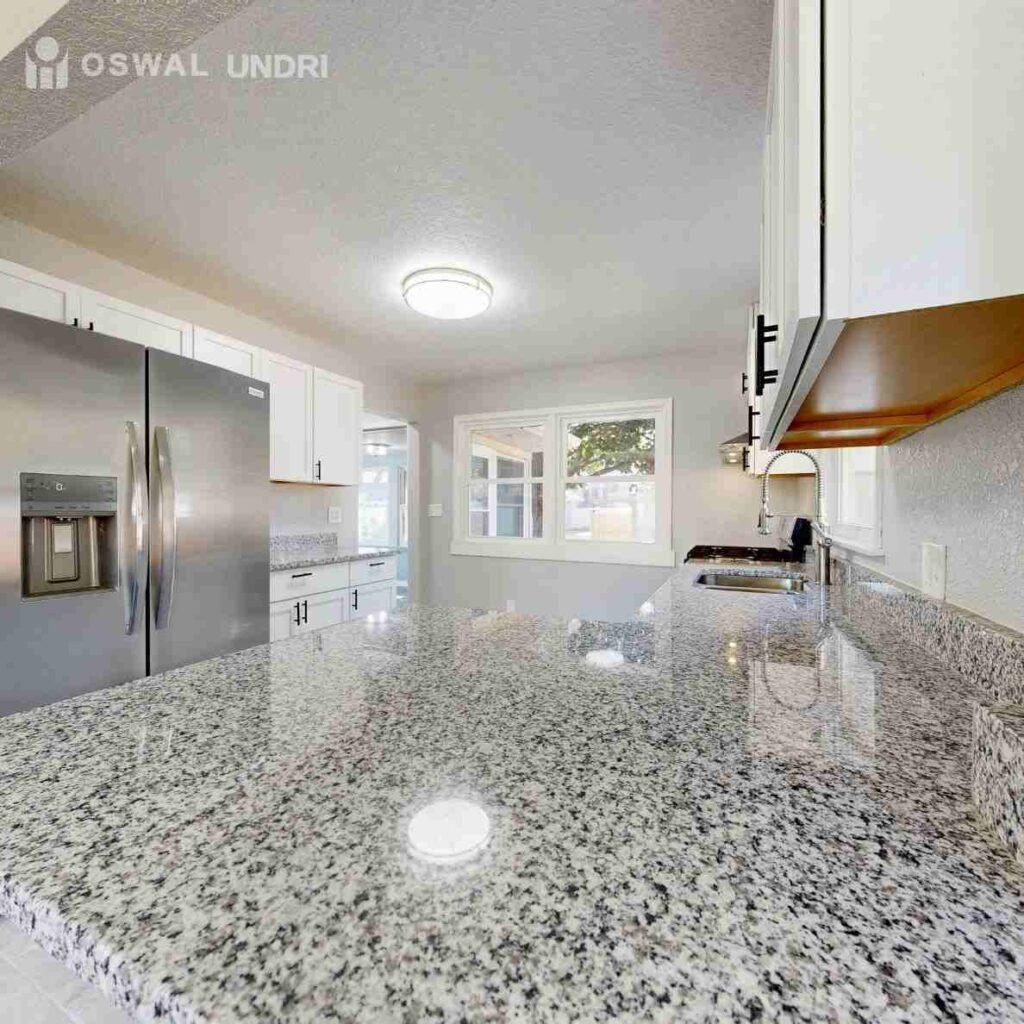
Calacatta Quartz vs Granite
Feature
Calacatta Quartz
Granite
Visual Appeal
Bright white with elegant veining
Dark, grainy patterns
Stain Resistance
Very high
Moderate
Heat Resistance
Moderate, heat pads needed
High
Maintenance
Easy and low effort
Requires sealing
Consistency
Uniform slabs
Natural color variations
Modern Design Fit
Excellent
Limited
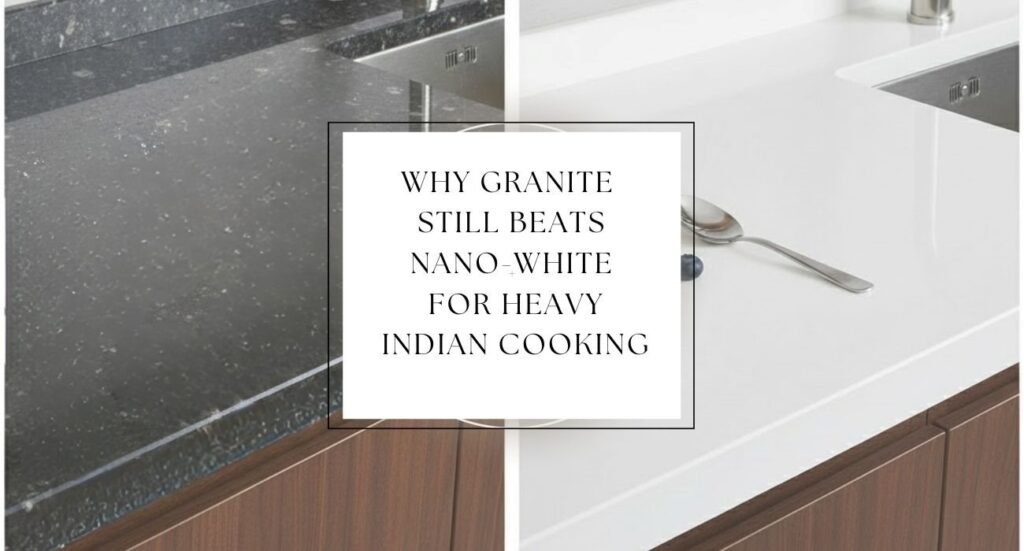
Granite has been one of the favourites in Indian kitchens, but Calacatta Quartz is emerging as the superior alternative.
Key Suppliers and Dealers in Pune
Top Wholesaler in Pune
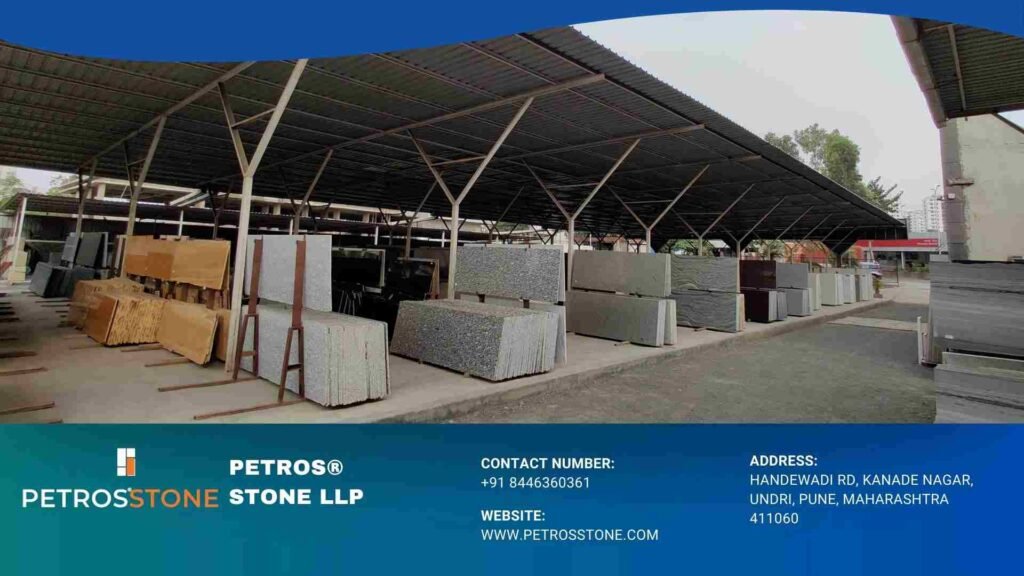
Petros® Stone is one of the reliable suppliers of high-quality Calacatta Quartz slabs in Pune. With a long-lasting quality and professional service, Petros® Stone is serving both individual owners of the home, interior designers, builders, and bulk projects.
Why choose Petros® Stone:
A wide variety of Calacatta Quartz designs and finishes.
Uniform slab thickness and veining.
Guidance on choosing a kitchen platform professionally.
Cutting, edge finishing, and installation coordination support.
Customers can also reach out to the number above and visit the outlet through appointment calls or WhatsApp, request slab photographs, request price lists, or even check stock availability before visiting the outlet.
Calacatta Quartz Stock Photos And Available Inventory
Popular variations of Calacatta Quartz are always in stock at Petros® Stone, which is why Pune buyers can plan their kitchen installations without delays. Their availability model is very appropriate for large-scale and residential projects.
Availability highlights:
Common versions of Calacatta Quartz Slabs are in stock.
Various thicknesses such as 15 mm, 18 mm, and 20 mm.
Shiny and flat finishes to suit various kitchen designs.
Reliable supply of single kitchen and bulk orders.
Bulk Purchasing Tips
Use the same batch of slabs to ensure consistency in colors and veins.
Confirm the finish and thickness before finalizing the order.
Add cutting, edge polishing, and installation in the quotation.
Add 10-15 percent material allowance to deal with wastage.
Demand a written warranty of products and workmanship.
FAQs
1. How does Calacatta Quartz handle haldi, oil, and masala stains in daily Indian cooking?
Calacatta Quartz cannot absorb the stains of turmeric, oil, and masala, therefore necessitating no more than wiping on a regular basis.
2. Is Calacatta Quartz suitable near windows with strong Pune sunlight?
Yes. It is not subject to UV discoloration, but should not be exposed to direct continuous heat.
3. For rental flats, does Calacatta Quartz make financial sense long-term?
Yes. Its low maintenance and durability reduce replacement needs and the cost of repair.
4. Will heavy appliances and pressure-cooker use cause cracks?
No, if installed properly with the correct thickness and support.
5. What should Pune homeowners check beyond slab price?
Check thickness, brand, edge finishing, cut-outs, quality of installation, and warranty.
Key Takeaways
Calacatta Quartz is a combination of marble opulence and robustness, and functionality required in the Indian kitchen.
It is very resistant to stains caused by oil, haldi, and masala. Its non-porous surface prevents the stains.
There are several Calacatta designs that give homeowners a chance to make decisions depending on their budgets and aesthetics.
Long-term safety and durability are guaranteed by selecting the appropriate thickness (18 mm or 20 mm).
Calacatta Quartz has much easier maintenance than marble and granite.
Get a free consultation, expert guidance, and a detailed quote tailored to your project needs.