

In most Indian homes, the kitchen is not a quiet place. It is where the day begins and often where it ends. Tea in the morning, pressure cooker at noon, frying in the evening, and sometimes leftovers at night. In between, there is washing, wiping, and more cooking.
A kitchen platform in India is not just about looks. It has to take pressure. It has to survive heat, oil, stains, heavy vessels, and careless moments. It has to work even when nobody is being extra careful.
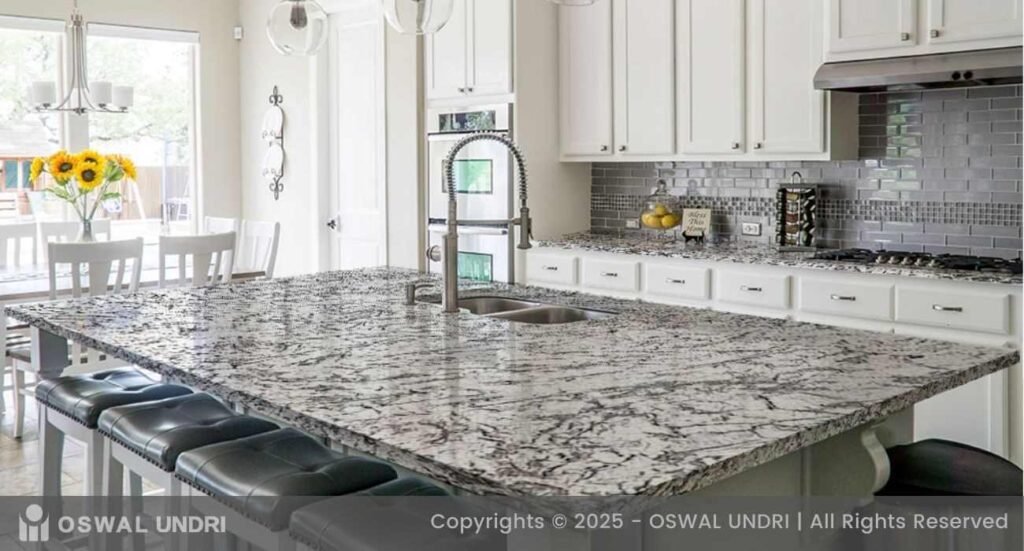

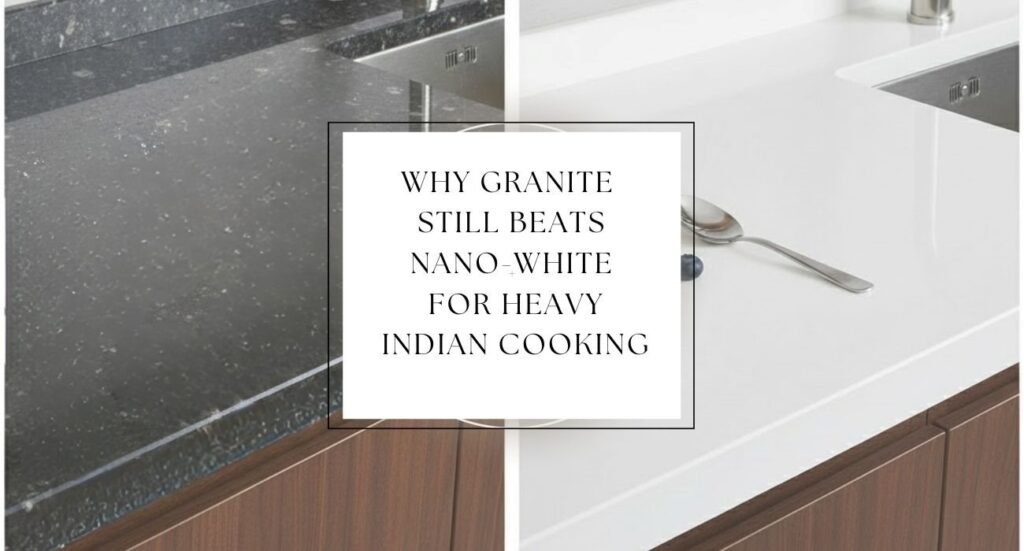
Over the last few years, many homeowners have started looking at ‘nano-white’ countertops because they look clean, modern, and premium. At the same time, standard granite continues to be used in most serious kitchens.
This is not because granite is outdated. It is because it fits Indian cooking better.
In this article, we compare standard granite and nano-white countertops through the lens of real Indian cooking habits. We look beyond showroom appeal to examine heat tolerance, impact resistance, maintenance, installation realities, and long-term value. The goal is to help homeowners choose a kitchen platform that performs reliably under everyday Indian kitchen stress.
- What People Actually Mean by 'Standard Granite' and 'Nano-White'
- Why Granite Has Earned Trust Over Time
- Daily Cooking Stress and Real-Life Usage
- Cracks, Sink Cutouts, and Edge Damage
- Heat Handling and Temperature Changes
- Stains, Marks, and Long-Term Appearance
- Installation Quality in Indian Conditions
- Maintenance and Living With the Surface
- Cost and Practical Value
- Looks, Design, and Available Choices
- Who Should Choose What
- Key Takeaways
What People Actually Mean by ‘Standard Granite’ and ‘Nano-White’
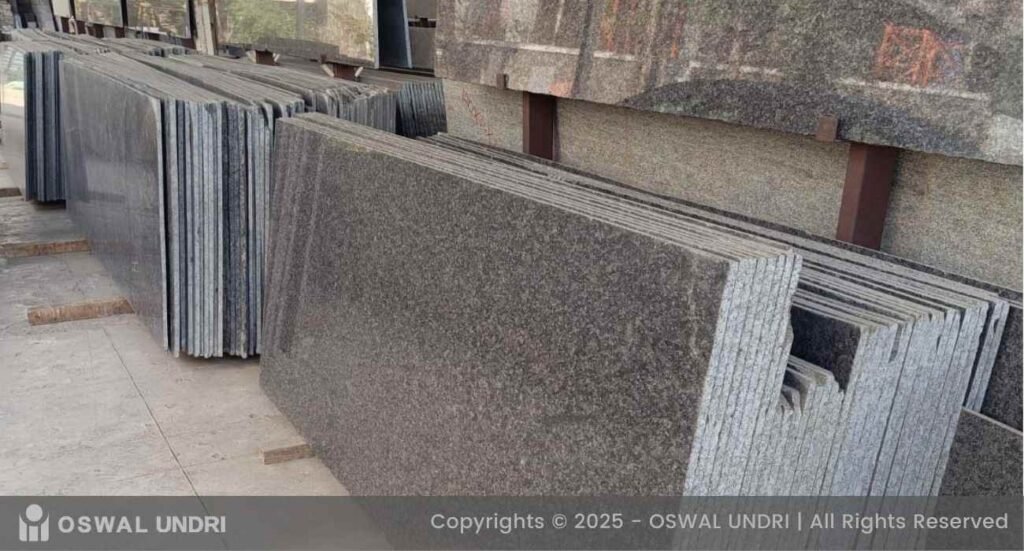

When people say ‘standard granite’ in India, they are not talking about low-quality stone. They usually mean regular natural granite that has been used for years in kitchens. Black granite, brown granite, green granite, and patterned varieties fall in this category.
These stones come from quarries, are cut into slabs, polished, and installed. They are natural materials. They do not depend on chemical coatings to look good or perform well.
‘Nano-white’ is a more confusing term. Different sellers use it for different materials. In most cases, it refers to glass-based or engineered slabs that are very white and glossy.
In a showroom, nano-white looks impressive. Under lights, it appears smooth and flawless. Many buyers fall in love with it at first sight.
The problem is that real kitchens are very different from showrooms.
Why Granite Has Earned Trust Over Time
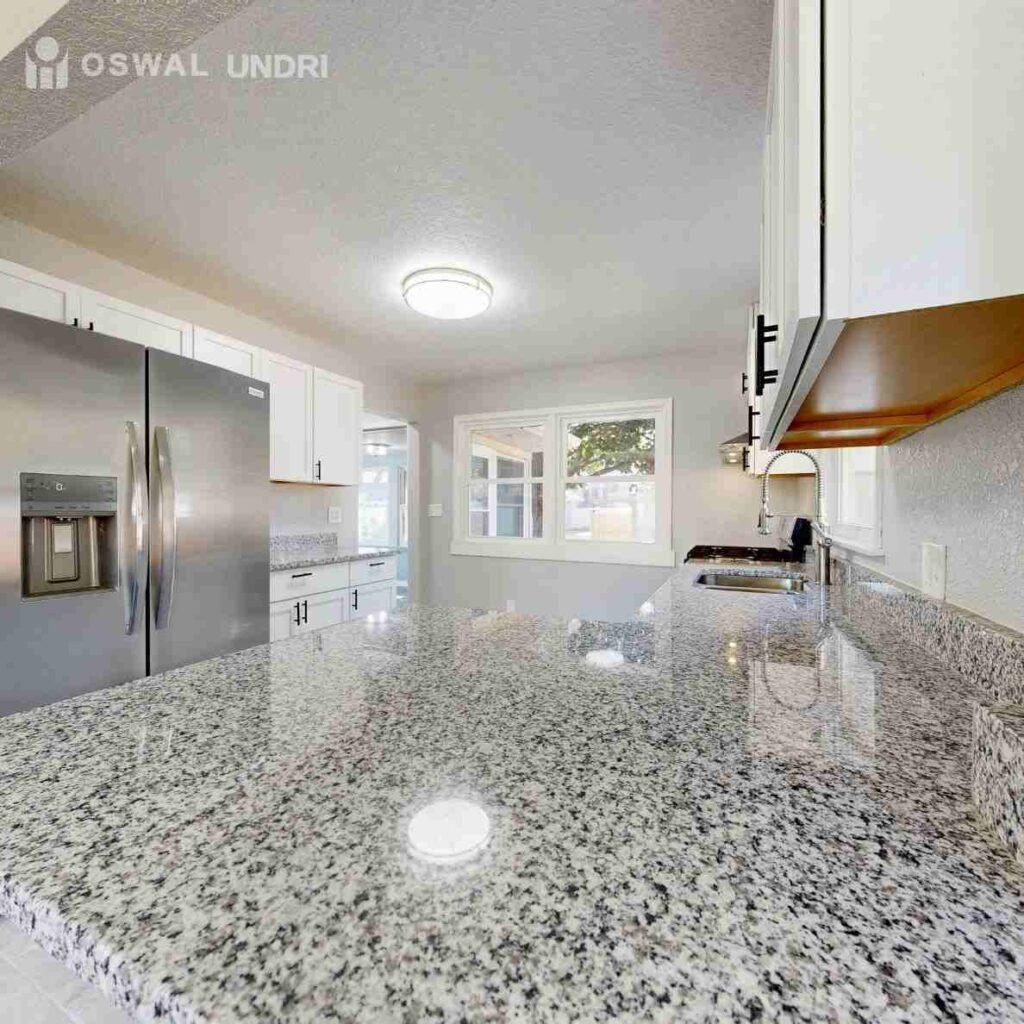
Granite has been used in Indian homes for decades. In some places, for centuries. You will find granite in old houses, temples, and public buildings that are still standing strong.
In normal homes, granite countertops often last twenty years or more. Even when they become slightly dull, they usually continue working without problems.
This long history matters. People trust granite because they have seen it perform.
Indian cooking is demanding. We use heavy pressure cookers, iron kadhais, stone grinders, mixer jars, and rolling pins. All of these hit the countertop regularly. Sometimes gently, sometimes not.
Granite handles this routine well. That is why even today, most restaurant kitchens and commercial setups still prefer granite. They cannot afford frequent repairs or replacements.
Nano-white materials do not yet have this kind of track record in India.
Daily Cooking Stress and Real-Life Usage
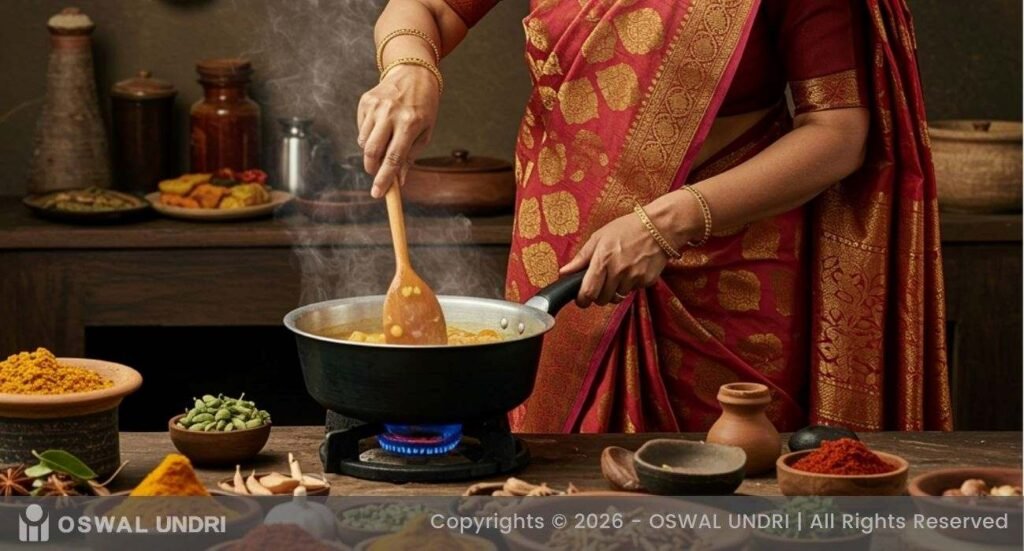
Indian kitchens face constant stress. Heat is high. Oil splashes are common. Spices are strong. Cleaning happens multiple times a day.
Some common situations happen in almost every home:
- A hot tawa is kept on the platform for a few seconds
- Cold water is poured near a hot area
- A mixer jar hits the corner
- A pressure cooker lid drops
- Grinding stones touch the surface
These are normal things. A good countertop should tolerate them. Granite usually does.
With nano-white, the risk is higher. Some materials are strong on the surface but weak inside. Small mistakes can slowly turn into visible damage.
Cracks, Sink Cutouts, and Edge Damage
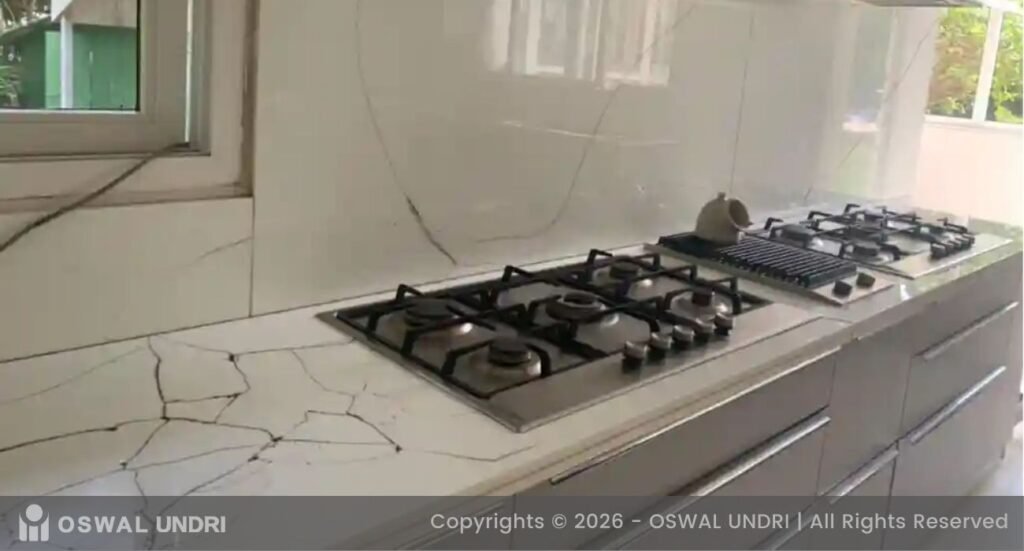
The sink area is the weakest part of any countertop. Cutting a hole reduces strength. Water and heavy vessels add more stress.
Granite performs well here when installed properly. Cracks near sink cutouts are rare.
With nano-white, cracks are more common, especially if installation is not perfect. Even small mistakes during cutting or support can create stress points.
Edges and corners are another problem.
Indian kitchens use heavy tools. Mixer jars, grinding stones, steel containers, and cookware often hit the edges. Many nano-white slabs are brittle. They chip more easily. And because they are white, every chip becomes visible. Granite can also chip, but small damage usually blends in and does not bother the eye too much.
Heat Handling and Temperature Changes

High heat is part of Indian cooking. Tawas, kadhais, and cookers get very hot. Sometimes they are kept on the platform without thinking.
Granite handles this reasonably well. Occasional heat contact usually does not cause major problems.
Another issue is sudden cooling. Many people wash the kitchen immediately after cooking. Hot areas suddenly meet cold water.
Granite tolerates this better than most nano-white materials. Nano-white surfaces can develop dull spots or internal stress over time if exposed to frequent thermal shock.
This means granite gives you more freedom. You do not have to think too much before placing something hot.
Stains, Marks, and Long-Term Appearance


To be fair, nano-white has an advantage here.
Most nano-white surfaces are glass-based and non-porous. They resist stains very well. Turmeric, coffee, oil, and wine usually do not penetrate.
Granite is slightly porous. But good quality granite, especially dark varieties, resists most stains if cleaned normally.
However, stain resistance is only one part of appearance.
White glossy surfaces show everything. Water marks, oil films, cleaning streaks, and small discolorations become visible very quickly.
Over time, joints may turn slightly yellow. Small scratches catch light. The surface can start looking patchy. Granite hides ageing better. Its natural patterns cover small defects. Even after years, it usually looks acceptable.
So while nano-white may stay stain-free, granite usually looks better in the long run.
Installation Quality in Indian Conditions
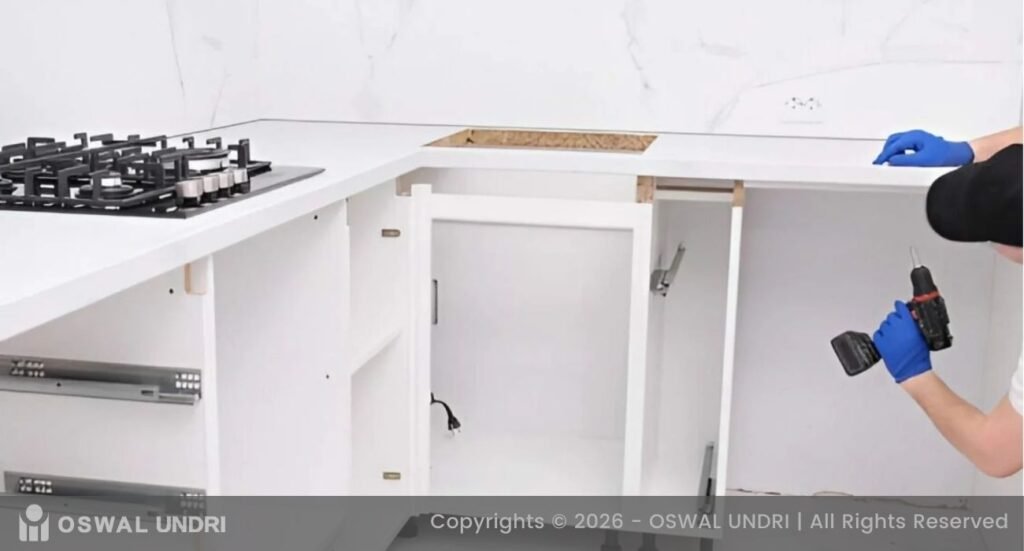
This is one of the biggest practical issues.
In many foreign countries, countertops are cut using advanced machines. Water jets and CNC systems ensure perfect edges and cutouts.
In India, most fabrication is still done manually using hand grinders and small machines.
This works fine for granite because granite is forgiving.
Nano-white needs high precision. Manual cutting increases the risk of cracks, chips, and weak joints.
Even good-quality nano-white slabs can fail because local workshops are not fully equipped for them.
This is not always the installer’s fault. It is a system limitation.
Maintenance and Living With the Surface
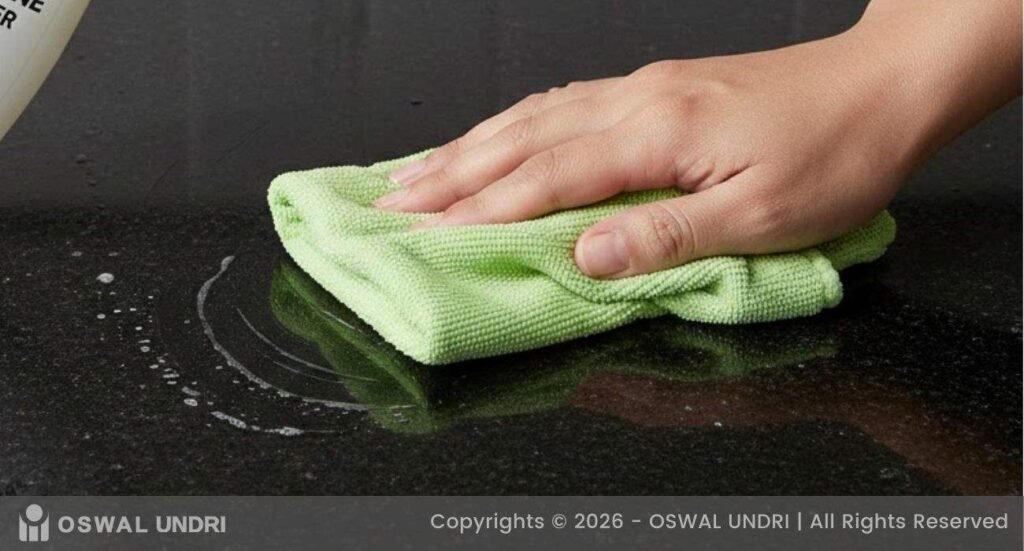
Granite is easy to live with. You can clean it with normal soap and water. You can scrub lightly. You do not have to worry too much.
If granite becomes dull, it can be re-polished. Minor chips can be repaired. Sealing is simple.
Nano-white needs more careful handling. Harsh scrubbers and strong chemicals can affect the finish. Repair options are limited.
Many nano-white owners become very protective of their kitchen. They constantly worry about marks and damage.
Granite owners usually do not. Over years, this difference affects comfort.
Cost and Practical Value
Nano-white countertops usually cost three to four times more than granite.
This includes material, transport, and installation.
With the same money, a homeowner can install granite and still have budget left for future replacement if needed.
Granite gives better long-term value because:
- It lasts longer
- It is cheaper to maintain
- It is easier to repair
- It does not demand perfect conditions
From a financial point of view, granite makes more sense for most Indian homes.
Looks, Design, and Available Choices
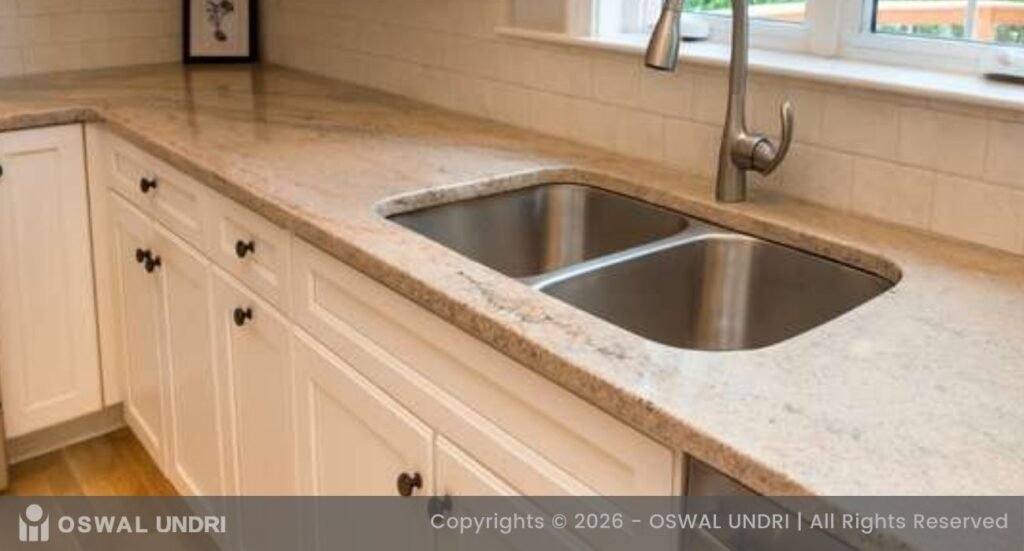
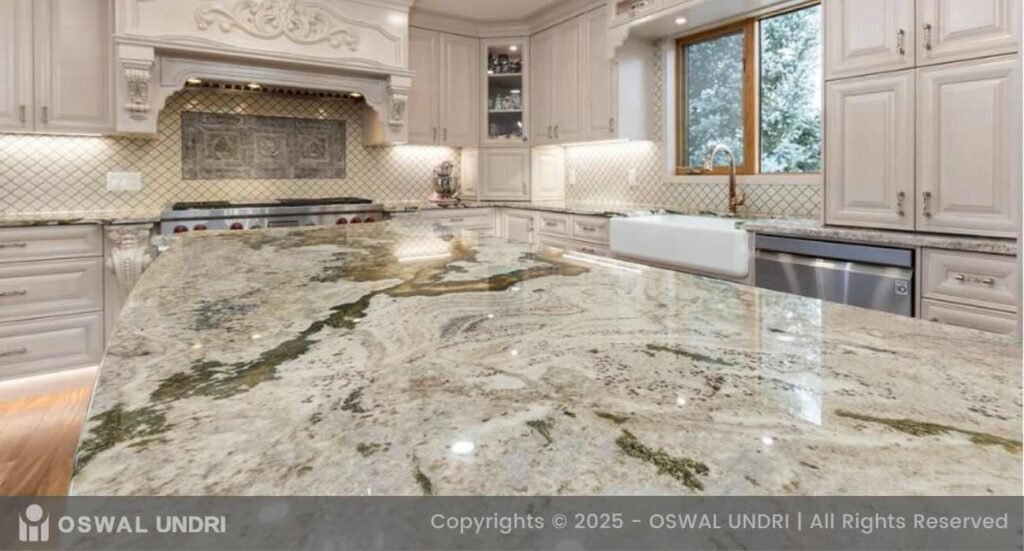
India has many types of granite. If you search properly, you can find beautiful stones in different shades and patterns.
You may not get pure white, but you can get elegant and timeless designs. With good lighting and layout, granite kitchens can look modern and premium.
Strength and beauty do not have to be opposites.
Who Should Choose What
Granite is the right choice if:
- You cook daily
- You use heavy utensils
- Many people use the kitchen
- You want low maintenance
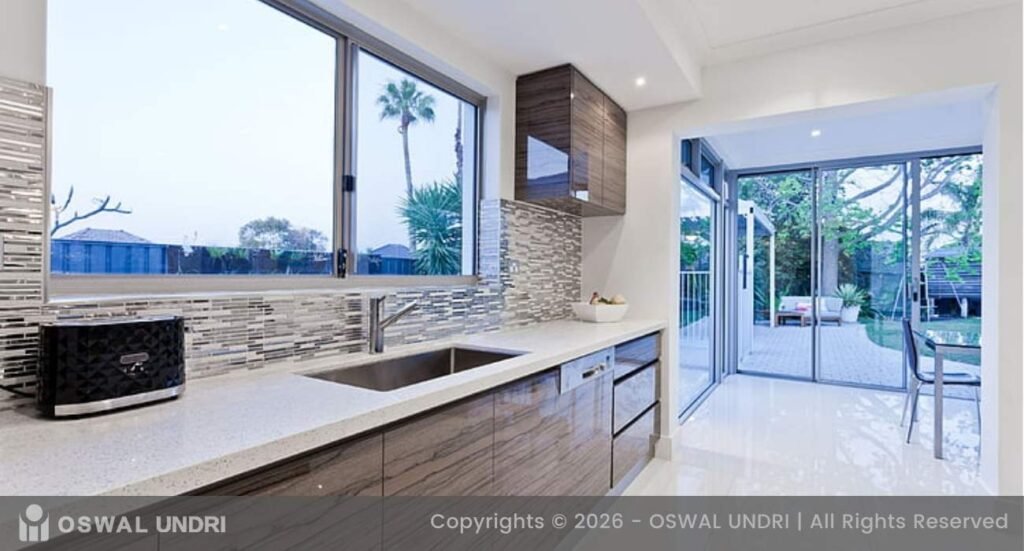
Nano-white may work if:
- Cooking is light
- Design is more important than durability
- Installation quality is excellent
- You are willing to be careful
For restaurants and heavy-use kitchens, granite remains the best option.
Key Takeaways
Standard granite continues to dominate Indian kitchens because it fits real life. It is strong, reliable, affordable, and forgiving. It handles heat, impact, and installation imperfections better than most modern alternatives. Nano-white looks attractive and resists stains, but it comes with higher cost, higher risk, and higher dependence on perfect workmanship.
Standard granite handles real Indian cooking better, withstanding heat, heavy utensils, impacts, and daily wear without demanding extra care.
Nano-white may look premium in showrooms, but it is more brittle, highly installation-dependent, and less forgiving in everyday kitchen use.
Granite performs better around sink cutouts, edges, and corners, where nano-white is more prone to cracks and visible chipping.
While nano-white resists stains, granite ages more gracefully, hiding scratches, marks, and minor damage over long-term use.
From cost, maintenance, and durability perspectives, granite offers far better value for Indian households that cook frequently and heavily.
Get a free consultation, expert guidance, and a detailed quote tailored to your project needs.

Why Pune Developers Should Stop Buying Steel Grey Granite…
Buying Granite and Marble Direct from Rajasthan | Is it worth it?
Staircase Safety Guide: Best Materials and Finishes

8 Best Translucent Stones for Backlit Bar Counters
How to Check if your Quartz Slab is Real or Fake? (Aviod Fakes)